The Atlantic Ocean off the coast of Tenerife often appears serenely composed: bright turquoise waters, a gentle trade breeze, and endless blue horizon. Yet, the oceanographic conditions that create a flawless day at sea are part of a massive, interconnected global circulation system. Understanding how the Canary Current affects weather in Western Europe reveals why the Canary Islands enjoy their famous "eternal spring" climate—and how this cold-water current moderates temperatures across Iberia, Britain, and the wider European continent.
For charter guests planning a luxury boat trip from Costa Adeje or Puerto Colón, the practical takeaway is wonderfully simple: the Canary Current maintains Tenerife's exceptionally mild, temperate maritime climate, keeping sea temperatures comfortable year-round while fueling the rich marine biodiversity that brings pilot whales and dolphins directly to our shores.
The Canary Current is a major surface ocean current flowing southward along the eastern edge of the North Atlantic Ocean. Originating off the coast of Western Europe and Iberia, it travels along the northwest coast of Africa, passing the Canary Islands before turning westward to join the Atlantic North Equatorial Current.
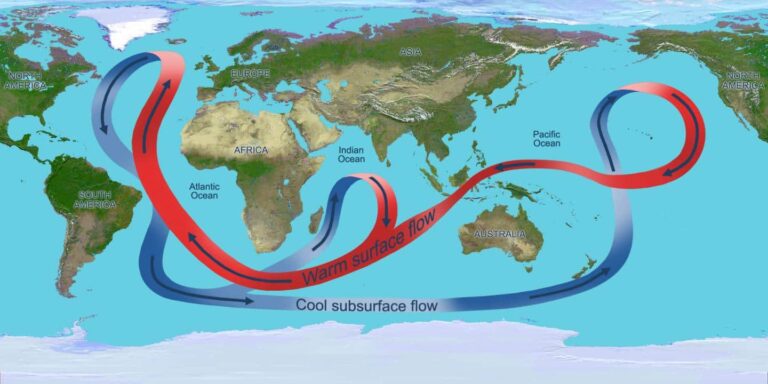
It constitutes the eastern limb of the massive North Atlantic Subtropical Gyre—a clock-wise ocean circulation system bounded by the Gulf Stream in the west, the North Atlantic Drift in the north, and the Equatorial Current in the south. Because it transports water from higher, cooler latitudes southward, the Canary Current is classified as a cool ocean current relative to the tropical air masses it encounters.
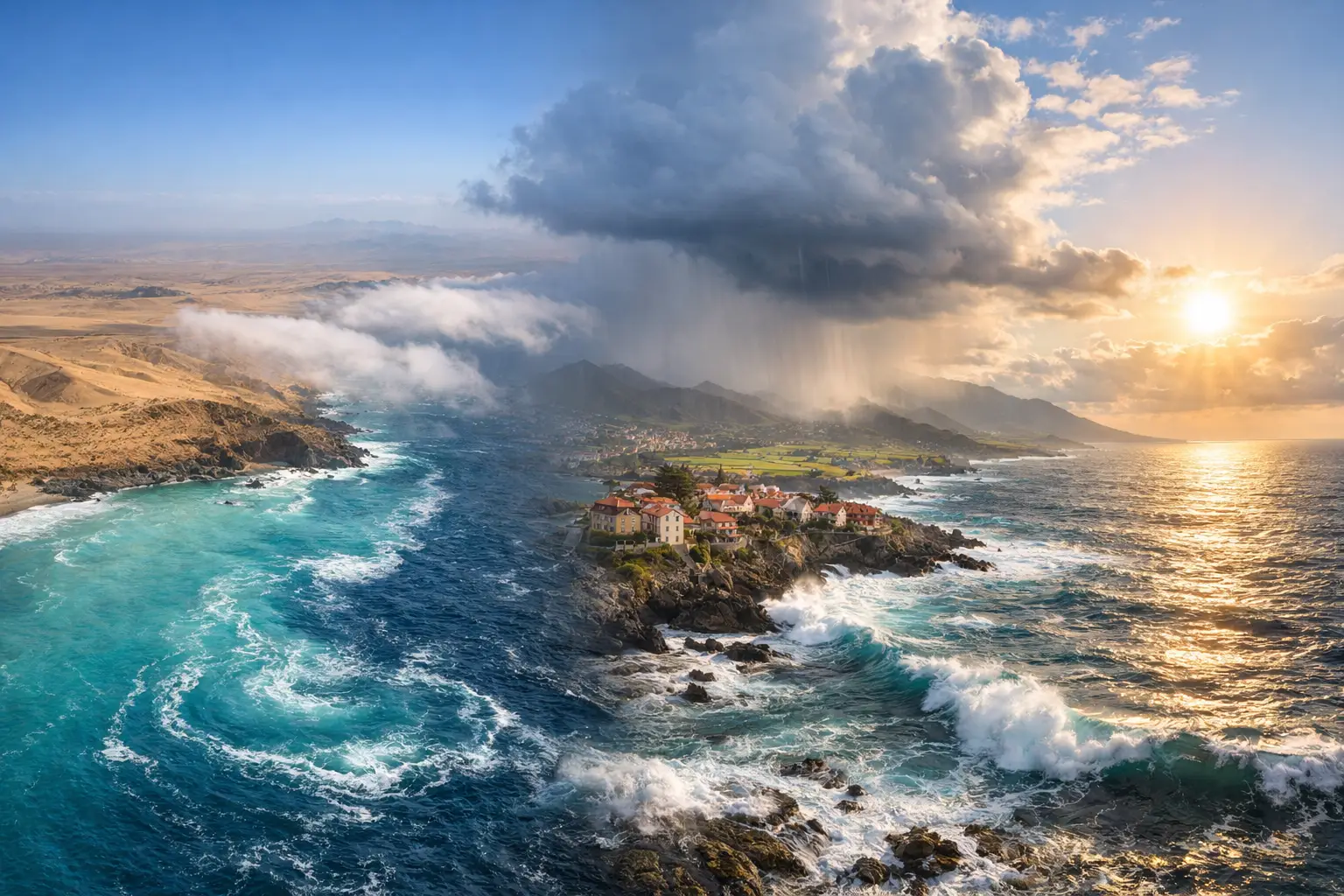
Crucially, as the northeast trade winds sweep across the northwest coast of Africa, they push surface waters offshore. This triggers a powerful oceanographic process known as coastal upwelling: deep, cold, nutrient-rich waters rise to the sunlit surface. These nutrients nourish microscopic plankton, forming the ecological foundation that supports massive fish populations, sea turtles, and resident pods of pilot whales and dolphins in Tenerife.
The relationship between the Canary Current and Western European weather is subtle, acting primarily as a thermal regulator rather than a direct storm generator. While the warm Gulf Stream carries tropical warmth toward Ireland, the UK, and Scandinavia, the Canary Current acts as the return valve, carrying cooled water back toward the equator.
However, day-to-day weather across Britain, France, and Western Europe is driven fundamentally by atmospheric circulation—specifically the polar jet stream, low-pressure cyclonic systems, and the Azores High-pressure system. The Canary Current shapes the underlying sea-surface temperatures over which these air masses travel, modifying their moisture and heat capacity before they move inland.
The most direct impact of the Canary Current is felt along the Atlantic coastlines of Portugal, southern Spain, Morocco, and the Canary Islands. Because the current delivers cooler water than would normally be expected at these latitudes, it prevents the coastal margins from experiencing the blistering, arid heat found further inland in the Saharan desert.
When warm, summer air passes over these cooler ocean waters, it cools from below, stabilizing the lower atmosphere. This frequently creates coastal fog, low-lying morning mist, and the characteristic trade-wind cloud layers (mar de nubes) seen along Tenerife's northern slopes. Conversely, along the sheltered southwest coast of Tenerife, Mount Teide shields the sea level, resulting in bright, clear skies and warm temperatures.
It may seem paradoxical that a cool southward current flows right past Western Europe without making the continent cold. The explanation lies in thermodynamics and prevailing wind patterns. The North Atlantic Ocean as a whole receives an immense net inflow of heat from the tropical Gulf Stream system, making Western Europe significantly warmer than corresponding latitudes in North America (such as Labrador or Canada).
Furthermore, Europe's weather is dominated by prevailing westerly winds blowing off the open Atlantic. Because water retains heat far longer than land, maritime air moderates extreme temperature swings—keeping European winters mild and summers comfortably cool. The Canary Current represents just one part of this vast oceanic heat-exchange system.
For visitors enjoying a holiday in south Tenerife, the Canary Current is the silent architect of the island's ideal climate. Ocean temperatures around Tenerife remain remarkably stable, ranging between 19°C in late winter and 23°C in early autumn. This thermal stability prevents extreme summer heatwaves while ensuring winters remain warmly pleasant.
This moderating ocean influence makes time on the water exceptionally comfortable. A summer charter off Costa Adeje offers refreshing sea breezes without oppressive heat, while a winter cruise provides warm, sun-drenched decks when mainland Europe is freezing. Furthermore, the nutrient-rich upwelling supported by the current ensures that every marine excursion takes place in a thriving, living marine sanctuary.
While the Canary Current sets the macro-climate of the archipelago, daily sailing conditions depend primarily on local surface winds and ocean swells:
At Royal Ocean, our professional captains analyze both global oceanographic trends and local wind forecasts, selecting the smoothest, most picturesque coastal routes for every private yacht charter.
When planning a boat trip in Tenerife, look beyond standard weather forecasts. Coastal weather in the south is governed by microclimates:
Understanding the interplay between the Atlantic ocean, the Canary Current, and Tenerife's high volcanic peaks reveals why this island remains an unmatched paradise for luxury yachting throughout every season of the year.
The Canary Current is a cool, southward-flowing ocean current that forms the eastern boundary of the North Atlantic Subtropical Gyre, traveling along the coasts of Portugal, Morocco, and the Canary Islands.
No. While classified as a cool current because it originates further north, it keeps sea temperatures around Tenerife pleasantly mild year-round, ranging between 19°C (66°F) in winter and 23°C (73°F) in late summer.
The current promotes coastal upwelling, pulling nutrient-dense deep water to the surface. This fuels plankton growth, sustaining rich marine food chains that attract resident pilot whales, dolphins, and sea turtles.
No. The current flows very broadly and slowly (less than 1 knot) in open ocean waters. Coastal sea states around south Tenerife are determined by local winds and swells, not hazardous current pulls.
Western Europe benefits from maritime heat transport driven by the Gulf Stream and North Atlantic Drift, combined with prevailing westerly winds blowing mild ocean air across the continent.