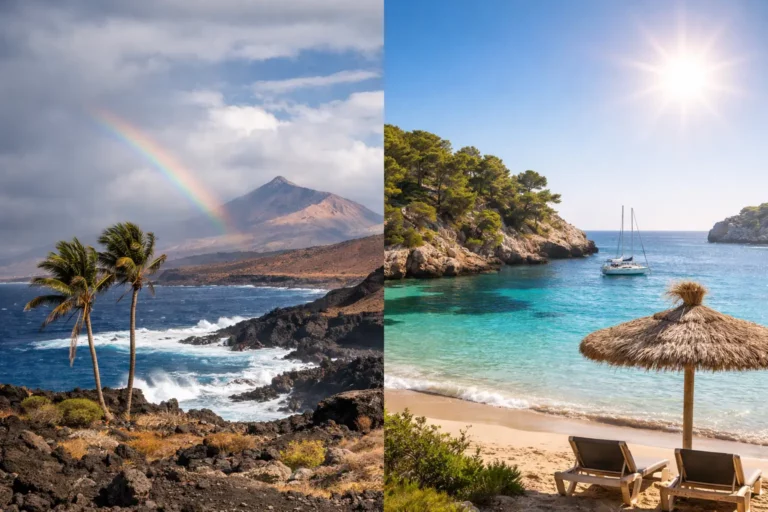
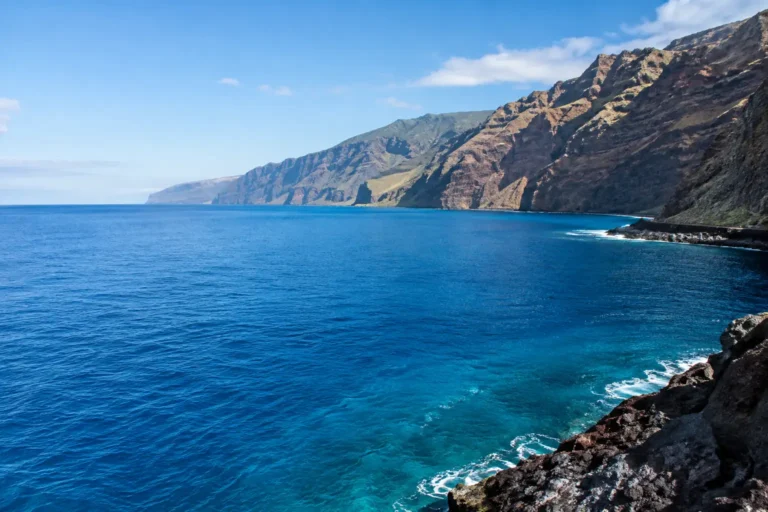
Stand on the greener northern slopes of Tenerife early in the morning, and a fascinating meteorological phenomenon unfolds. You may not see a single storm cloud, yet the leaves of the ancient laurel trees are dripping, the soil is damp, and water is quietly pooling on the ground. In a volcanic archipelago surrounded by the Atlantic Ocean, securing fresh water has always required human ingenuity. The secret lies not only in traditional rainfall but in a unique system of "horizontal rain" and an extensive network of underground mountain tunnels.
For many visitors, this comes as a surprise. The Canary Islands feel sun-soaked, dry, and desert-like, especially around the southern coastal resorts where boat trips and excursions from Costa Adeje are common. Yet behind the scenes, islands like Tenerife have engineered one of the most complex water management systems in the European Union, seamlessly combining natural cloud harvesting, deep volcanic channels, and high-tech desalination.
The Canary Islands do not possess a single permanent river, lake, or large freshwater stream. Instead, the western islands—Tenerife, La Palma, La Gomera, and El Hierro—rely heavily on a phenomenon known as horizontal rain (lluvia horizontal). Research conducted by the Spanish National Research Council (CSIC) and the Institute of Natural Products and Agrobiology (IPNA) has documented that this process is driven by the steady northeast trade winds (vientos alisios), which push moisture-rich oceanic air directly against the high volcanic mountain peaks.
As this moist air climbs the mountainsides—typically between 800 and 1,500 meters (2,600 to 4,900 feet) above sea level—it condenses into a thick, persistent fog known locally as the mar de nubes (sea of clouds). This is where Tenerife's ancient laurisilva (laurel) forests and endemic Canary Pine trees become vital collectors. Scientific studies indicate that this fog drip contributes an estimated 20% to 30% of the total water input to the island's forested watersheds. The moisture condenses on the foliage and drips to the forest floor, slowly filtering through the porous volcanic rock to recharge the island's massive underground aquifers.
The long, delicate pine needles and wide laurel leaves trap microscopic water droplets from the passing mist. Without these native forests, this vital cloud moisture would simply pass over the island and vanish into the ocean. This makes the conservation of these woodlands a critical component of Tenerife's water security strategy.
If horizontal rain is nature's poetic gift, water galleries (galerías de agua) represent the practical brilliance of Canarian engineering. A water gallery is a narrow, man-made horizontal tunnel drilled deep into the heart of a mountain to tap into hidden groundwater reservoirs trapped within the porous volcanic layers.
Tenerife is home to a staggering network of over 1,000 water galleries, with total lengths exceeding thousands of kilometers. These excavations were dug primarily during the 19th and 20th centuries, often by hand using rudimentary tools. Because volcanic basalt rock is highly porous—acting like a giant sponge that stores centuries of filtered cloud water—these tunnels allow gravity to naturally pull pure water out of the mountain interior and channel it down to coastal towns and plantations without requiring mechanical pumps.
Many travelers assume that an island as large as Tenerife would simply build dams and surface reservoirs to collect winter rain. While Tenerife does have agricultural water tanks and several small dams, traditional continental reservoirs are highly inefficient here due to the island's unique geology.
Fresh volcanic lava flows and basaltic fields are filled with deep fractures, hollow tubes, and highly permeable stone layers. According to hydrological studies published in peer-reviewed journals, including the Journal of Hydrology, over 80% of rainfall in the Canary Islands is lost to rapid subsurface drainage rather than remaining on the surface. Historically, this made water rights incredibly valuable—often carrying far more economic weight than the ownership of the land itself. Water was meticulously measured, traded, and piped through open stone channels (canales) across dramatic ravines.
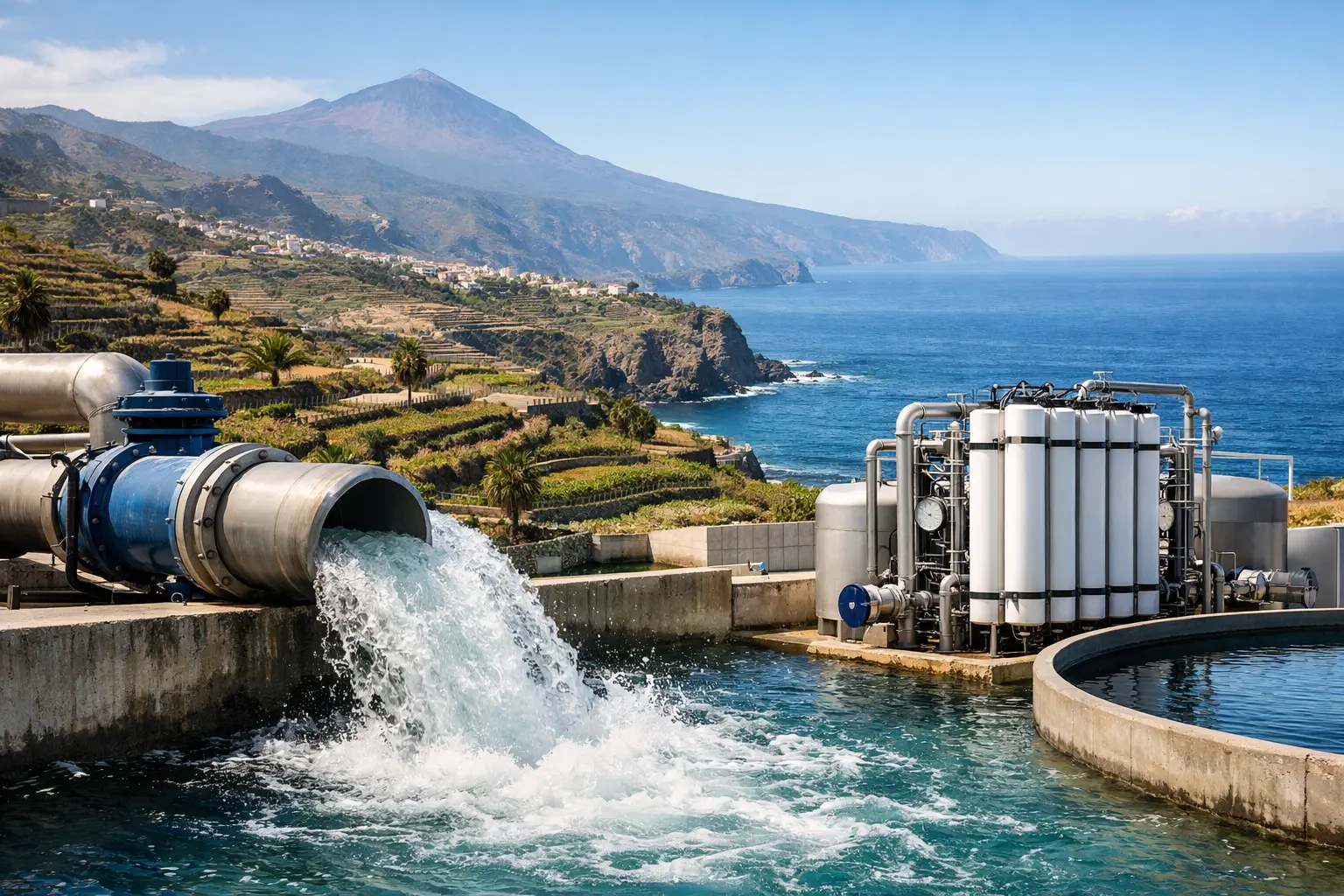
While horizontal rain and mountain galleries sustained Tenerife for generations, the rapid growth of agriculture, residential areas, and tourism required an even more reliable source. Today, any realistic answer to how the islands get their water must focus heavily on seawater desalination plants (desaladoras).
For the arid southwest coast—home to Costa Adeje, Playa de las Américas, and Los Cristianos—industrial desalination is now the lifeblood of the economy. These high-tech facilities use advanced reverse osmosis systems to strip salt from the surrounding Atlantic Ocean. Official data indicates that the Canary Islands produce approximately 500,000 cubic meters of desalinated water per day, with Tenerife accounting for a significant portion. This ensures that hotels, residential properties, and marinas maintain a stable supply without putting excessive pressure on the island's delicate mountain aquifers.
For the most current desalination statistics and water quality reports, readers should consult the official publications of the Spanish Ministry for Ecological Transition and the Government of the Canary Islands.
When you are relaxing on the deck of a private yacht, sipping an iced drink, and watching the arid cliffs pass by, the island's natural elements seem effortlessly balanced. However, the comfort you experience on a luxury yacht charter or a relaxed day at sea is entirely supported by this hidden, highly organized infrastructure working tirelessly in the background.
Tenerife rewards travellers who take the time to look beyond the obvious. The striking contrast between the lush, emerald-green northern valleys and the desert-like, sun-kissed south coast—all within a short drive—is a direct result of these atmospheric and geological mechanics.
The next time you look up from the coast toward the peaks of Mount Teide and see a white ring of mist hanging along the ridges, you are witnessing the island's natural water factory at work. Understanding the clever, resilient spirit of Tenerife enriches any visit, turning a luxury escape into a truly memorable experience.
Horizontal rain (lluvia horizontal) refers to the process where moisture-rich trade winds condense into fog on mountain slopes. The droplets are intercepted by vegetation (like laurel trees and pines) and drip to the ground, recharging groundwater aquifers. It is estimated to provide up to 30% of the water input to the island's forested areas, according to research from the Spanish National Research Council.
Tenerife has an extensive network of over 1,000 water galleries (galerías). These horizontal tunnels, built primarily in the 19th and 20th centuries, tap into the volcanic rock to drain groundwater by gravity.
Tenerife's volcanic geology is highly porous. According to hydrological studies, over 80% of rainfall quickly drains through the basalt and fractured lava rock into underground aquifers, making surface reservoirs inefficient compared to groundwater extraction and desalination.
Yes. Desalination plants on the island use reverse osmosis technology to produce water that meets strict drinking water standards set by the World Health Organization and the European Union. Water quality is regularly monitored and tested for purity and mineral content. For the most recent water quality reports, consult the official website of the local water authority or the Government of the Canary Islands.
For additional authoritative information on water management in the Canary Islands, readers are encouraged to consult the following organizations directly: