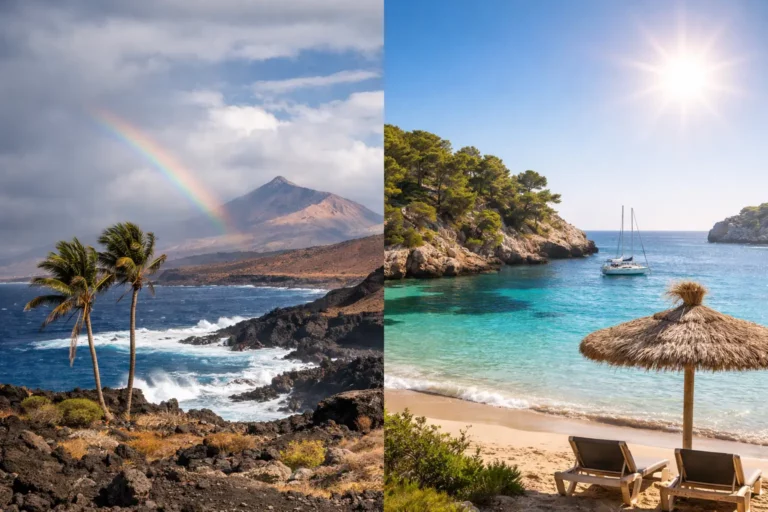
A full marina in February tells you more about island economics than any glossy brochure. When restaurants are serving, excursion boats are departing and hotels are still welcoming guests in what would be low season elsewhere, the year-round resort islands in Europe tourism economy becomes very easy to see. These islands do not rely on a short summer surge alone. They build livelihoods, infrastructure and investment around a near-constant flow of visitors.
For travellers, that creates choice, comfort and flexibility. For local businesses, it creates opportunity - but also pressure to maintain quality, protect natural assets and avoid becoming too dependent on one industry. Nowhere is that balance clearer than on Europe’s leading resort islands, where sunshine may be the headline, but the real story is economic resilience shaped by tourism.
Not all island destinations function in the same way. A Mediterranean island with a sharp summer peak may earn heavily for a few months and then slow dramatically. By contrast, islands with mild winters, strong air connectivity and broad visitor appeal can keep tourism moving for most of the year. That changes everything from employment patterns to property development and public services.
A year-round model tends to support more stable jobs in hospitality, marine leisure, transport, food supply and maintenance. Staff can stay in work for longer, businesses can justify higher standards, and operators are able to invest in better facilities because demand is not compressed into a narrow season. For visitors, that often means a more polished experience. Service teams are established, excursions are well organised, and the destination feels operational rather than half asleep.
There is another advantage too. When demand is spread across the calendar, pressure can be managed more intelligently. The busiest weeks still bring strain, of course, but islands are less exposed to a feast-or-famine pattern. That matters for restaurants, yacht charters, tour providers and hotel groups alike.
The strongest examples are usually found where climate, air access and tourism infrastructure align. The Canary Islands stand out because they offer reliable sunshine in winter as well as summer, which gives them an edge over many mainland beach destinations. Tenerife, Gran Canaria and Lanzarote have each built economies that serve visitors in every season, with hotels, marinas, guided experiences and resort services operating far beyond the usual summer window.
Madeira, while not the same type of beach resort market, also benefits from all-season appeal driven by scenery, walking, wellness and mild weather. Malta has a similar advantage through cultural tourism, short breaks and shoulder-season travel. Cyprus can perform strongly outside peak summer too, although its seasonal curve is often more pronounced depending on area and segment.
The key point is that year-round success rarely comes from weather alone. It depends on flight frequency, accommodation range, international reputation, local service standards and enough variety to attract different kinds of travellers. A destination that only sells sunbeds may struggle in cooler months. One that combines coastline, dining, wildlife, boating, events and premium hospitality has far more resilience.
Tenerife offers one of the clearest examples of how this model works in practice. The island attracts winter sun travellers, family holidaymakers, couples, luxury guests and short-break visitors across the year. South Tenerife in particular has been shaped around dependable hospitality infrastructure, with resorts, beaches, marinas, restaurants and marine excursions all feeding into a continuous visitor economy.
That steady flow supports a wide network of businesses beyond hotels. It keeps skippers, chefs, waiting staff, cleaners, transfer companies, port services, photographers and activity providers in regular work. It also allows premium operators to exist alongside larger volume businesses. That distinction matters. A destination with year-round demand can support different tiers of tourism rather than forcing every operator into a race to the bottom.
On the water, this is especially visible. Shared tours, fishing trips, private charters, whale and dolphin watching and celebration cruises all serve different expectations and budgets. Guests who want more space, better hospitality and a calmer onboard atmosphere are willing to pay for that difference. In turn, higher-value experiences can help lift overall tourism revenue without simply increasing passenger numbers.
At its best, a resort island economy creates a strong cycle of reinvestment. Visitor spending supports jobs. Jobs support local households and supply chains. Reliable income encourages improvements in accommodation, dining, transport and leisure experiences. As quality rises, the destination can attract guests who spend more and often travel outside school-holiday peaks.
This is where premium tourism becomes especially important. High-value experiences often require fewer people to generate meaningful revenue, which can be healthier for local infrastructure than relying only on mass volume. A well-run yacht excursion, for example, may host a smaller number of guests but deliver a far more refined experience, with attentive service, quality food and a stronger sense of occasion. For visitors, that feels more personal. For the island economy, it can support better margins and more sustainable business models.
There is also a reputational benefit. Islands that become known for quality rather than cheap volume tend to hold their appeal for longer. They are less vulnerable to being undercut by newer, lower-cost destinations.
A strong tourism economy is attractive, but it is not without pressure. Islands have finite space, finite resources and delicate coastal environments. If tourism growth outpaces planning, the result can be congestion, rising housing costs, environmental stress and a diluted visitor experience.
This is the central tension for year-round resort islands in Europe tourism economy. Constant demand creates stability, yet it can also make it harder for communities and infrastructure to breathe. Ports become busy. Roads feel stretched. Popular coastal areas can tip from lively to overcrowded. If every business pursues volume above all else, the quality that made the island desirable in the first place can begin to slip.
That is why the best island tourism strategies focus not only on visitor numbers, but on visitor value, seasonal spread and experience quality. More guests are not always the answer. Better-managed tourism often is.
Marine tourism plays a special role on resort islands because it turns the coastline into an active part of the guest experience rather than just a backdrop. Boat trips, wildlife encounters and private charters extend how visitors use the destination, and they often become the most memorable part of a stay.
For discerning travellers, the difference between a standard excursion and a premium one is significant. Comfort, space, crew attention, cleanliness and catering change the mood entirely. Instead of feeling processed, guests feel looked after. That is particularly important for couples marking an occasion, families who want an easier day on the water, or groups who value privacy and good service.
For the wider economy, these experiences help diversify tourism spending. A guest who books a refined yacht trip is not only paying for time at sea. They are supporting skilled crew, marina operations, provisioning, maintenance and a hospitality standard that can lift the reputation of the destination as a whole. In Tenerife, operators such as Royal Ocean reflect that higher-end part of the market - one that complements the island’s broad tourism base while giving visitors a more elegant alternative to crowded boats.
If you are choosing an island for an all-season escape, look beyond the temperature chart. Reliable flights matter. So does the quality of accommodation stock, the standard of dining and whether experiences continue properly outside peak summer. Some destinations look year-round on paper but feel limited in practice once half the area closes for the quieter months.
It is also worth paying attention to the type of tourism an island attracts. If your priority is relaxation, service and memorable experiences, you may prefer destinations that support premium operators and a broader hospitality culture. An island built entirely around bargain tourism can still be lively, but it may not deliver the ease, comfort and atmosphere many adult travellers want.
Tenerife remains appealing for exactly this reason. It offers warm-weather reliability, mature resort infrastructure and enough depth to suit different styles of travel, whether that means a peaceful coastal stay, a celebratory yacht cruise or a few hours spent watching dolphins from a comfortable deck with a drink in hand.
The smartest resort islands understand that sunshine gets people to book, but quality is what makes them return. For travellers, that means better holidays. For local economies, it means a stronger future built not only on visitor numbers, but on experiences worth remembering.