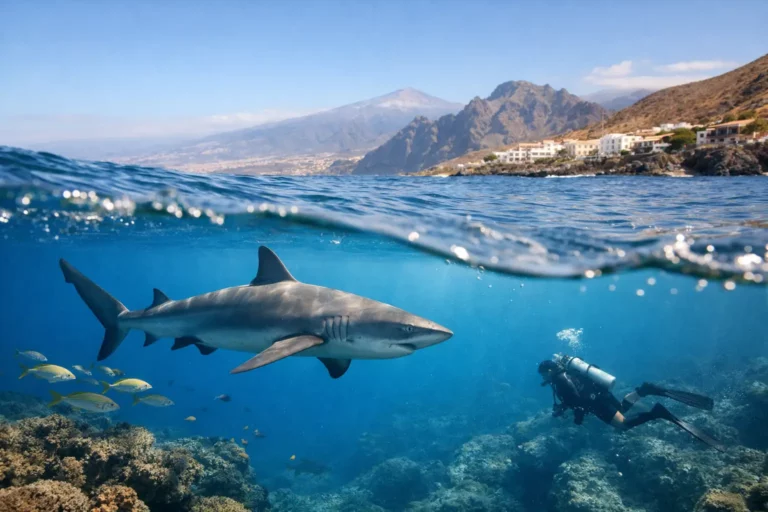
Tenerife is renowned for whale and dolphin watching, attracting visitors from around the world. The warm Atlantic waters and dramatic underwater terrain between Tenerife and La Gomera create a rich ecosystem and sanctuary for marine life. Here, over 20 species of cetaceans have been identified, making Tenerife one of Europe's premier spots to see whales and dolphins in their natural habitat.
The protected Teno-Rasca marine area is key for sightings, and tours depart from main harbors like Puerto Colon, Marina del Sur, and Los Gigantes. These areas offer easy access to deep ocean canyons where marine mammals frequently gather.

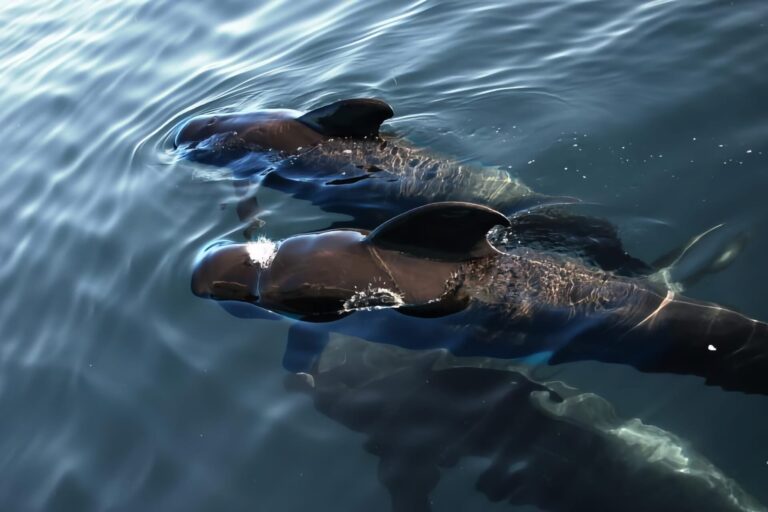
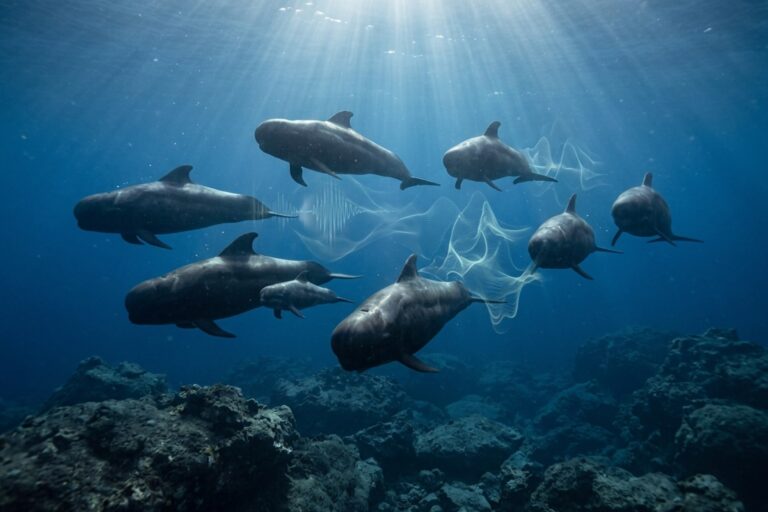
Short-finned pilot whales (Globicephala macrorhynchus) are the most commonly sighted whales in Tenerife. Though technically part of the dolphin family, their size and behavior make them distinctive. Adults are 3.5 to 6.5 meters long and can weigh up to 2 tons. They have rounded heads and dark bodies that can be seen surfacing near boats.
Pilot whales travel in loyal family groups (pods), often containing 10 to 30 individuals, with very complex social behaviors. Their diet mostly consists of squid and deep-sea fish, and they’re known for their impressive deep dives, reaching depths of hundreds of meters.
Pilot whales are considered resident in the waters around Tenerife, making encounters extremely reliable — sightings happen on about 99% of trips, regardless of the season.
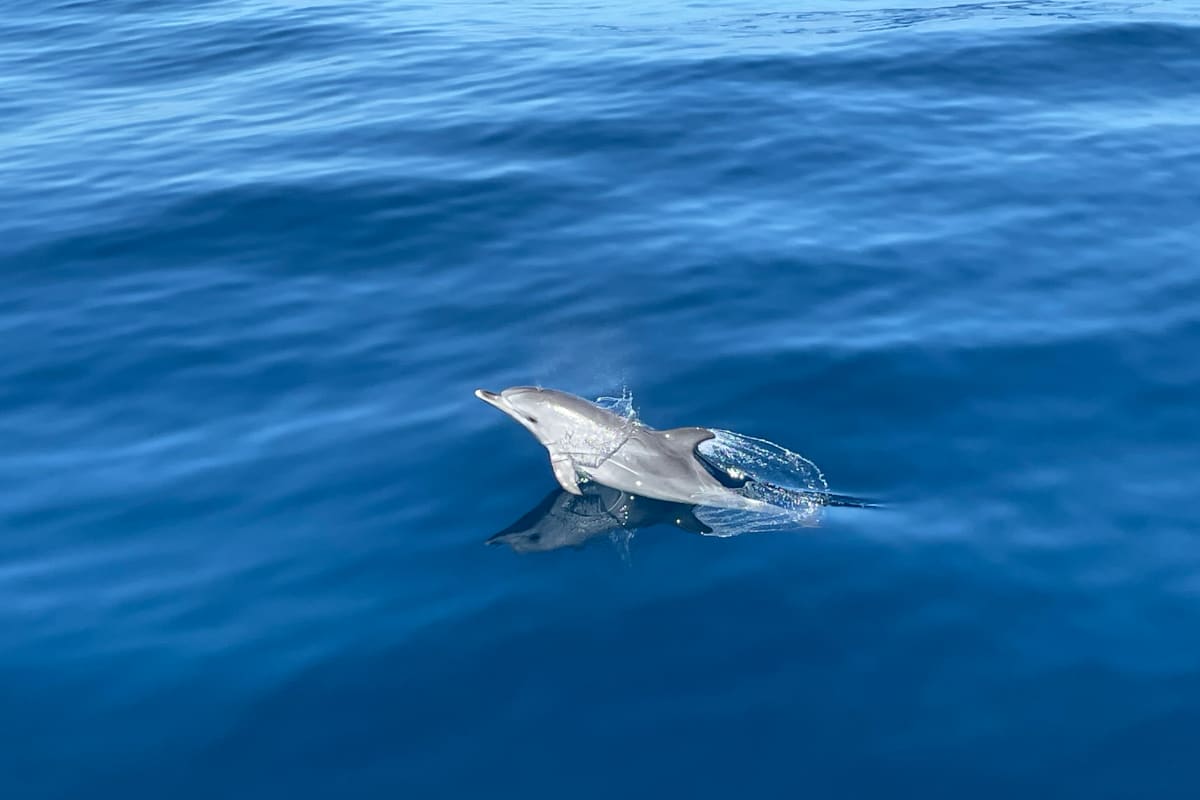
Bottlenose dolphins (Tursiops truncatus) are famous worldwide, and in Tenerife, they’re local stars. These dolphins measure 2.5 to 3 meters, with sleek gray bodies and distinctive curved dorsal fins. They live in active groups (pods) of 10 to 30, often leaping, spinning, and playing in the waves.
Bottlenose dolphins are highly intelligent and social; scientists believe their communication rivals that of great apes. On boat tours, they’re frequently seen approaching vessels, surfing the bow wave, and showing off with jumps and playful splashes.
Sightings on tours occur regularly, about 70% of excursions spot these dolphins. Their lively behavior makes watching them an unforgettable experience for both adults and children.
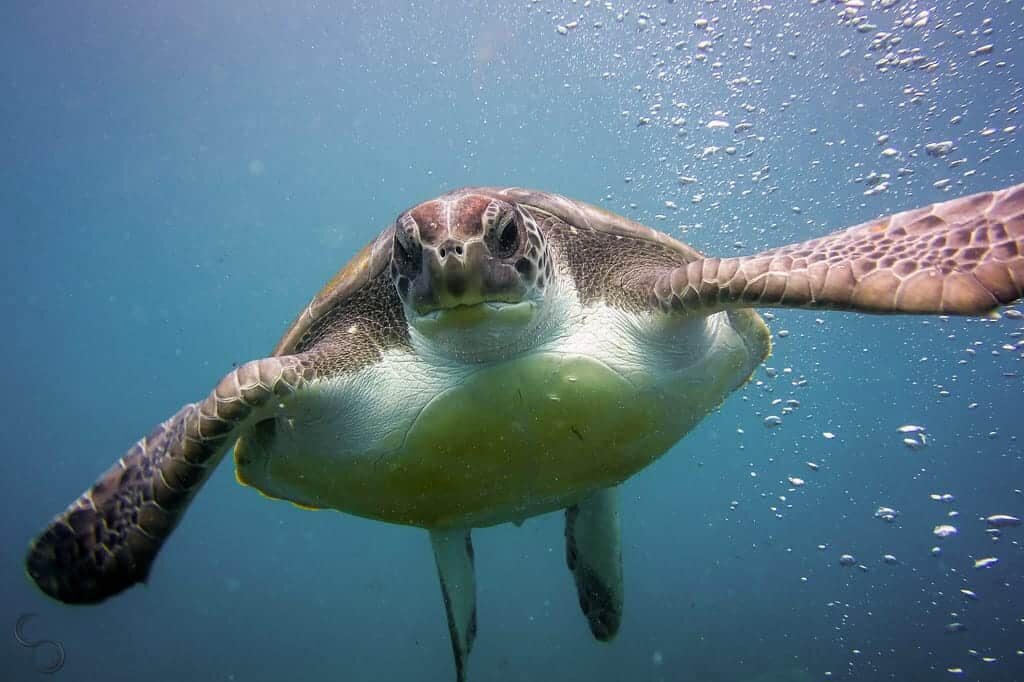
While pilot whales and bottlenose dolphins are the stars, Tenerife’s waters host other visitors. Spotted dolphins, striped dolphins, and sometimes migratory whales like sperm whales, fin whales, and sei whales can be seen. Encounters with sea turtles, flying fish, or seabirds are also common, adding to the diversity and excitement of a boat trip.

Tours may include snorkeling stops in secluded bays, swimming alongside fish (but not with the dolphins or whales), and views of coastal cliffs and volcanic scenery.
Tenerife supports responsible whale and dolphin watching through the Barco Azul (Blue Boat) certification, awarded by the Canary Islands Government and Spanish Ministry of Environment. Certified boats comply with laws on minimum approach distances, observation protocols, and crew training. Look for the yellow Barco Azul flag when booking — this ensures your tour respects animal welfare and marine conservation.
Research: SATURN Project - Ship Noise Impact Studies
Certified tours support research, conservation, and education, contributing to the long-term health of local whale and dolphin populations.

Do not touch, feed, or swim with whales and dolphins. Interaction disrupts their natural behaviors and is forbidden by law in the Canary Islands. Responsible operators keep a safe distance and observe quietly, creating respectful encounters that benefit both animals and tourists.
Violating these rules risks fines and may harm the animals. Always follow the crew’s instructions for a safe and meaningful experience.
Pilot whales — almost every tour. Bottlenose dolphins — most tours. Encounters with wild animals are never certain, but Tenerife’s waters offer very high chances thanks to resident populations.
No. Touching, feeding, or swimming with whales and dolphins is not allowed. Tours are strictly observation only to protect the animals.
Sunscreen, sunglasses, windbreaker, camera, hat, and (if needed) motion sickness pills. Binoculars can help spot animals further away.
Yes, most tours welcome children and families. Check with your provider for age requirements and equipment.
If sea conditions are unsafe, tours are postponed or rescheduled. Operators prioritize safety and comfort.
Ready to see pilot whales and bottlenose dolphins up close? Book an official whale & dolphin watching excursion with a Barco Azul certified operator like Royal Ocean. Enjoy small group comfort, respectful wildlife encounters, and expert guidance.