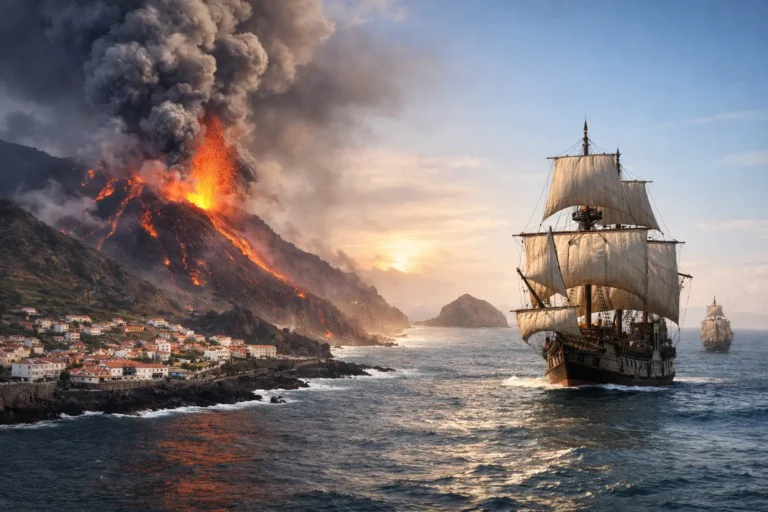
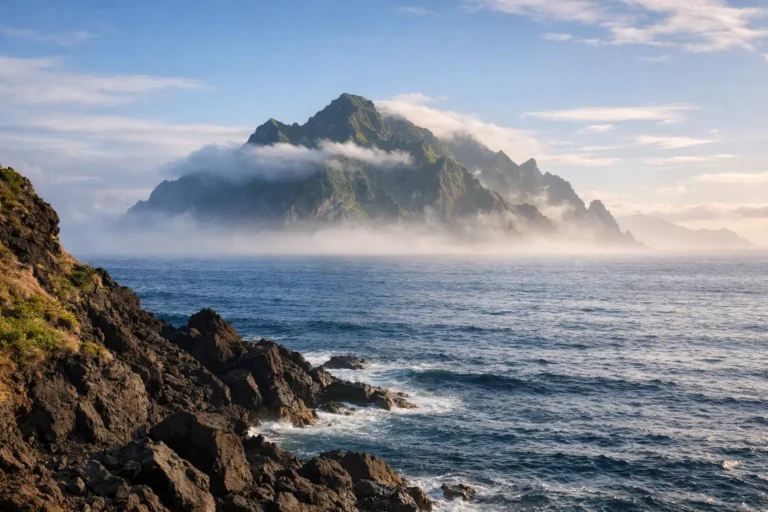
The Spanish conquest of Tenerife and the maritime routes that followed helped shape the island's place in the Atlantic world. Tenerife was not simply a remote island reached from the Iberian Peninsula. Its conquest was a long and violent conflict that transformed the island and strengthened its connections with Castile, Africa and, increasingly, the Americas.
For visitors sailing from south Tenerife today, this history adds another dimension to time on the water. The same Atlantic that now carries whale-watching cruises, private celebrations and sunset charters once transported soldiers, settlers, provisions and trade goods. Wind, sea conditions and the island's position on the map influenced both the conquest itself and Tenerife's later development as a maritime crossroads.
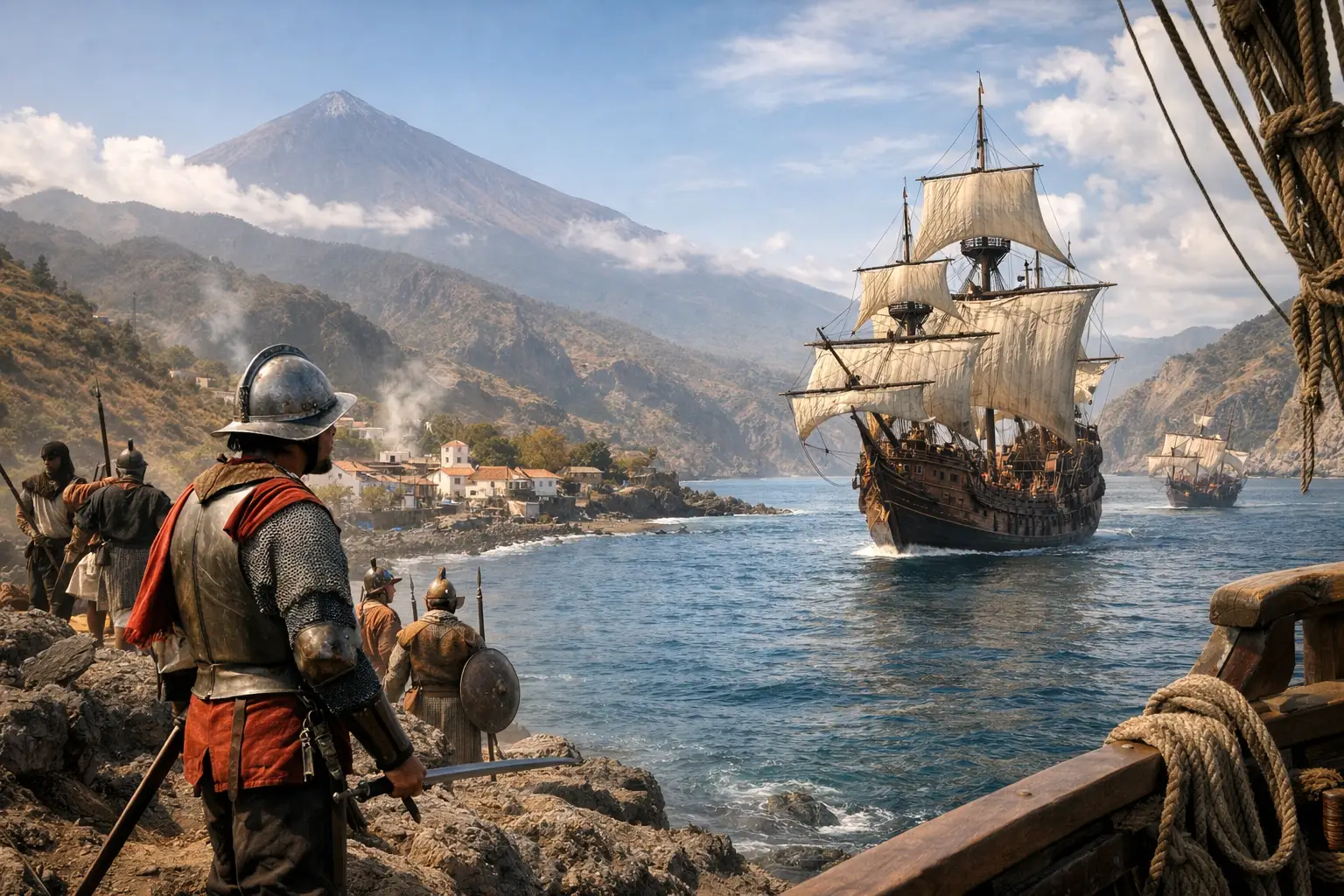
Before Castile completed its conquest of Tenerife, the island was home to the Guanches, the indigenous inhabitants of Tenerife. The island was divided into nine political territories known as menceyatos, each governed by a ruler called a mencey.
Guanche society had developed over many centuries and was closely adapted to Tenerife's geography. Communities occupied fertile valleys, upland pastures and coastal areas, while the island's mountains, ravines and changing climate influenced patterns of settlement and land use.
By the late 15th century, Castile had already established control over several other Canary Islands. Tenerife remained one of the most significant islands still outside Castilian rule. Its size, population, fragmented political structure and difficult terrain made conquest considerably more challenging than a simple military landing.
The story of Tenerife's incorporation into the Crown of Castile was therefore shaped by resistance, alliances and conflict. The island's geography, which visitors can still appreciate from the sea today, played an important role in the campaigns that followed.
The final Castilian campaign began in 1494 under Alonso Fernández de Lugo, who had previously taken part in the conquest of La Palma. His forces landed near Añaza, close to present-day Santa Cruz de Tenerife, establishing a foothold on the island's north-eastern coast.
The first campaign ended in a major Castilian defeat. At the First Battle of Acentejo in 1494, Guanche forces defeated de Lugo's army in northern Tenerife. The landscape worked in favour of local warriors familiar with the terrain, while the Castilian expedition also faced the practical difficulties of supplies, movement and maintaining a military force far from its main base.
De Lugo returned in 1495 with a stronger expedition and the support of allied Guanche kingdoms. Some menceyatos, particularly in the south and east of the island, had entered into alliances with the Castilians, while others continued to resist.
Disease also had a devastating impact on parts of the indigenous population during this period, further weakening Tenerife's ability to resist the renewed campaign. The exact nature of the epidemic traditionally referred to as modorra guanche remains uncertain.
The renewed Castilian campaign led to decisive victories at the Battle of Aguere in 1495 and the Second Battle of Acentejo later the same year. By 1496, Tenerife had come under Castilian control, completing the conquest of the main Canary Islands.
The conquest transformed Tenerife far beyond its political status. Land was redistributed, new settlements developed and Christianity was imposed as part of the new colonial order. Many Guanche people were killed during the conflict, while others were enslaved or gradually incorporated into colonial society.
For this reason, the history should not be reduced to a story of exploration and strategic expansion. Tenerife's integration into the Castilian world came through warfare and profound social change whose consequences shaped the island for centuries.
The sea was essential to the conquest. Castilian expeditions depended on vessels capable of transporting soldiers, horses, weapons, food and other supplies between the Canary Islands and the Iberian world.
Landing on Tenerife was only the beginning of the challenge. There were no modern ports capable of supporting large-scale military operations, and the movement of people and supplies depended on weather, sea conditions and suitable landing points.
Once Castilian control had been established, the coastline took on a new economic importance. Ships brought settlers, manufactured goods and supplies, while Tenerife increasingly exported agricultural products to external markets. Ports and anchorages developed according to commercial needs and the practical realities of Atlantic navigation.
Tenerife occupied an advantageous position in the Atlantic. Located off the north-west coast of Africa and south-west of the Iberian Peninsula, the Canary Islands lay close to wind systems that influenced navigation between Europe, Africa and the Americas.
The northeast trade winds were particularly important for ships travelling south towards the Canary Islands and then west across the Atlantic. From the Canaries, vessels could take advantage of favourable winds and currents for voyages towards the Caribbean and the Americas.
The return journey followed a different pattern. Ships generally had to move north-west into the Atlantic to reach more favourable winds before turning east towards Europe. Navigation was therefore based on an understanding of seasonal conditions, prevailing winds and the capabilities of individual vessels.
The Canary Islands did not function as a single, fixed point on one perfectly defined route. Different ships followed different courses depending on their destination, cargo, season and political circumstances. Nevertheless, the islands became an important place to take on water, food, supplies and, where necessary, make repairs before longer Atlantic crossings.
| Maritime Route | Direction | Importance for Tenerife |
|---|---|---|
| Southbound Atlantic route | Iberia to the Canary Islands | Connected Tenerife with Castile and wider European trade networks. |
| Westbound transatlantic route | Canary Islands towards the Americas | Benefited from Atlantic wind systems and helped establish the Canaries as a strategic staging point. |
| Return route to Europe | Americas via the North Atlantic | Required navigators to seek more favourable winds before turning east towards Europe. |
| Inter-island routes | Between Tenerife and neighbouring islands | Supported trade, administration, migration and the movement of agricultural goods. |
After the conquest, Tenerife became increasingly connected to commercial networks through agriculture and maritime trade. Sugar was one of the most important products of the early colonial economy. Processing facilities and plantations developed in areas where water and land conditions allowed cultivation.
Wine later became one of Tenerife's best-known exports. Canarian Malvasía gained particular importance in overseas markets, with wine shipped to destinations in Europe and across the Atlantic.
These exports depended entirely on maritime transport. Ships leaving Tenerife carried agricultural products to foreign markets, while vessels arriving at the island brought manufactured goods, migrants and new cultural influences.
The sea was therefore more than a geographical boundary. It became the main system through which Tenerife was integrated into an expanding Atlantic economy.
For merchants, maritime routes opened access to distant markets. For sailors, however, Atlantic travel remained unpredictable. Ships could be delayed by poor winds, damaged by storms or threatened by privateers and piracy.
Ports and anchorages were important not only for trade but also for preparation and refuge. Ships needed water, provisions and opportunities to repair vessels before continuing longer journeys.
This balance between opportunity and uncertainty defined Tenerife's relationship with the Atlantic. The island occupied a strategically valuable position, but every voyage still depended on the changing conditions of the sea.
Modern visitors experience Tenerife's waters in very different circumstances. Contemporary yachts, experienced crews and modern navigation have transformed a journey along the coast into a comfortable part of a holiday rather than a struggle for survival, trade or military advantage.
Yet the geography remains the same. From the water, Tenerife's volcanic coastline, high ridges and changing sea conditions are easier to appreciate. The Atlantic still shapes the experience, from the wind and currents to the movement of vessels along the coast.
The waters around Costa Adeje and Los Cristianos are also known for marine life, with pilot whales and dolphins regularly seen offshore. A modern cruise allows visitors to experience these waters at a much slower pace, with time to relax, swim when conditions allow and view Tenerife from the same Atlantic perspective that shaped its history.
There is an obvious contrast between the two experiences. Early maritime routes were driven by conquest, migration and commerce. A modern private yacht charter is designed around comfort, leisure and the freedom to enjoy the coastline.
The history of Tenerife's conquest should never be treated simply as a picturesque background to a day at sea. It involved resistance, violence and the destruction and transformation of an indigenous society.
At the same time, the events of the late 15th century changed Tenerife's relationship with the Atlantic. The island became more closely connected to Castile and later to the wider commercial networks linking Europe, Africa and the Americas.
Viewing Tenerife from the water offers a useful sense of that geography. The coastline, the prevailing winds and the Atlantic horizon are not simply part of the scenery. For centuries, they influenced how people arrived, traded, fought and travelled across the ocean.
Today, a cruise offers a far more peaceful way to experience that same maritime landscape. With a professional crew and time to enjoy the coast at an unhurried pace, the Atlantic becomes part of the experience rather than an obstacle to overcome.
The Guanches were the indigenous inhabitants of Tenerife before the Castilian conquest. The island was divided into nine kingdoms, known as menceyatos, each ruled by a mencey. Guanche society developed its own customs, belief systems and ways of using Tenerife's land and natural resources.
The final Castilian campaign began in 1494 under Alonso Fernández de Lugo. After the Castilian defeat at the First Battle of Acentejo, de Lugo returned in 1495 with stronger forces and local allies. By 1496, Tenerife had come under Castilian control.
Tenerife's position in the Atlantic, close to the northeast trade winds, made the Canary Islands an important stopping point for ships travelling between Europe, Africa and the Americas. Vessels could take on provisions, water and other supplies before continuing longer voyages.
The conquest brought major political and social changes. Land ownership was reorganised, new settlements developed and Christianity was imposed. Many Guanche people were killed during the conflict, while others were enslaved or incorporated into the new colonial society.
Sugar was an important export during the early colonial period. Wine later became one of Tenerife's most significant products, with Canarian Malvasía exported to markets in Europe and across the Atlantic.
Yes. Viewing Tenerife from the Atlantic offers a different perspective on the island's geography, coastline and relationship with the sea. Modern cruises follow the same waters that for centuries connected Tenerife with neighbouring islands and the wider Atlantic world.