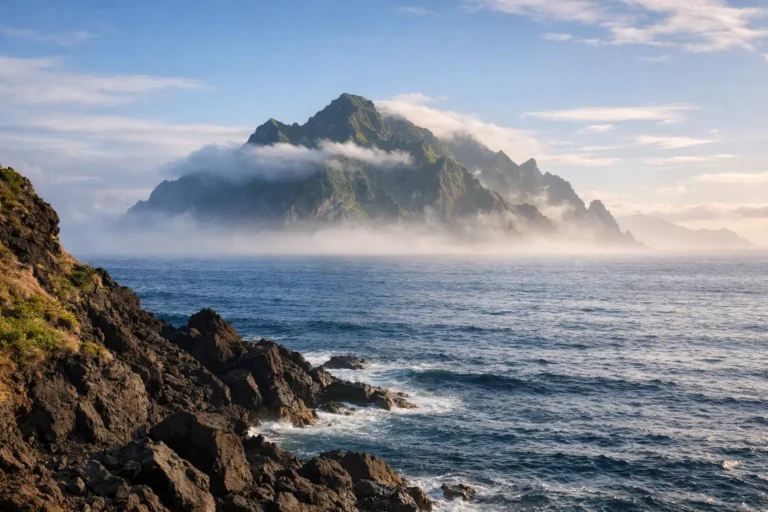
The south of Tenerife is often admired from the deck of a yacht for its golden Atlantic light, dramatic volcanic cliffs, and polished resort coastline. Yet, directly behind this modern paradise lies a much older world: the sacred geography of the indigenous Guanches and the tragic, poetic **legend of Amarca**. This landscape was sculpted not only by basaltic lava, ocean swells, and trade winds, but by centuries of spiritual memory, ancestral belief, and oral tradition.
For guests cruising along the southwest coast from Costa Adeje or Puerto Colón, gaining perspective on these ancient roots adds a quiet, sophisticated dimension of luxury to the journey. Beyond the busy marinas and beachfront villas lies an island whose ravines, hidden caves, and soaring volcanic summits were once revered as places of divine presence, power, and protection.
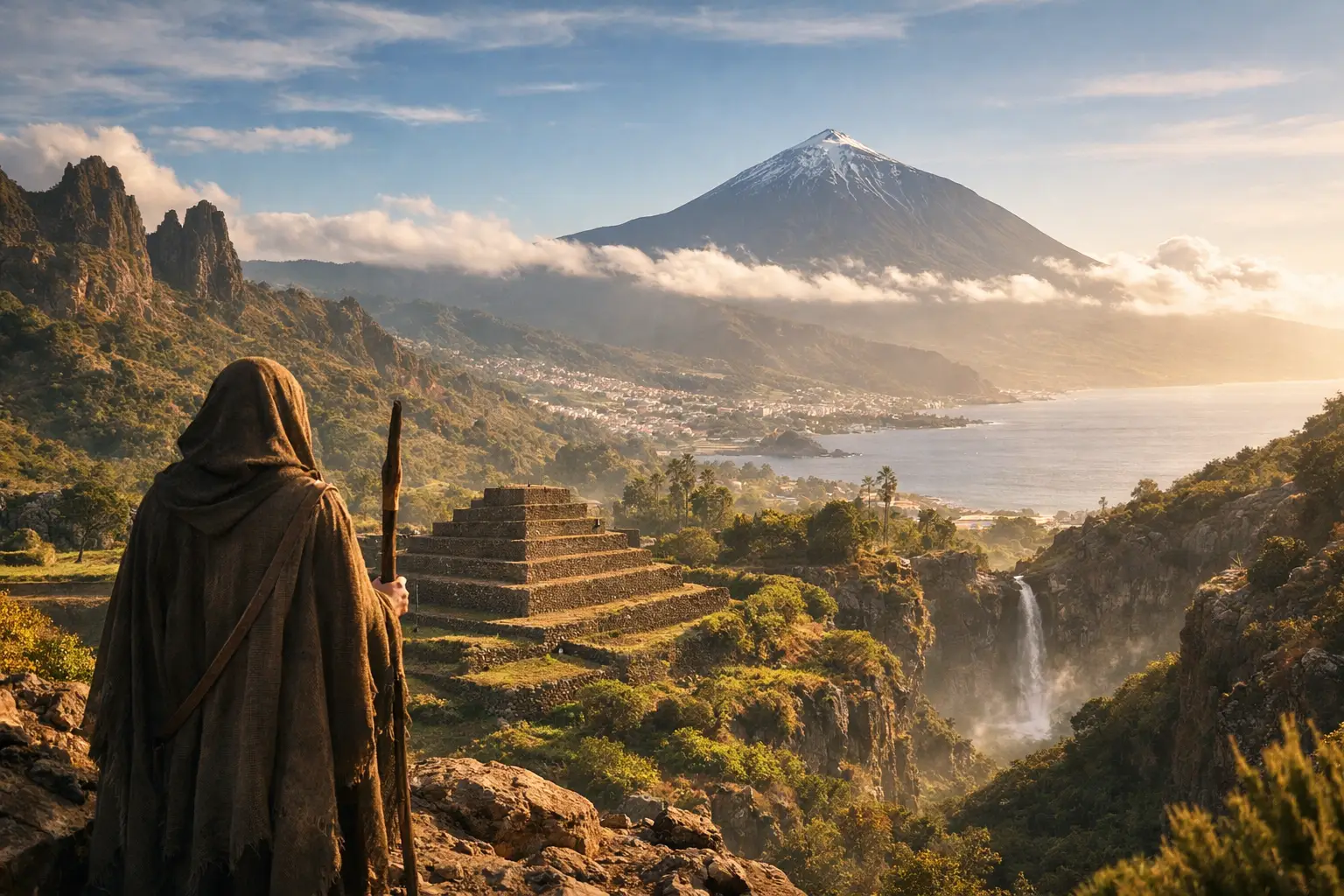
The tale of Amarca belongs to Tenerife's rich yet fragmentary body of aboriginal mythology. The Guanches, the North African Berber-descended inhabitants who populated the Canary Islands before the Castilian conquest in the 15th century, did not utilize a written script. Consequently, their spiritual narratives were passed down through oral storytelling, place names, and early Spanish historical records.
In local folklore, Amarca was a young Guanche woman of extraordinary beauty living in the southern region (associated with the ancient Menceyato de Abona or Icod). Courted by powerful leaders and humble shepherds alike, her story turns tragic when a young shepherd, consumed by unrequited love, fell to his death from the high cliffs. Overwhelmed by grief and public sorrow, Amarca walked into the deep waters or ravines of the south, vanishing into the landscape itself.
Rather than treating this story as literal history, it is best understood as a poetic expression of how the indigenous people viewed their environment: a living landscape where human emotion, destiny, and geographical features were inextricably intertwined.
Guanche spiritual life was deeply animistic, rooted entirely in the natural forces that governed survival on an isolated volcanic island. Living alongside active volcanoes, steep cliffs, scarce freshwater sources, and an unpredictable Atlantic ocean, their pantheon directly reflected their physical environment:
Caves held a profound sacred status across Tenerife. They served as royal residences for the local kings (menceyes), sacred burial places for mummified ancestors, and ceremonial spaces. The dark interior of the earth was revered as a threshold between the physical world and the ancestral spirit realm.
While south Tenerife is world-famous today for its sun-drenched beaches and luxury resorts, its interior terrain carries an ancient, solemn structure. Rising abruptly from the ocean, the land climbs through rugged terraces, volcanic cones, and deep gorges toward Teide National Park.
Deep ravines, or barrancos, are the primary geological features defining southern Tenerife. Carved by seasonal rainwater over millennia, these chasms served as vital corridors connecting the arid coastline to the fertile highland pastures.
The Barranco del Infierno in Adeje is one of the most prominent examples. Its dramatic depth, perennial water springs, and sheltered caves made it a strategic and sacred sanctuary for the Guanche rulers of the southern kingdom. For earlier communities, entering a ravine was a transition into a cool, protected world—providing precious fresh water in a dry region and shelter from coastal winds.
Many modern place names across south Tenerife—such as Adeje, Abona, Arona, and Guaímar—are direct linguistic survivals of the original Guanche language, preserving the indigenous map beneath modern tourism infrastructure.
Visible from almost any point along the south coast and from the deck of a vessel at sea, Mount Teide dominates the island's identity. At 3,715 meters, its snowy peak rising above the Atlantic was the ultimate physical and spiritual reference point for the Guanches.
In Guanche cosmology, Teide was the pillar holding up the heavens. Its violent eruptions were viewed as cosmic battles between Achamán and Guayota. For a modern traveller gazing back toward the land from a private yacht, the view of Teide rising above the coastal clouds invokes that same timeless sense of awe: an island forged by immense, uncontrollable natural forces.
For the Guanches, who lacked advanced metalworking and long-distance ocean navigation technology, the Atlantic Ocean was both a life-giving provider and an impassable boundary. They collected shellfish along the rock pools and fished close to shore, but the open ocean marked the edge of their known world.
Navigating these exact coastal waters today aboard a modern motor yacht offers a striking contrast. Where ancient inhabitants stood on volcanic rocks looking out at a mysterious sea, charter guests look back at the dramatic island contours from the safety of the water, appreciating the coastline through a lens of comfort and freedom.
Gaining an appreciation for Tenerife's older stories transforms how you experience a day on the water. As your yacht glides away from the marina and the modern buildings fade into the background, the true volcanic architecture of the island reveals itself.
You begin to notice the ancient lava flows spilling into the ocean, the deep shadows of the ravines, and the sheer scale of the southern slopes. A sunset private cruise along the south coast takes on a deeper, almost mystical quality as the golden hour light illuminates the same cliffs and summits that were revered centuries ago.
Approaching Tenerife's indigenous history requires respect and cultural mindfulness. Many Guanche archaeological sites, cave burials, and sacred rock engravings are delicate and strictly protected under Canarian heritage laws.
When exploring inland archaeological sites or hiking through historical reserves like Anaga or Teide, always remain on designated paths, leave artifacts undisturbed, and support official local museums, such as the MUNA (Museum of Nature and Archaeology) in Santa Cruz. Combining authentic cultural awareness with the luxury of a private charter allows you to experience Tenerife as a layered, deeply meaningful destination.
The Guanches were the aboriginal inhabitants of Tenerife before the Spanish conquest in the late 15th century. Originating from North African Berber tribes, they lived in distinct tribal kingdoms (menceyatos), practiced pastoral agriculture, and maintained a rich oral tradition closely tied to the island's volcanic terrain.
The legend of Amarca is a famous Canarian folk tale about a beautiful Guanche woman living in south Tenerife. Following the tragic death of a shepherd enamored with her, Amarca disappeared into the southern ravines or ocean. The story symbolizes the deep connection between human emotion and the island's rugged landscape.
The Guanches worshipped Achamán (the supreme sky god), Magec (the sun god), Chaxiraxi (the mother goddess), and feared Guayota (the malignant spirit associated with volcanic eruptions inside Teide).
Ravines were vital natural pathways connecting the dry southern coast to highland pastures. They provided freshwater springs, sheltered caves for living and burial, and served as natural territorial boundaries between Guanche kingdoms.
Yes. On clear days, Mount Teide provides a breathtaking backdrop for yacht charters departing from south Tenerife marinas like Puerto Colón. Its majestic peak rises above the coastal clouds, dominating the island's skyline.