A yacht can look perfectly still alongside a berth while the sea is quietly changing beneath it. Tides, changing water levels and the mechanics of pontoon mooring are part of what makes a smooth departure from Tenerife possible. Guests may barely notice these details, but they are an important part of good seamanship.
For guests joining a private charter, whale-watching cruise or sunset experience, these things should remain in the background. Experienced crews check the berth, mooring lines, weather and local conditions before every departure so that guests can concentrate on enjoying their time on the water.
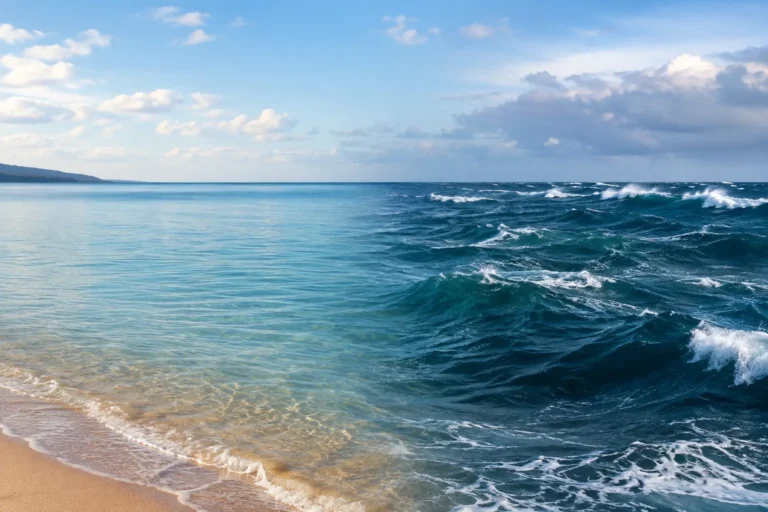
Tides around the Canary Islands are caused primarily by the gravitational effects of the moon and sun. In practical terms, Tenerife generally experiences two high tides and two low tides during a lunar day of approximately 24 hours and 50 minutes. Because the cycle does not match the 24-hour clock exactly, the timing of high and low water shifts from one day to the next.
This is why a marina can look noticeably different at different times of the day. A berth that is easy to access in one part of the morning may have a different gangway angle several hours later.
Tenerife does not experience the extreme tidal ranges found in places such as the Bristol Channel or some parts of northern France. The island is generally considered a moderate tidal environment, although changes in water level can still matter when dealing with marina infrastructure, gangway angles and clearance around a berth.
The largest differences between high and low water occur during spring tides. These happen around the new and full moons, when the gravitational effects of the sun and moon reinforce each other. Neap tides occur around the first and third quarter moons and produce smaller tidal differences.
For a yacht charter guest, there is no need to study a tide table before stepping aboard. The important point is that the crew understands how the day's tide interacts with wind, swell, water depth, the marina layout and the yacht's draught.
Water level is only one factor affecting conditions inside a marina. Wind can push water towards or away from a harbour entrance, while long-period Atlantic swell can create movement inside a marina even when the weather appears calm. Passing boats can also produce wakes that briefly move a pontoon or yacht.
This is why experienced crews consider the complete situation rather than relying on the tide alone. Wind direction, swell, boat traffic, berth position and the yacht itself all influence how a departure or arrival should be handled.
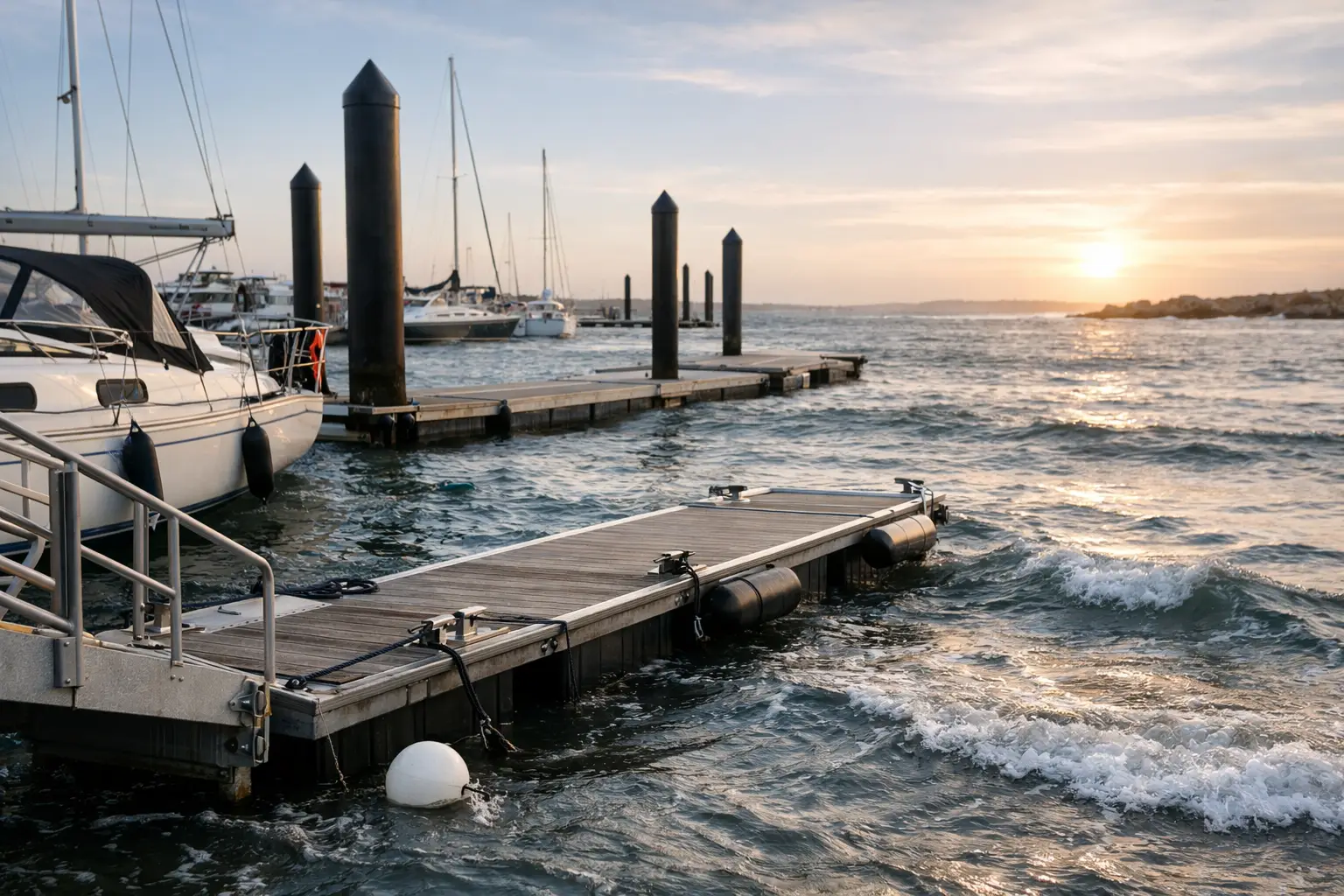
Tidal range is the vertical difference between high and low water. For most guests, its most noticeable effect is the angle of the gangway connecting the shore with a floating pontoon.
When the water level is lower, the gangway may become steeper. At higher water, it may sit at a flatter angle. The difference can be particularly noticeable for young children, older passengers or anyone carrying luggage or wearing loose footwear.
The floating pontoon itself rises and falls with the water. This is one of its main advantages: the yacht and pontoon move together, so their relative height remains much more consistent than it would with a fixed quay.
The connection between the pontoon and the shore still changes angle, however, and the pontoon can also move slightly because of wind, vessel wakes or harbour surge. Good crew management therefore remains important even in a sheltered marina.
For passengers with reduced mobility, it is worth mentioning this when arranging a charter. The crew can then consider the most appropriate boarding arrangement and provide assistance where needed.
A pontoon berth needs to keep a yacht securely in position while still allowing it to rise and fall naturally with the water. The basic principle is simple: mooring lines restrain unwanted horizontal movement without preventing normal vertical movement.
The exact setup varies between marinas and berths. A yacht may lie alongside a pontoon or between finger pontoons, with lines attached to cleats, fixed mooring points or other suitable structures.
Different lines have different jobs, and together they keep the yacht under control:
Mooring lines need to have enough freedom for ordinary movement without allowing the yacht to build excessive momentum against the pontoon. The appropriate setup depends on the yacht, berth, wind direction, expected boat traffic and local conditions.
As conditions change, the crew may adjust the lines or reposition fenders. These are small details that guests rarely notice, but they are part of maintaining a secure and comfortable berth.
Fenders are more than a simple buffer between the yacht and the dock. Their position and height need to correspond to the shape of the hull and the height of the pontoon's protective edge.
Correct placement helps prevent the yacht's hull from contacting hard surfaces as the vessel moves within the berth. It becomes particularly important when wind, passenger movement or passing boat wakes cause the yacht to shift slightly.
The same attention applies when leaving the marina. Before releasing the lines, the crew considers engine readiness, wind direction, nearby vessels, available clearance and the yacht's movement as it leaves the berth. In a confined marina, calm communication and controlled manoeuvring are essential.
For most guests, tides will not determine whether they can enjoy a Tenerife cruise. The island's mild climate and favourable cruising conditions allow yacht trips throughout much of the year.
What does change is the way the crew approaches the marina. A bright, calm morning can develop into a breezier afternoon, while conditions around a berth can differ from those experienced farther offshore.
Experienced crews adapt to these changes naturally. They may adjust the timing or speed of a manoeuvre, pay closer attention to boat traffic or choose a slightly different approach to the berth. Guests generally experience the result as something very simple: boarding and departure feel calm and unhurried.
At Royal Ocean, these practical details support the overall experience of spending time aboard a Princess 440 Flybridge. Once safely away from the marina, guests can settle in, enjoy the coastline and look out towards the Atlantic for pilot whales and dolphins.
There are only a few things guests need to think about before arriving at the marina.
These details are rarely what guests remember about a yacht charter. They should not be. Their value is that they allow everything else to feel easy.
While the tide continues to rise and fall beneath the pontoon, the yacht remains secure, the gangway is prepared and the crew handles the practical side of the departure. Guests are then free to step aboard, settle in and enjoy Tenerife from the water.
Tides around the Canary Islands are caused primarily by the gravitational effects of the moon and sun. Tenerife generally experiences two high tides and two low tides during a lunar day, with the exact timing shifting from day to day. The island has a moderate tidal environment compared with regions known for extreme tidal ranges.
Spring tides occur around the new and full moons and produce the largest difference between high and low water. Neap tides occur around the first and third quarter moons and produce a smaller tidal range. Despite the name, spring tides have nothing to do with the season.
Changes in water level can affect the angle of a marina gangway. A floating pontoon rises and falls with the water, keeping its height relative to the yacht more consistent, although the gangway connecting it to the shore may become steeper or flatter.
Bow and stern lines help control the yacht's position within the berth, while spring lines reduce fore-and-aft movement. Fenders protect the hull from contact with the pontoon. The crew may adjust the setup as wind, water level and boat traffic change.
Secure shoes with a firm, non-slip sole are preferable to loose flip-flops when crossing a marina gangway or walking on a wet deck. A light jacket or windbreaker can also be useful later in the day when the Atlantic breeze becomes cooler.