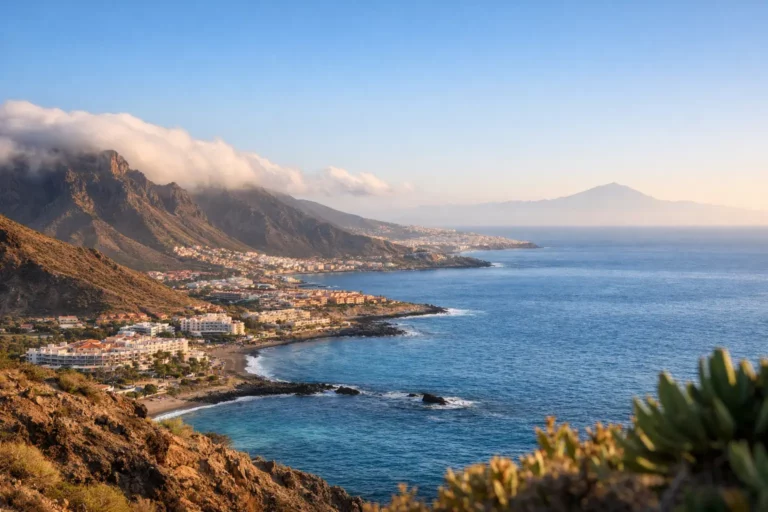
A sea view from the promenade can be deceptive. From Costa Adeje or Los Cristianos, the water may appear glossy, blue and almost motionless, yet a few miles beyond the harbour a yacht can meet a lively, rolling surface.
This contrast is not usually a sign that anything has suddenly gone wrong. It is the result of wind, swell, coastline, depth and perspective working together. In Tenerife, these factors can change noticeably over a relatively short distance, which is why experienced crews assess conditions across the intended route rather than judging the day by the view from land alone.

The coast provides a degree of natural shelter. Headlands, cliffs and the shape of the island can block or soften winds close to shore, particularly along the south and west of Tenerife. Water inside a marina, bay or sheltered section of coastline therefore has less space for waves to develop and may look exceptionally calm.
Further offshore, that protection fades. Wind travels over a wider, uninterrupted stretch of water, known as fetch. The longer the wind blows across open water, the more energy it can transfer into the sea, increasing the size and steepness of wind-driven waves.
A gentle breeze on land can therefore feel considerably more noticeable once a yacht clears the harbour, particularly when the wind has been blowing steadily for several hours.
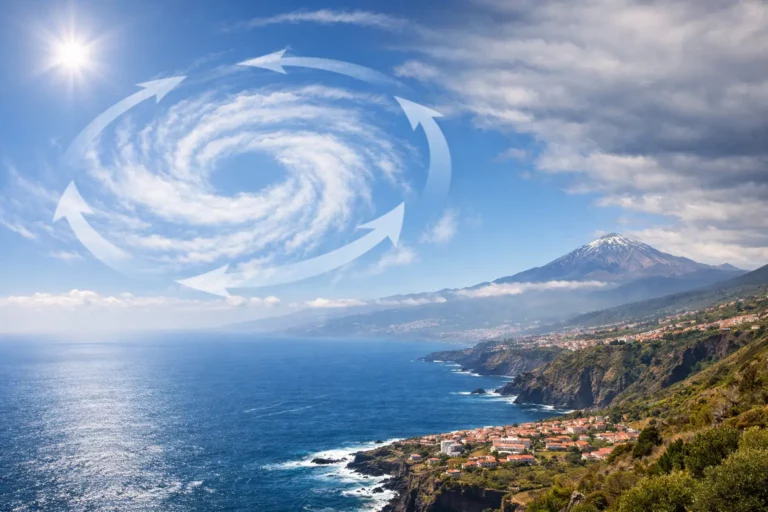
Swell is different from the short, irregular waves created by local wind. It can be generated by distant weather systems and travel across large areas of ocean before reaching Tenerife.
That means a yacht can encounter a regular rise and fall offshore even when the sky is blue and the wind near the coast is light. The beach may still look peaceful because the swell is difficult to see from a distance.
The character of the swell also matters. Long, widely spaced waves can create a slow, predictable movement, while shorter and steeper wind chop can make a boat feel much busier even when the waves are smaller.
From shore, the horizon tends to flatten detail. Small waves are difficult to distinguish at a distance, and their height can be easy to underestimate. Sunlight reflecting from the surface can make this even more pronounced, creating a bright shimmer that hides the texture of the water.
On board, the perspective is completely different. Guests are much closer to the water and can see each line of swell as the yacht moves through it. A sea that looked almost flat from a hotel terrace may therefore seem much more active once you are actually on the water.
This does not automatically mean uncomfortable conditions. A long, regular swell can produce a relatively smooth movement, while confused chop arriving from several directions can feel much more noticeable.
The direction from which waves approach the yacht also affects how the movement feels.
Waves coming from ahead are met directly by the bow and can create a more pronounced up-and-down movement. When the yacht travels with the swell, the motion can feel different. Waves arriving from the side may produce more rolling.
An experienced skipper can take these differences into account when choosing a route, adjusting speed and positioning the yacht. The aim is not to eliminate every movement of the sea, which is impossible, but to find the most comfortable approach that conditions allow.
Tenerife is not surrounded by one uniform sea state. Its varied coastline, high terrain and prevailing winds create noticeable local differences. South Tenerife is often favourable for boating because some areas can benefit from shelter when conditions are more exposed elsewhere, but the actual sea state still depends on wind, swell direction, season and time of day.
The trade winds common to the Canary Islands can become more noticeable offshore even when resort areas feel warm and relatively still. Local winds can also strengthen as the day progresses.
Swell direction matters too. A northerly or north-easterly swell can affect exposed sections of coastline differently from sheltered departure points. Currents can further influence the surface, particularly where wind, swell and current interact from different directions.
This is why a general weather forecast is only part of the picture. Local knowledge helps a skipper understand how particular conditions behave around harbour entrances, headlands and different sections of the coast.
Perfectly flat water is appealing, but comfort depends on more than wave height alone. A light, regular swell may be quite pleasant for cruising, swimming or wildlife watching, while a smaller but confused chop can make the yacht move in several directions at once.
The vessel itself also makes a difference. Hull design, size, weight, seating and the way the yacht is operated all influence how passengers experience the sea. On a private whale and relaxation cruise, the skipper can also adapt the route and pace to the conditions rather than following a rigid itinerary.
A comfortable day at sea begins before guests step aboard. The skipper considers marine forecasts, wind strength and direction, swell height and period, visibility, currents, port conditions and how the weather is expected to develop during the cruise.
The plan can then be adapted to the actual conditions. That may mean choosing a more protected section of coast, changing the order of the itinerary, selecting a different place for a swimming stop or reducing speed when the sea becomes more active.
On some days, postponing or cancelling a trip may be the safest decision if conditions do not meet the operator's standards. This is an important part of responsible seamanship: the sea does not follow a fixed schedule, and a professional crew has to respond to what is actually happening on the water.
The same flexibility is important during whale and dolphin watching. Wildlife encounters are never guaranteed, and there is no single route that works in every sea state. A responsible skipper balances the search for marine life with the conditions, the time available and the wellbeing of everyone on board.
When the sea looks completely calm from land, it is natural to expect an equally still ride. A more realistic expectation is that you are going out onto the open Atlantic, where some movement is normal and conditions can change after leaving the shelter of the coast.
That does not mean a yacht trip will be rough. Many days offer very comfortable cruising conditions. It simply means that the appearance of the water from the promenade is not a reliable indication of what the sea will feel like several miles offshore.
If you are particularly sensitive to motion, tell the crew when booking. They can take your concerns into account when planning the outing. A shared whale-watching trip or a private charter can both be affected by sea conditions, so flexibility is more important than promising a particular type of water in advance.
Even on a warm Tenerife day, conditions offshore can feel cooler because of wind and the movement of the yacht. A light extra layer can therefore be useful, especially on a longer cruise or a sunset trip.
For a more comfortable experience:
For guests who are especially sensitive to motion, the timing of the trip can also matter. If the forecast indicates that winds are likely to increase later in the day, a morning departure may offer different conditions. The forecast on the actual day should always take priority over a general rule about the best time to go.
The sea can look almost motionless from a beach or hotel terrace and still have a noticeable swell beyond the coast. Wind, fetch, distant weather systems, coastline, currents and the direction of travel all contribute to what a yacht actually experiences.
Once you understand this, the difference between the view from shore and the conditions offshore becomes much easier to explain. It is simply the result of a dynamic ocean interacting with Tenerife's unusually varied coastline.
And that is part of the appeal of going out to sea: the landscape changes, the perspective opens up and the coastline looks completely different from the water.
The coast can provide natural shelter from wind and waves. Further offshore, that protection decreases and wind has a larger open-water surface over which to transfer energy to the sea. Distant swell can also reach offshore areas while the water close to the beach still looks calm.
Swell is a series of waves generated by weather systems, often far from the place where the waves are eventually observed. It can arrive under clear skies and light local wind, producing a regular rise and fall offshore.
Trade winds can become stronger as the day progresses, so afternoons can sometimes be livelier offshore. However, conditions vary from day to day. The actual marine forecast is more useful than assuming that every afternoon will be rougher.
Eat lightly before departure, stay hydrated, get some fresh air and look towards the horizon if you begin to feel unwell. If you regularly experience motion sickness, ask a pharmacist about suitable remedies before travelling and tell the crew about your concerns.
Yes. If conditions do not meet the operator's safety standards, postponing or cancelling a trip can be the appropriate decision. Weather and sea conditions can change, so the final decision should be based on the actual forecast and conditions on the day.