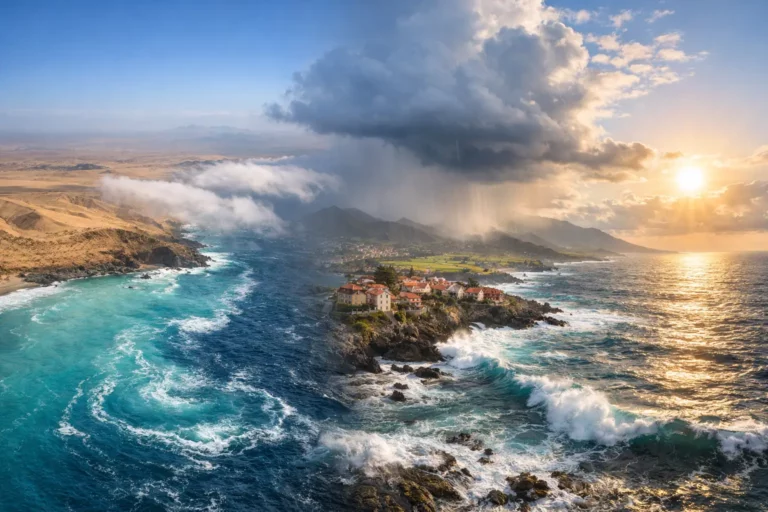
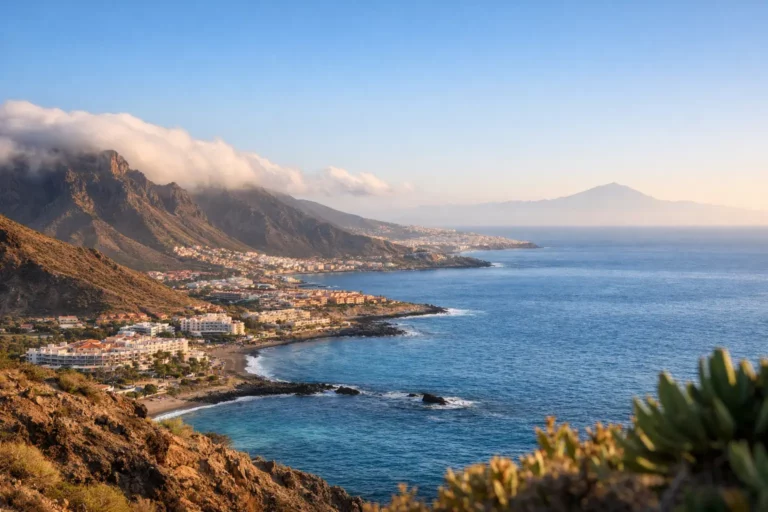
A morning at sea in south Tenerife can begin beneath a soft, silvery bank of coastal mist and resolve within minutes into an astonishingly clear horizon where the neighboring island of La Gomera appears to float on the Atlantic. The scientific explanation behind why Tenerife possesses some of the clearest skies on Earth lies in a fascinating meteorological phenomenon: the atmospheric inversion layer, combined with steady trade winds, high volcanic topography, and exceptionally dry air above the cloud deck.
For discerning travellers, this is far more than an abstract weather detail. It explains why a private yacht charter along the south-west coast offers such razor-sharp views of the coastline, why the mountain slopes above the resorts bathe in perpetual sunshine, and why Mount Teide is celebrated globally as one of the finest astronomical locations in the Northern Hemisphere.
Under normal meteorological conditions, air temperature decreases steadily with altitude. An atmospheric inversion reverses this standard profile. In the Canary Islands, a layer of warm, dry continental air sinks and settles above a layer of cooler, humid ocean air brought in by the sea surface currents. That warm upper layer acts like a physical lid, preventing the moist lower air from rising freely into the upper atmosphere.
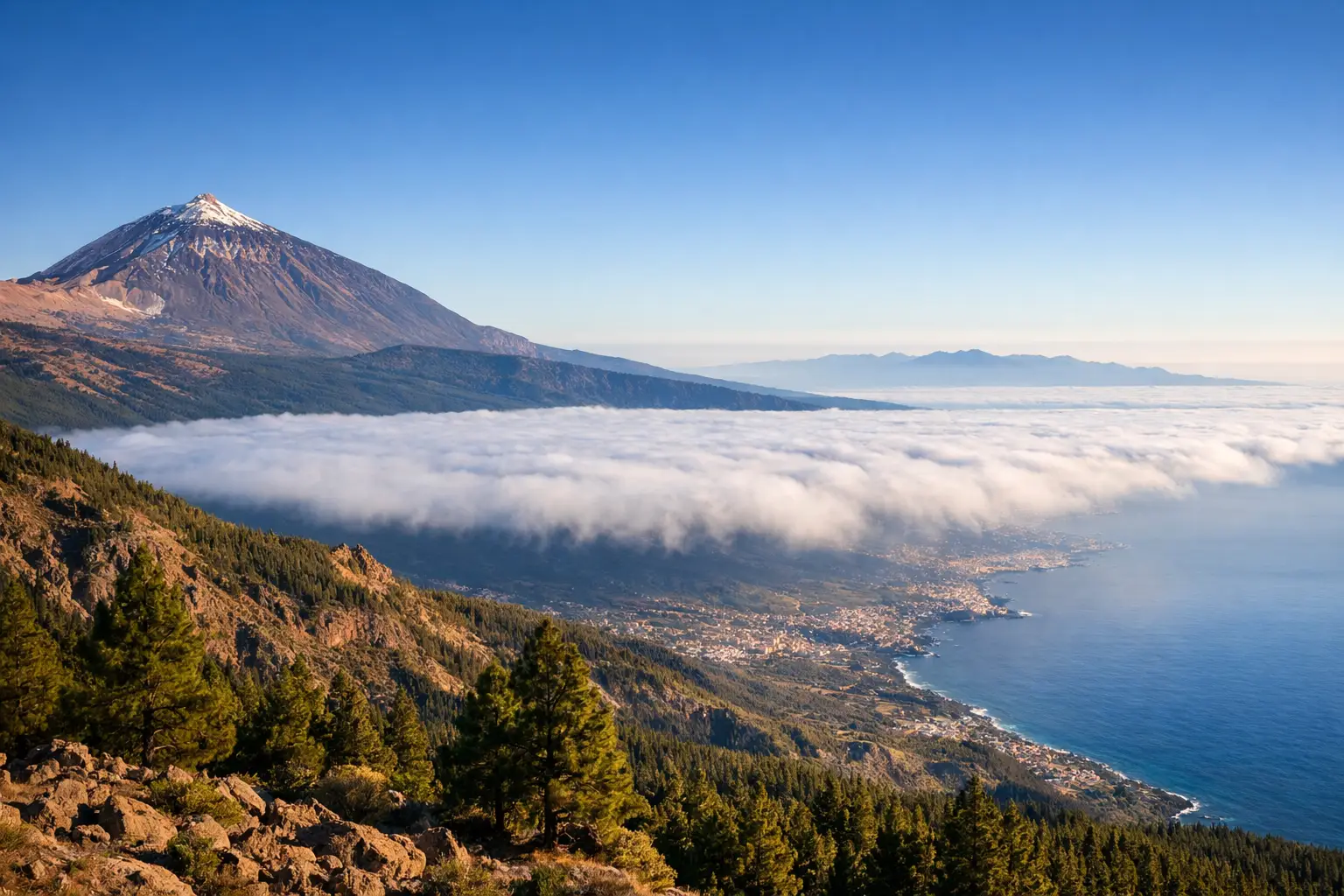
This inversion is continuously generated and maintained by the interaction between the **Azores High** (a persistent high-pressure system) and the northeast trade winds. As the ocean-borne air reaches Tenerife, it collides with the island's steep volcanic slopes. Moisture condenses into clouds on the windward northern slopes, forming a dense, stunning sea of fog known locally as the mar de nubes (sea of clouds), usually capped between 800 and 1,800 meters elevation.
Above this cloud ceiling, the atmosphere becomes intensely dry, calm, and clear. While the northern pine forests may sit under a cool, misty blanket, the highlands of Teide National Park rise into brilliant, unfiltered sunshine—a striking contrast that defines the island's unique atmosphere.
Tenerife does not possess a single uniform weather pattern. Its dramatic vertical relief creates dozens of distinct microclimates, making geographical awareness essential when planning time on the water or exploring the interior.
The south-west coastline—stretching through Costa Adeje, Playa de las Américas, and Los Cristianos—is completely sheltered by the 3,715-meter barrier of Mount Teide. This topographic shield blocks the moisture-laden trade winds, ensuring the south remains warm, dry, and sunny for over 300 days a year, even when the north experiences heavy cloud cover.
From the deck of a yacht, guests can often look inland and see the dramatic mar de nubes clinging to the mid-altitude mountain ridges while the ocean itself remains bathed in golden sunlight. This atmospheric separation adds a breathtaking visual backdrop to a day on the water, contrasting blue ocean horizons with white, billowy cloud formations along the volcanic peaks.
Towering at 3,715 meters above sea level, Mount Teide is Spain's highest peak and the dominant architect of the island's weather. By forcing incoming ocean air upward, it acts as a massive natural separator of atmospheric layers.
Observing the sky from an island above the inversion layer means looking through a significantly thinner column of atmosphere. Because water vapor, marine aerosols, and low-altitude humidity are trapped beneath the cloud deck, the air above is virtually free from atmospheric distortion. Light travels through this dry, stable air with minimal scattering.
Furthermore, because Tenerife sits isolated in the middle of the Atlantic Ocean, far removed from continental industrial pollution, its air purity is unmatched. Combined with strict light-pollution protection laws across the high plateau, the **Teide Observatory** (operated by the Instituto de Astrofísica de Canarias) stands alongside Hawaii and Chile as one of the three premier locations on Earth for astronomical research.
While the cloud sea is most dramatic when viewed from the mountain summits looking down, the atmospheric inversion layer directly elevates the experience of a coastal cruise. The low humidity at sea level during inversion events results in extraordinary horizontal visibility, making distant islands like La Gomera, La Palma, and El Hierro appear astonishingly sharp on the horizon.
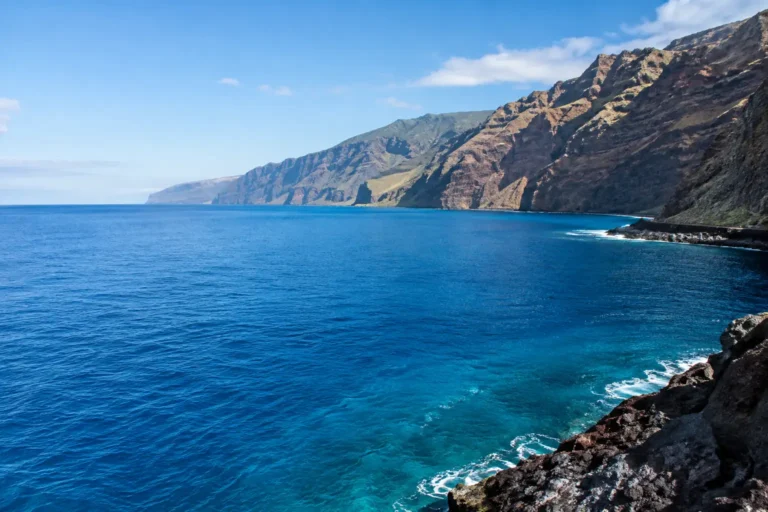
For guests aboard a private yacht charter or an exclusive marine wildlife excursion, this optical clarity brings out the rich, vibrant colors of the Atlantic. The volcanic cliffs of Los Gigantes reveal intricate geological strata, the sea takes on a deep cobalt sheen, and spotting pilot whales or dolphins surfacing in the distance becomes far easier under the crisp light.
At Royal Ocean, our experienced captains continuously evaluate these atmospheric dynamics. By understanding local wind shadows and visibility windows, we curate routes that maximize sunshine, smooth sea states, and breathtaking coastal panoramas, ensuring your time at sea feels completely effortless.
The northeast trade winds act as Tenerife's natural climate regulator. They prevent summer temperatures from reaching oppressive extremes, fuel the cloud inversion, and maintain optimal ocean circulation. In summer, the inversion layer tends to be lower and more stable; in winter, it can fluctuate, bringing crisp, cool days with exceptional air clarity.
The primary exception to this atmospheric clarity is the Calima—a weather event where easterly winds transport fine Saharan dust across the Atlantic. During a Calima, the dust layer creates a warm, golden haze, temporarily muting the horizon and raising temperatures. These events are temporary, typically clearing within a few days to reveal crystal-clear skies once again.
To experience Tenerife's sky at its most spectacular, timing and location are key:
Whether you are admiring Mount Teide's towering silhouette from the flybridge of a luxury yacht or standing high above the clouds looking down at the Atlantic, Tenerife's unique atmospheric inversion layer creates a natural spectacle found almost nowhere else in Europe.
An atmospheric inversion occurs when a layer of warm air sits above a layer of cooler, moist air near the surface. In Tenerife, this acts like a thermal lid, trapping marine clouds below 1,800 meters and leaving the higher volcanic peaks under clear, dry, sunny skies.
Tenerife's high elevation places the Teide National Park above the atmospheric inversion layer. At this altitude, the air is exceptionally dry, stable, and free from light pollution and cloud cover, providing pristine conditions for astronomical observation.
The south-west coast—including Costa Adeje, Los Cristianos, and Puerto Colón—is the sunniest region. Protected by the massive volcanic landmass of Mount Teide, it remains sheltered from the rain and trade-wind clouds that affect the northern coast.
The mar de nubes is a natural phenomenon caused by trade winds pushing marine moisture against the northern slopes of Tenerife. Trapped beneath the inversion layer, the clouds condense into a flat, fluffy "sea" that can be viewed from above when driving up toward Teide.
Yes, positively. The high-pressure systems that maintain the inversion layer typically bring stable weather, exceptionally clear horizontal visibility, and calm sea conditions along the sheltered south-west coast.