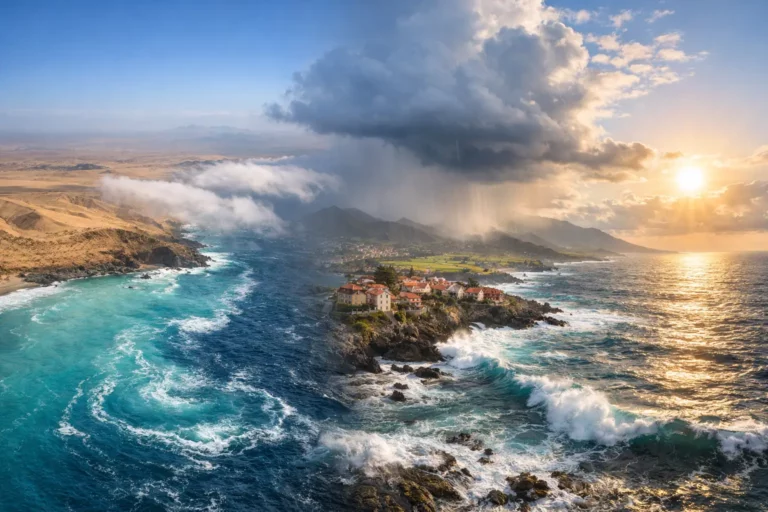
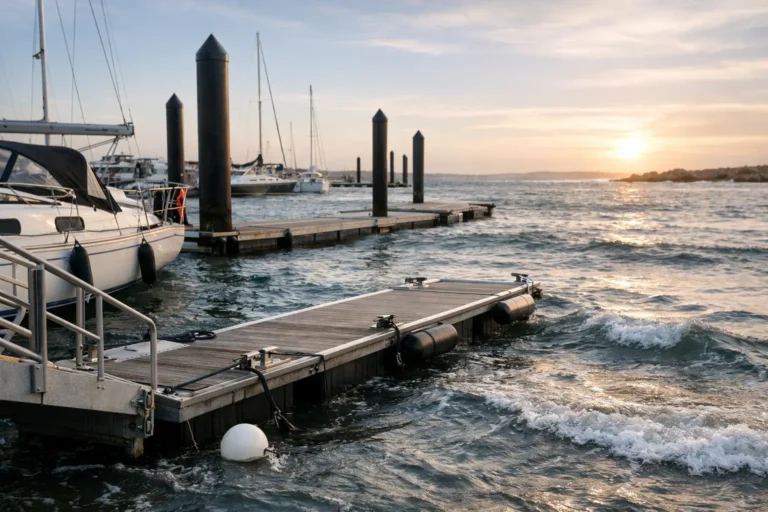
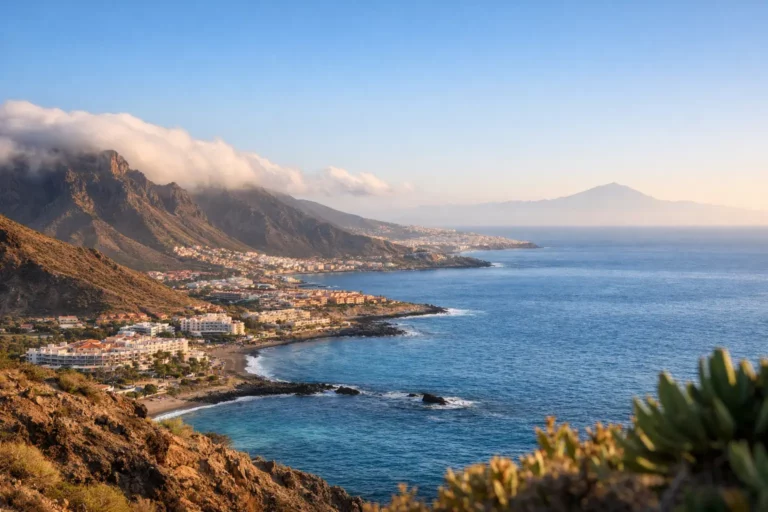
From a yacht off Tenerife's south-west coast, the reason becomes surprisingly easy to appreciate. The coastline remains clearly visible while the seabed falls away beneath you. Tenerife has deep water close to shore because the island is volcanic, with steep underwater slopes that descend directly into the Atlantic.
Unlike many continental coastlines, Tenerife does not gradually extend into a broad, shallow shelf. The island rises from the ocean floor as part of the Canary Islands' volcanic chain, and much of its underwater structure continues down towards deep Atlantic water.
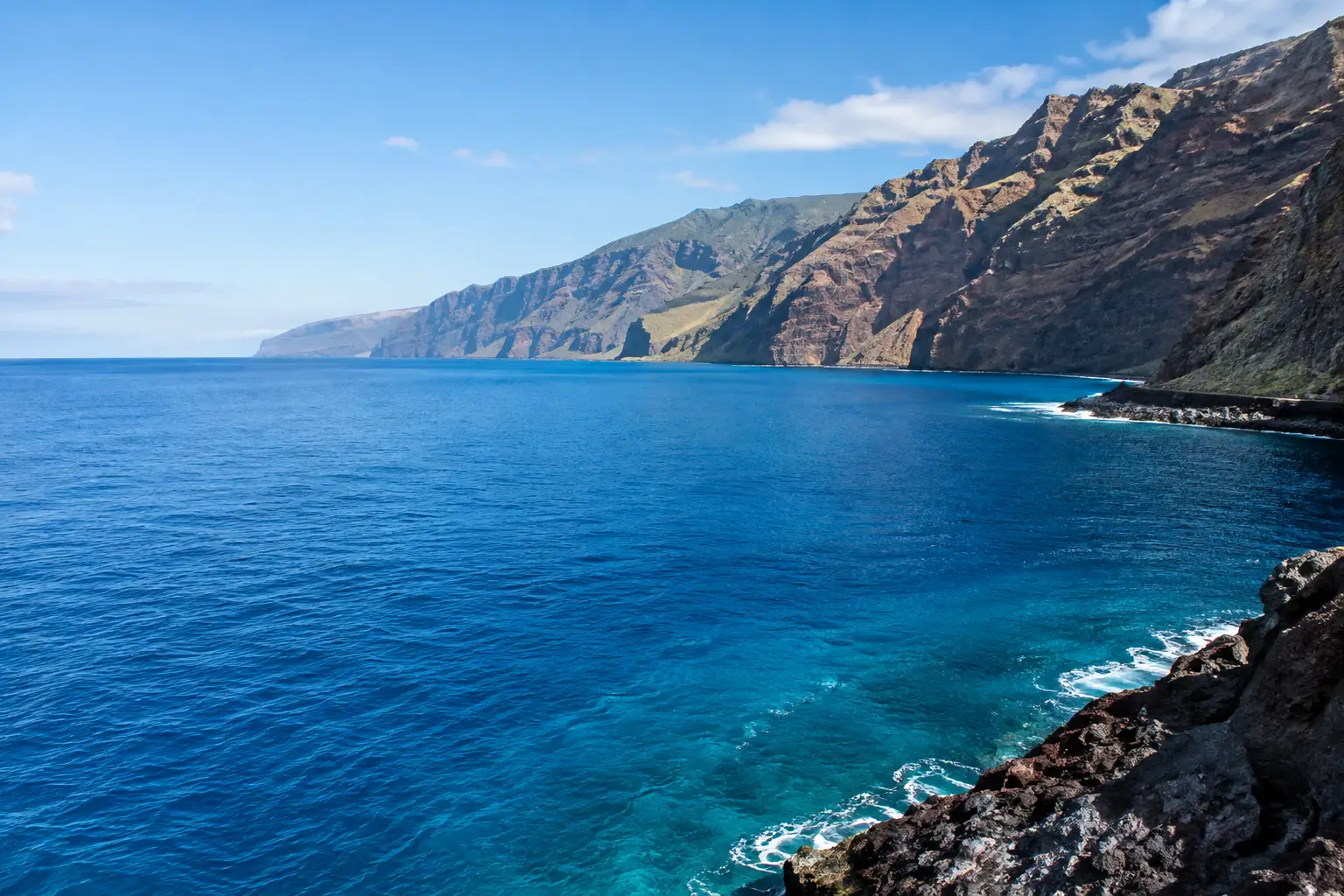
Tenerife was built by volcanic activity over millions of years. Repeated eruptions deposited enormous quantities of lava on the ocean floor, gradually forming the island we see today.
But the visible mountains, ravines and cliffs are only the part of this volcanic structure that rises above sea level. Beneath the surface, the island's flanks continue into the Atlantic, often descending steeply rather than spreading out across a wide continental shelf.
This is why the sea can look shallow and inviting close to a beach while becoming dramatically deeper farther offshore. The exact depth varies around the island: harbours, beaches and sheltered coves have their own seabed profiles, while other stretches of coast descend much more rapidly.
The Canary Islands formed on oceanic crust rather than as an extension of a large continental landmass. Tenerife's underwater terrain has been shaped by volcanic eruptions, lava flows, volcanic ridges, erosion, sediment and large geological changes over time.
The result is a very different underwater landscape from the broad, gently shelving coastlines found in many continental areas. The slopes around Tenerife continue down into the Atlantic, creating considerable depth relatively close to land.
You can sometimes notice this change without seeing a depth chart. Near a beach or shallow cove, sunlight can reach the seabed and the water may appear turquoise. Farther offshore, deeper water absorbs more light and takes on a much darker blue.
From a yacht, this creates an unusual sense of scale. You can look back towards Tenerife's steep volcanic coastline while travelling over water that is already considerably deeper than its calm surface might suggest.
The deep coastal waters around Tenerife are one of the reasons the island is well known for marine wildlife. The waters between Tenerife and La Gomera support resident short-finned pilot whales, while several dolphin species may also be encountered.
Depth alone does not attract whales. The important factor is the wider ecosystem created by depth, currents, water temperature and nutrient movement. Deep-water habitats support fish, squid and other prey, which can in turn support marine mammals.
The proximity of deep ocean habitat to the coast also has a practical consequence for whale watching. Boats do not necessarily need to spend hours travelling far offshore before reaching areas where deep-water species may be encountered.
That does not mean sightings are guaranteed. Whales and dolphins are wild animals, and their location and behaviour change with food availability, weather and sea conditions. A responsible crew adapts to those conditions rather than promising a particular encounter.
If you are interested in the wildlife side of Tenerife's underwater geography, our Private Whales & Relax Cruise combines whale and dolphin watching with time to enjoy the coastline and, when conditions allow, a swim stop.
Tenerife's south and south-west coasts combine relatively deep coastal waters with conditions that are often more sheltered than on the northern side of the island. The topography provides some protection from the prevailing north-easterly trade winds, although Atlantic conditions can still change.
This combination helps explain why the area around Costa Adeje, Los Cristianos and the south-west coast is such a popular starting point for boat trips. A yacht can leave the resort coastline behind and quickly enter a very different Atlantic environment.
On a clear day, the contrast is particularly striking. Tenerife's volcanic slopes rise behind you, La Gomera may be visible on the horizon, and the water changes from lighter coastal colours to deep Atlantic blue.
The scenery also changes with the time of day. In the late afternoon, the volcanic slopes can take on warmer tones while the low sun creates stronger contrasts across the coastline.
It might seem logical that deep water close to shore would make an ideal swimming environment. In practice, depth is only one factor when choosing a swim stop.
A captain also needs to consider wind direction, swell, currents, boat traffic, the shape of the coastline and the confidence of the people on board. A sheltered bay with shallower water may be a much better choice than an exposed area of deeper ocean.
This is particularly important for families, first-time boat guests and anyone who is not a confident swimmer. The best location is the one where everyone can enter and leave the water comfortably under the conditions of that particular day.
Tenerife has a mild climate, but it is still an Atlantic island. A sunny and calm morning on land does not guarantee identical conditions farther offshore, and wind and swell can vary between different parts of the coast.
That is why a professional skipper should have the flexibility to change the route or choose a different swimming location. Following the safest and most comfortable conditions is more important than sticking rigidly to a predetermined itinerary.
You do not need to see the seabed to understand what lies beneath you. Watch the coastline from the deck and notice how quickly the water changes from transparent shallows to deep blue. Look back at the steep volcanic profile of the island and remember that much of the same structure continues below the surface.
This geography affects more than the colour of the water. It helps create habitats for marine life, influences where deep-water species can be encountered and allows yacht trips to reach offshore environments without travelling vast distances from the island.
It also gives a yacht trip a distinctive sense of place. You are not simply travelling along the edge of an island; you are crossing the submerged slopes of a volcanic landscape that continues far below the Atlantic.
The most interesting part of this landscape is that you can experience it without any special equipment. From the deck of a yacht, the coastline, the water and the open Atlantic all become part of the same view.
A well-managed cruise can adapt to the conditions, allowing time for wildlife watching, coastal sightseeing and swimming when appropriate. The route may change according to the sea, but the underlying geography remains the same.
Next time you look towards Tenerife's sunlit coast from the water, remember that the steep slopes of the island do not end at the shoreline. Much of the volcanic landscape continues beneath you, disappearing into the deep Atlantic.
Tenerife is a volcanic island that rises from the ocean floor as part of the Canary Islands' volcanic chain. Its underwater flanks often descend steeply, unlike the broad, gently shelving continental shelves found along many mainland coasts.
Depth varies considerably around the island. Beaches, harbours and sheltered coves may have relatively shallow approaches, while other areas descend rapidly towards deep Atlantic water. The exact seabed profile depends on the location.
Yes. Deep-water habitat close to the coast means boats can reach areas suitable for encountering deep-water species without travelling long distances offshore. The waters around Tenerife support resident short-finned pilot whales and several dolphin species, although sightings are never guaranteed.
Swimming safety depends on much more than depth. Wind, swell, currents, boat traffic, the coastline and the confidence of swimmers all matter. A captain should choose a suitable location according to the conditions on the day.
Shallow coastal water can appear turquoise because sunlight reaches the seabed. Farther offshore, deeper water absorbs more light and appears darker blue. Tenerife's steep underwater terrain can make this transition particularly noticeable.