A black-rock shoreline, Atlantic spray and a pool of clear water that seems designed for an unhurried swim: Tenerife’s natural sea pools, how volcanic lava creates charcos, are one of the island’s most distinctive coastal experiences. They offer a quieter, more elemental alternative to a hotel pool, but they are not static attractions. Every charco is shaped by the sea, and the conditions on the day deserve as much attention as the view.
For guests staying in Costa Adeje, Los Cristianos or the south-west coast, a visit to a sea pool can add a wonderfully local note to a polished Tenerife itinerary. Set aside time, choose the conditions carefully and let the landscape set the pace.
Tenerife was built by volcanoes, layer by layer. When lava reached the coastline, it cooled rapidly on contact with the Atlantic. The result was not a smooth beach but a rugged platform of basalt, full of ledges, channels, cracks and low-walled hollows.
Over many years, waves enlarged some of these hollows and carved away weaker rock. A natural basin could then retain seawater as the tide moved in and out. That basin is a charco - the Spanish word commonly used in the Canary Islands for a natural pool or puddle, though in Tenerife it often refers to far more dramatic rock pools beside the ocean.
The most appealing charcos are protected enough to hold calm, translucent water while remaining connected to the sea. On a gentle day, fresh seawater circulates through gaps in the volcanic rock. The water may look still from the edge, yet it is part of the Atlantic system rather than an enclosed swimming pool.
That distinction matters. Charcos can change with the tide, the swell direction and the season. A pool that is serene in the morning can be exposed, choppy or unsafe later in the day. Their beauty lies in that living connection to the coast, but it also calls for sensible judgement.
No two lava pools are quite alike because the original lava flow, its cooling pattern and decades of wave action differ from one cove to the next. Some have broad, shallow shelves where children can paddle under close supervision. Others are deep, dark-edged basins where confident swimmers can float above volcanic contours and watch small fish move through the clear water.
Rock formations may also create arches, natural steps and channels that frame the sea beyond. In some locations, local authorities have added access ladders, rails or paved sunbathing areas. These improvements can make a site more comfortable, but they do not turn the Atlantic into a controlled environment. A natural or semi-natural pool still requires respect for the water.
The island’s northern coast is particularly rich in sea pools. It receives more Atlantic exposure and has some of Tenerife’s most striking basalt scenery, although the weather can be cooler and the sea more energetic than in the south.
El Caletón in Garachico is among the best-known examples. The pools sit below the old town, where lava from the 1706 eruption of Trevejo transformed the coastline. Here, black volcanic formations create a series of bathing areas with views out to open water. It is a memorable place to visit, especially when the sea is calm, but it can close or become unsuitable in rough conditions.
Bajamar and Punta del Hidalgo, farther north-east, are celebrated for their oceanfront bathing areas. Their pools combine volcanic surroundings with more formal access and facilities, making them practical for a relaxed coastal stop. They are often described alongside natural charcos, though parts have been shaped and maintained for public bathing. The setting remains unmistakably volcanic, with powerful Atlantic views and the Anaga mountains often rising behind the coast.
For a wilder atmosphere, seek out smaller pools around the north and north-west shore, where lava shelves meet quieter villages and banana-growing valleys. These places reward an early start and a flexible plan. Parking can be limited, surfaces uneven and access less obvious than at a conventional beach.
On the south-west coast, Charco de Isla Cangrejo near Los Gigantes is a popular choice for visitors based near the resorts. Its appeal is obvious: a dramatic volcanic shoreline beneath the famous cliffs. Yet this is also an area where swell can make conditions hazardous, so it is never a place to enter simply because others are doing so.
Tenerife uses several terms for coastal swimming spots, and they are worth understanding. A charco is generally a natural hollow in rock that fills with sea water. A piscina natural may be largely natural but adapted with walls, steps or protective features. A municipal seawater pool can be more extensively engineered, even if it sits directly beside the ocean.
For travellers, the distinction is less about labels than expectations. If you want the raw drama of basalt, tidal water and a true sense of place, choose a charco. If easy entry, handrails and a comfortable place to spend several hours matter more, a maintained natural pool may suit you better. Both can be beautiful, and the right choice depends on your confidence in the water, the people travelling with you and the day’s sea conditions.
The safest, most enjoyable charco visit starts before you leave your accommodation. Check local sea and weather conditions on the day, not just a sunny forecast. Wind and swell can affect exposed pools even when the air is warm and the sky is clear.
Low to mid tide often reveals the volcanic architecture most clearly, while a rising tide can refresh a pool with cleaner water. However, there is no universal ‘best tide’ for every location. At some pools, very low tide can leave little depth for swimming; at others, higher water brings stronger surges over the rocks. Local signage, lifeguard flags where provided and the behaviour of the water are more useful than a rule of thumb.
Avoid entering if waves are breaking over the pool walls, if the water is visibly surging through the channels, or if there is an official closure. Never turn your back on the ocean while standing on a lava platform. Wet basalt can be exceptionally slippery, and a single larger set of waves can arrive after a deceptively calm interval.
Good footwear makes a real difference. Reef shoes or sturdy water shoes protect feet from sharp rock and improve grip when entering and leaving the water. Bring drinking water, sun protection and a towel, but travel light enough to keep both hands free on uneven paths. Glass is a poor companion for volcanic rocks and should be left behind.
Charcos are at their best when treated as a pause rather than a challenge. Arrive early before the hottest part of the day, take time to watch the water and choose a place where everyone in your group feels comfortable. Families may prefer a maintained pool with clear access, while couples may enjoy finding a quieter viewpoint nearby and lingering over the changing colour of the sea.
Please leave the rocks exactly as you find them. Tide pools are small habitats as well as swimming spots, with algae, crabs, fish and other marine life adapted to a demanding shoreline. Do not remove stones or shells, feed wildlife or climb into areas protected by barriers. A little care helps preserve the character that makes these places special.
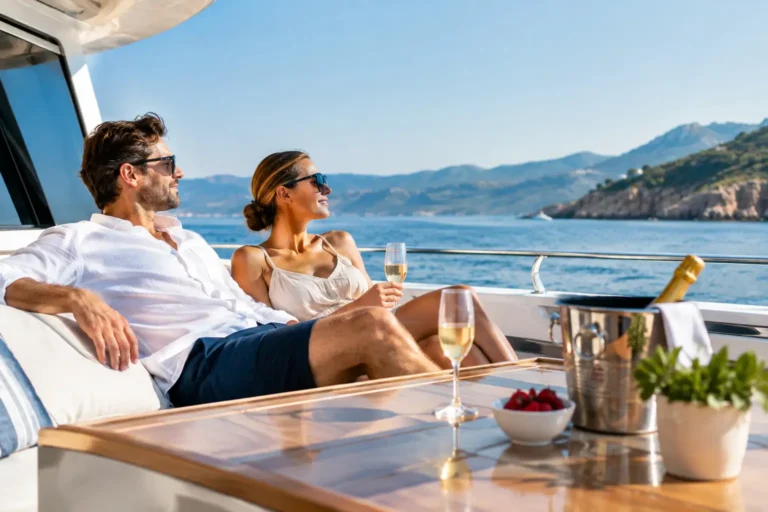
A sea-pool stop also pairs beautifully with time on the water. From the south of Tenerife, a well-planned yacht cruise with Royal Ocean offers a different perspective on the same volcanic coastline: open horizons, sheltered comfort and the possibility of seeing dolphins or whales in their natural environment. The two experiences complement one another - one close to the lava, the other quietly above the Atlantic.
The finest charco visits are rarely rushed. Choose calm conditions, move carefully across the basalt and give yourself permission to simply sit at the edge for a while. In Tenerife, lava is not only a reminder of the island’s past; it is the reason an ordinary swim can feel wonderfully unforgettable.