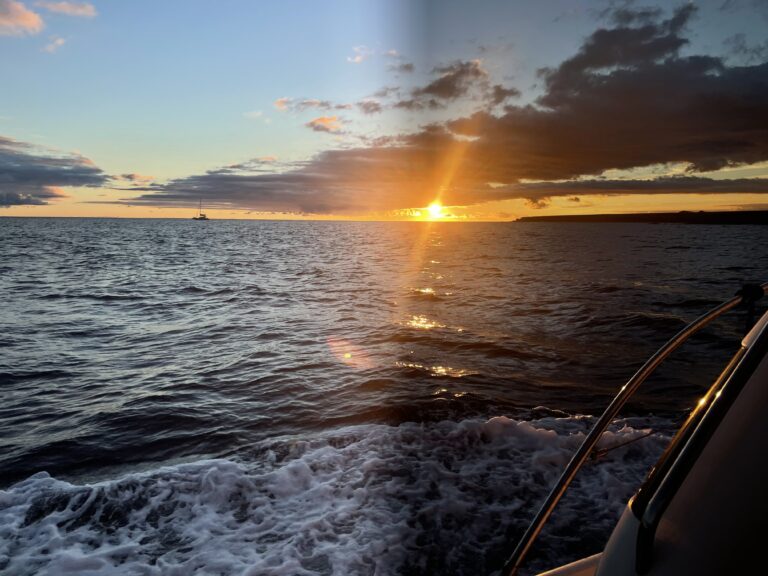
A relaxed yacht cruise can look effortless from the deck: a chilled drink in hand, Tenerife’s volcanic coastline behind you and the Atlantic opening ahead. Yet every smooth hour on the water begins with detailed preparation. So, how does a yacht crew plan a route in Tenerife? By balancing sea conditions, local knowledge, wildlife protection, the yacht’s capabilities and, above all, the experience each guest has come to enjoy.
For a private celebration, a couple’s sunset cruise or a refined whale-watching trip, the best route is rarely a fixed line on a chart. It is a considered plan that adapts to the day while keeping comfort, safety and unhurried enjoyment at its heart.
Planning begins well before the yacht leaves the marina. The skipper reviews the marine forecast, looking beyond the simple promise of sunshine. Tenerife can be warm and bright ashore while the Atlantic has a noticeably different mood offshore. Wind direction and strength, swell height and period, visibility, tides and any coastal warnings all influence where the yacht can travel most comfortably.
The south of Tenerife is particularly appealing for yacht charters because it benefits from the island’s shelter on many days. Even so, the conditions around Costa Adeje, La Caleta, Los Cristianos and the waters beyond can change with the trade winds. A northerly swell may make one section of coast less pleasant, while another remains calm enough for a comfortable cruise and a swim stop.
The crew also considers the duration of the charter. A two-hour shared excursion needs a route that delivers beautiful scenery and strong wildlife potential without spending too much time travelling. A longer private charter allows more flexibility: perhaps a leisurely cruise along the coast, time at anchor, swimming in clear water and a slower return as the light softens towards sunset.
A route is designed around real conditions rather than a brochure promise. The skipper will normally plot a primary course, then prepare alternatives in case the wind freshens, the sea state shifts or guests would benefit from a more sheltered location.
The first decision is often the direction of travel. Cruising along the south-west coast can reveal dramatic cliffs, secluded-looking coves and the distinctive outline of Tenerife rising from the sea. On a calm day, the crew may travel farther from the harbour to give guests a greater sense of open Atlantic space. If there is more movement in the water, they may favour a protected coastal course where the yacht remains steadier and conversation, refreshments and photography are more enjoyable.
This is not a compromise in service. It is professional seamanship. Choosing a comfortable route over the longest possible route is often the difference between a pleasant outing and a truly luxurious one. A premium experience should feel considered, not rushed or overly ambitious.
Navigation equipment, local charts and harbour information support every decision. The crew monitors other vessels, fishing activity, water-sports areas and designated zones, while maintaining a safe distance from the coast and any navigational hazards. A Princess 440 Flybridge yacht offers an elevated viewpoint and generous space for guests, but its skipper still plans conservatively. The sea always has the final word.
The waters off south Tenerife are known for resident pilot whales and frequent dolphin activity, which is one reason a yacht cruise here feels so special. Crews develop a strong understanding of the areas where cetaceans are commonly encountered, based on season, sea conditions, recent sightings and respectful observation over time.
However, wildlife cannot be scheduled. A responsible crew does not chase animals or promise a particular encounter at a particular minute. Instead, the yacht approaches slowly and respectfully when whales or dolphins are spotted, following applicable guidance on speed, distance and time spent nearby. The aim is to allow guests to appreciate the moment without disturbing the animals in their natural environment.
Conditions can affect the quality of a sighting too. A calm sea makes it easier to spot a dorsal fin or a group of dolphins at the surface. Glare, swell and stronger winds can make observation more challenging. The crew will use experience and patience, but they will not sacrifice guest comfort or safe navigation in pursuit of a sighting.
That responsible approach often makes the encounter more meaningful. Seeing pilot whales surface calmly beside a well-positioned yacht, with the crew providing space and clear guidance, is far removed from the noise and crowding of a mass-market excursion.
The finest itinerary is personal. Before departure, the crew considers who is on board and what they want from their time at sea. A couple celebrating an anniversary may prefer quiet coastline, attentive service and a route timed for golden-hour views. A family may value a calmer stretch of water for swimming, with enough shade and space to settle in. A group celebrating a birthday may want an unhurried anchor stop, curated drinks and time to enjoy music, food and each other’s company.
Sea-sickness is also considered with discretion. Even guests who feel confident on boats can be surprised by an Atlantic swell. The skipper may adjust speed and heading to reduce rolling, select a more protected course or recommend remaining in a sheltered area. Fresh air, a steady horizon and an experienced crew all help, but route planning is the first line of comfort.
Timing matters just as much. Morning trips can offer softer light, cooler temperatures and often gentler conditions. Midday charters suit guests who want time to swim and enjoy the warmth. Sunset routes are planned with care so there is no hurried dash back to port when the sky begins to change colour. The yacht needs to be in the right place at the right time, with enough margin for a relaxed return.
A swim stop is one of the great pleasures of a Tenerife yacht charter, but it is never selected at random. The crew looks for suitable depth, protection from wind and swell, safe clearance from other vessels and a setting that feels peaceful rather than exposed.
Anchoring is a technical decision as well as a scenic one. The skipper assesses the seabed, depth, swinging room and nearby traffic before committing to a position. In some circumstances, remaining under way or choosing another location is more appropriate. Guests may only see a beautiful blue-water pause in the itinerary, but behind it is a careful assessment of safety and comfort.
Once settled, the atmosphere changes. Towels, refreshments and freshly prepared food can be served, guests can use the water at their own pace, and the coastline becomes the backdrop rather than something to hurry past. This is where a well-planned route earns its value: it creates time to enjoy the yacht, not simply travel on it.
No two days on the Atlantic are identical. The route that was perfect yesterday may not be right today, and an experienced crew will say so confidently. Flexibility does not mean uncertainty. It means having the knowledge, equipment and local judgement to make the day feel effortless, even when conditions require a change of plan.
At Royal Ocean, that judgement supports the entire onboard experience. The crew can adjust the pace, find a more comfortable stretch of coast or build extra time around an exceptional wildlife moment, while maintaining the polished service guests expect from a private yacht setting.
A thoughtfully planned route leaves room for the best parts of Tenerife to appear naturally: a pod of dolphins moving across the bow, the quiet of a sheltered swim, the cliffs glowing in late-afternoon light, or simply the pleasure of being well looked after at sea. When choosing your charter, ask less about how far the yacht will go and more about how carefully the day will be shaped around you.