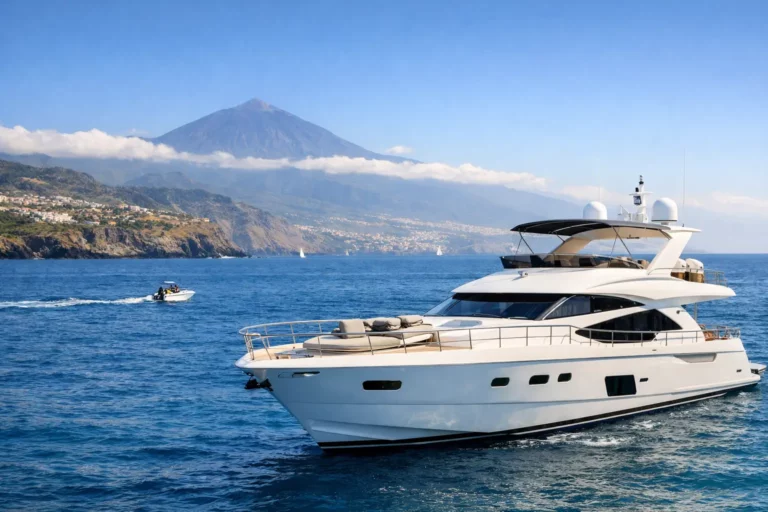
The first glimpse of a yacht at the pontoon is usually all polished rails, calm water and anticipation. Yet what happens before a yacht leaves the marina? Long before guests step aboard for a whale-watching cruise, swim stop or sunset celebration, the crew are carrying out a carefully organised routine that protects comfort, safety and the quality of the time ahead.
For a premium experience in south Tenerife, departure is not simply a matter of starting the engines. It is the point where local sea knowledge, professional preparation and thoughtful hospitality come together. A well-prepared yacht feels effortless once underway because the detail has already been handled ashore.
A yacht’s planned departure time matters, but weather and sea conditions have the final say. Before leaving the marina, the skipper checks the local forecast, wind direction and strength, swell height and period, visibility, and any official marine notices. Around Tenerife, conditions can differ noticeably between the sheltered waters near Costa Adeje and more exposed areas further along the coast.
This is more nuanced than checking whether the sun is shining. A bright day can still bring a short, uncomfortable chop, while light cloud can accompany beautifully calm cruising conditions. The skipper considers the route, the type of charter, the ages and confidence levels of guests, and the yacht’s safe operating limits.
For a private celebration or romantic cruise, that may mean choosing a quieter bay for swimming. For a wildlife-focused trip, it may mean adjusting the search area while remaining considerate of the animals and other vessels. If conditions are unsuitable, a professional operator will delay, adapt or reschedule rather than force a voyage that does not meet the expected standard.
The elegant side of yachting depends on serious preparation below deck. Before passengers arrive, the crew complete practical checks that help make the voyage safe and unhurried. On a Princess 440 Flybridge yacht, this includes inspecting engine systems, fuel levels, batteries, cooling systems and navigation equipment.
The team will also confirm that the VHF radio is working correctly, review charts and planned waypoints, and make sure essential onboard equipment is ready for use. Mooring lines, fenders and the gangway are checked too. These details matter when leaving a busy marina, where wind, neighbouring boats and limited space require precise handling.
A typical pre-departure safety routine covers several essentials:
Guests may never see much of this work, and that is exactly the point. It allows the crew to focus fully on welcoming everyone onboard once boarding begins.
A premium yacht is prepared as a hosted space, not simply as a means of transport. Deck cushions are arranged, shaded areas are checked, and the saloon is aired and presented for the day ahead. Towels, drinking water and refreshments are placed where they will be easy to enjoy without cluttering the deck.
The standard of preparation changes with the occasion. A shared whale-watching trip needs an open, comfortable layout that gives guests good views and room to move safely. A private charter may call for a more personalised arrangement, whether that is chilled drinks for a group of friends, a beautifully set table for a special lunch, or discreet details for a proposal.
Food preparation is equally deliberate. Freshly prepared snacks and drinks are best handled before departure, when the crew have access to the marina’s facilities and can keep the galley orderly. It also avoids unnecessary disruption once the yacht is cruising along Tenerife’s coast, when guests should be free to relax, take photographs and enjoy the scenery.
Cleanliness is part of luxury, but it is also practical. Dry decks, spotless washrooms, tidy seating and properly stored equipment make the yacht feel calm and cared for. They reduce trip hazards and help every guest settle in from the moment they step aboard.
Once guests arrive, the crew’s role shifts from preparation to hospitality. Boarding is managed at a relaxed pace, with help available for bags, uneven footwear or anyone who feels less steady around the pontoon. This is particularly reassuring for families, first-time boat guests and those travelling with older relatives.
Before departure, the skipper or crew member gives a short, clear briefing. Guests are shown where lifejackets are kept, how to move safely around the yacht, which areas are best avoided while manoeuvring, and where the washroom is located. They will also explain the plan for the cruise, including likely cruising time, any swim stop and what to expect from sea conditions.
A good briefing should feel reassuring rather than formal. It is a chance to answer practical questions before the yacht leaves the berth: whether shoes should be removed, where to store bags, how to manage seasickness, and when refreshments will be served. If anyone has mobility needs, dietary requirements or a special occasion planned, the crew can make final arrangements discreetly at this stage.
The quietest part of a charter can be one of the most technical. As the yacht leaves its mooring, the skipper is considering wind, current, prop wash, marina traffic and the position of nearby vessels. Crew members release lines in a set order, communicate clearly and keep the deck area controlled.
Guests are normally asked to remain seated or hold a secure point while the yacht manoeuvres. It is a brief request, but it allows the skipper to concentrate fully until there is clear water ahead. Once outside the marina, the pace softens. The sound of the harbour falls away, Tenerife’s coastline opens up and the crew can begin the more visible side of the experience: attentive service, local insight and relaxed cruising.
Whale and dolphin watching off Tenerife is one of the island’s most memorable experiences, but it is never a scripted performance. The skipper uses local knowledge, recent sightings, sea state and the movement of other vessels to choose an appropriate area. Wildlife may be encountered quickly, or the search may take longer. Responsible crews do not promise a particular moment on demand.
When animals are spotted, respectful viewing matters as much as excitement. The yacht approaches carefully, keeps an appropriate distance and avoids behaviour that could disturb the pod. This protects the wildlife and gives guests a far better experience than a rushed chase across the water.
The route may also be adapted around the group. A couple on a sunset charter may prefer a gentle coastal cruise with time to enjoy the changing light. A family might value a calmer swim stop in clear water. A group celebrating a birthday may want more time at anchor for food, drinks and music. The best itinerary is not always the longest route. It is the one that feels right for the conditions and the people onboard.
When a yacht appears to glide away from the marina without effort, that ease has been earned through experience. Safety checks, weather judgement, a clean and welcoming deck, prepared refreshments and a thoughtful guest briefing all create the confidence to truly relax.
At Royal Ocean, that preparation supports the kind of Tenerife charter people remember for the right reasons: unhurried service, comfortable surroundings, beautiful coastal views and space to enjoy the sea in good company. Before booking, it is worth sharing what matters most to your group. A little detail before departure gives the crew the best opportunity to make the time on the water feel genuinely personal.