A calm patch of Atlantic water can make everyone on board look twice at the surface. A rounded shell, a gentle movement of a flipper or a brief head above the waves may reveal one of the ocean's most remarkable travellers. Loggerhead turtles are long-distance ocean wanderers, and seeing one near Tenerife can be a genuinely special moment.
For visitors enjoying a cruise from south Tenerife, wildlife is never a performance on demand. Dolphins and pilot whales are among the marine animals most commonly associated with these waters, while loggerhead turtles are occasional visitors. Their presence is a reminder that the Atlantic is connected far beyond the horizon through ocean currents, feeding grounds, nesting beaches and seasonal movements.

Loggerhead turtles, known scientifically as Caretta caretta, are among the Atlantic's great long-distance travellers. They begin life on sandy nesting beaches and spend years moving through ocean environments before reaching maturity. During their early life, currents can carry young turtles across large areas of the sea, while later movements become increasingly influenced by feeding opportunities and the need to reach breeding areas.
Their journeys do not follow one fixed route across a chart. Water temperature, food availability, ocean currents, age and reproductive cycles all influence where an individual turtle travels. Some loggerheads spend extended periods in open water, while others move into coastal habitats where they can feed on crabs, molluscs and other marine prey.
Adult turtles can travel substantial distances between feeding and breeding areas. This means that a turtle seen near Tenerife may be connected to marine and coastal habitats far beyond the Canary Islands. Its journey is part of a much larger Atlantic system rather than a local, isolated movement.
Ocean currents play an important role in the lives of young loggerheads. Broad current systems can transport hatchlings and juveniles through productive areas of the ocean, allowing them to travel considerable distances while they develop.
As turtles grow, their movements become more varied. They may spend time in offshore waters before moving towards coastal feeding grounds, and mature animals can undertake long journeys between feeding areas and nesting beaches.
This helps explain why the Canary Islands are relevant to loggerhead turtles without being described as a single migration corridor. The archipelago forms part of a much wider Atlantic environment used by marine species moving between different regions of the ocean.
It also explains why a turtle sighting near Tenerife is difficult to predict. A yacht may spend several hours at sea without seeing one, while on another day a turtle may briefly appear at the surface. That uncertainty is part of what makes a wild encounter so memorable.
Responsible wildlife viewing is based on a simple principle: observe natural behaviour without trying to control the encounter. When a turtle appears, the best response is usually patience rather than pursuit.
The skipper can assess the turtle's direction, distance from the yacht, sea conditions, visibility and the presence of other vessels before deciding how to proceed. Depending on the situation, the appropriate response may be to reduce speed, maintain a safe distance or simply allow the turtle to move away before continuing the journey.
For guests, the etiquette is straightforward. Stay calm, remain in a safe position on board and follow the crew's guidance. There is no need for everyone to rush towards the railings or try to create a closer encounter.
On a small-group boat tour in Tenerife, a quieter atmosphere also makes wildlife observation more enjoyable. With fewer people competing for the best view, guests can simply watch the animal and let the moment unfold naturally.
These precautions are easy to follow, but they matter. A turtle may be resting, feeding or preparing to dive when it reaches the surface. Giving it space allows the encounter to remain a natural part of its journey rather than an interruption.
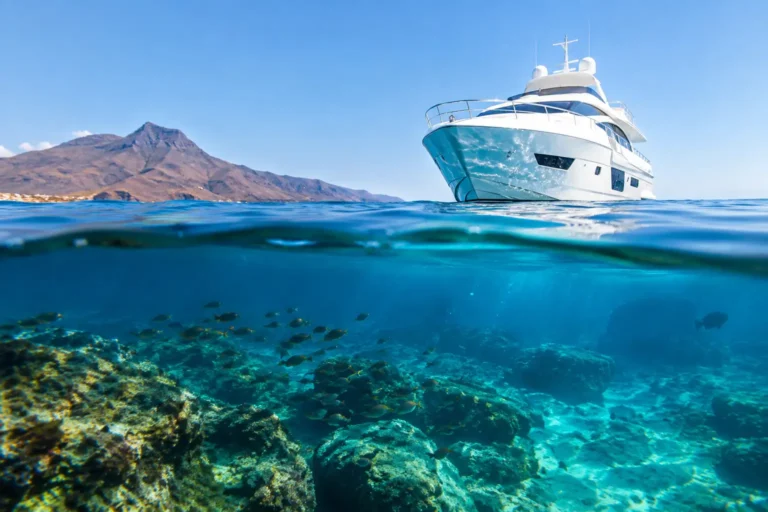
A swim stop is one of the pleasures of a Tenerife yacht charter. The chance to enter clear Atlantic water and enjoy the coastline from a different perspective is an important part of many private cruises.
However, seeing a turtle near the yacht does not automatically mean that guests should enter the water. The crew needs to consider the animal's behaviour, sea conditions, visibility, other vessels and guest safety before deciding whether a swim stop remains appropriate.
If a turtle is nearby, the best choice may be to remain on deck and enjoy the sighting, wait until it has moved on or choose another location for swimming. Respecting that space does not take anything away from the experience. It is simply a more responsible way to share the ocean.
The same approach applies when whales or dolphins are nearby. Marine animals can change direction unexpectedly, travel with young or react to increased activity around them. Professional seamanship means adapting to what is happening on the water rather than treating wildlife as part of a fixed itinerary.
Comfort and responsible wildlife watching can work naturally together. A well-managed yacht gives guests space to observe without crowding a sighting, while an experienced skipper can make decisions according to the conditions rather than the expectations of a large group.
At Royal Ocean, the experience is also about enjoying the time between wildlife encounters. Relaxing on deck, taking in Tenerife's volcanic coastline and enjoying refreshments are all part of being at sea. Nature does not follow a timetable, so there is no reason for a cruise to depend on constant sightings.
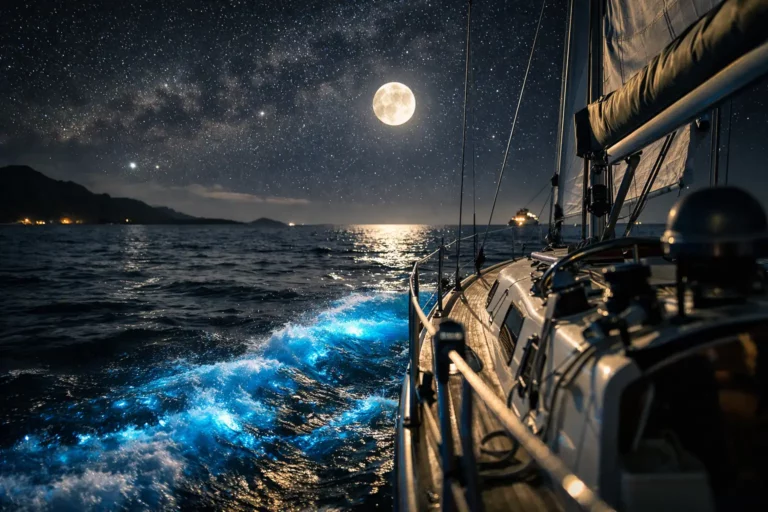
For couples, an unexpected turtle appearing during a sunset cruise can become one of the most memorable moments of the evening. For families, it can be the sighting children remember long after the holiday. And because it cannot be guaranteed, it retains something that a scheduled attraction can never quite reproduce: genuine surprise.
Responsible wildlife watching begins before a turtle appears alongside the boat. The choices made on board can also help reduce pressure on the marine environment.
Plastic pollution is a significant threat to sea turtles. Floating plastic can be mistaken for food, while discarded fishing line and other debris can cause entanglement. Keeping rubbish securely contained and making sure nothing can blow overboard are simple precautions that every guest can follow.
Choosing an operator that treats wildlife encounters responsibly also matters. Close approaches, attempts to attract animals and guaranteed-sighting promises may sound appealing, but they can encourage behaviour that puts the experience ahead of the animal.
Weather and sea conditions deserve the same respect. Tenerife is famous for its favourable climate, but Atlantic conditions can change. A professional skipper may alter a route, postpone a swim stop or move away from an area when conditions are unsuitable. Protecting guest safety and reducing unnecessary disturbance to wildlife often go hand in hand.
The quality of a marine encounter is not measured by how close the yacht came or how perfect the photograph was. It is the feeling of seeing a wild animal move freely through its own environment while the boat quietly passes through the same ocean.
A loggerhead turtle may appear for only a few seconds before disappearing beneath the surface. Sometimes you will have time for a photograph; sometimes you will simply see the shell and a movement in the water. Either way, the encounter is valuable precisely because it was not arranged.
Keep your expectations open, your camera ready and your attention on the crew. If a loggerhead crosses your path during a Tenerife cruise, give it the freedom to continue its journey. The memory will be better because it remained wild.
Loggerhead turtles (Caretta caretta) are long-distance ocean travellers. They begin life on sandy nesting beaches and spend years moving through ocean environments, with their movements influenced by currents, water temperature, food availability, age and reproductive cycles.
Loggerheads can occur in the waters around the Canary Islands, but sightings are unpredictable and should not be considered a standard feature of a yacht cruise. A responsible operator should never guarantee a turtle sighting on a particular day.
Stay calm, remain in a safe position on board and follow the skipper's instructions. Give the turtle space, never feed or touch it, avoid sudden manoeuvres and do not try to approach it for a closer photograph.
A turtle sighting does not automatically mean that guests should enter the water. The crew should consider the turtle's behaviour, sea conditions, other vessels and guest safety before deciding whether a swim stop is appropriate. In some situations, the best option is simply to observe the turtle from the yacht.
Keep rubbish securely contained, never allow plastic or other waste to enter the sea and choose operators that prioritise responsible wildlife encounters. Avoid feeding or touching marine animals and follow the crew's guidance whenever wildlife is nearby.