From the flybridge, Tenerife's south-west coast can look almost impossibly blue: clear water, a warm horizon and the distant outline of La Gomera. Yet beneath that surface lies a very different landscape — one shaped by lava, currents, depth and the Atlantic's constant movement.
For guests enjoying a private charter, wildlife cruise or relaxed swim stop, the water beneath the yacht is more than a beautiful backdrop. It is a living volcanic environment, with habitats that change according to depth, location, season and sea conditions. You may not see every resident of the seabed from the surface, but knowing what lies below adds another dimension to time spent on the ocean.
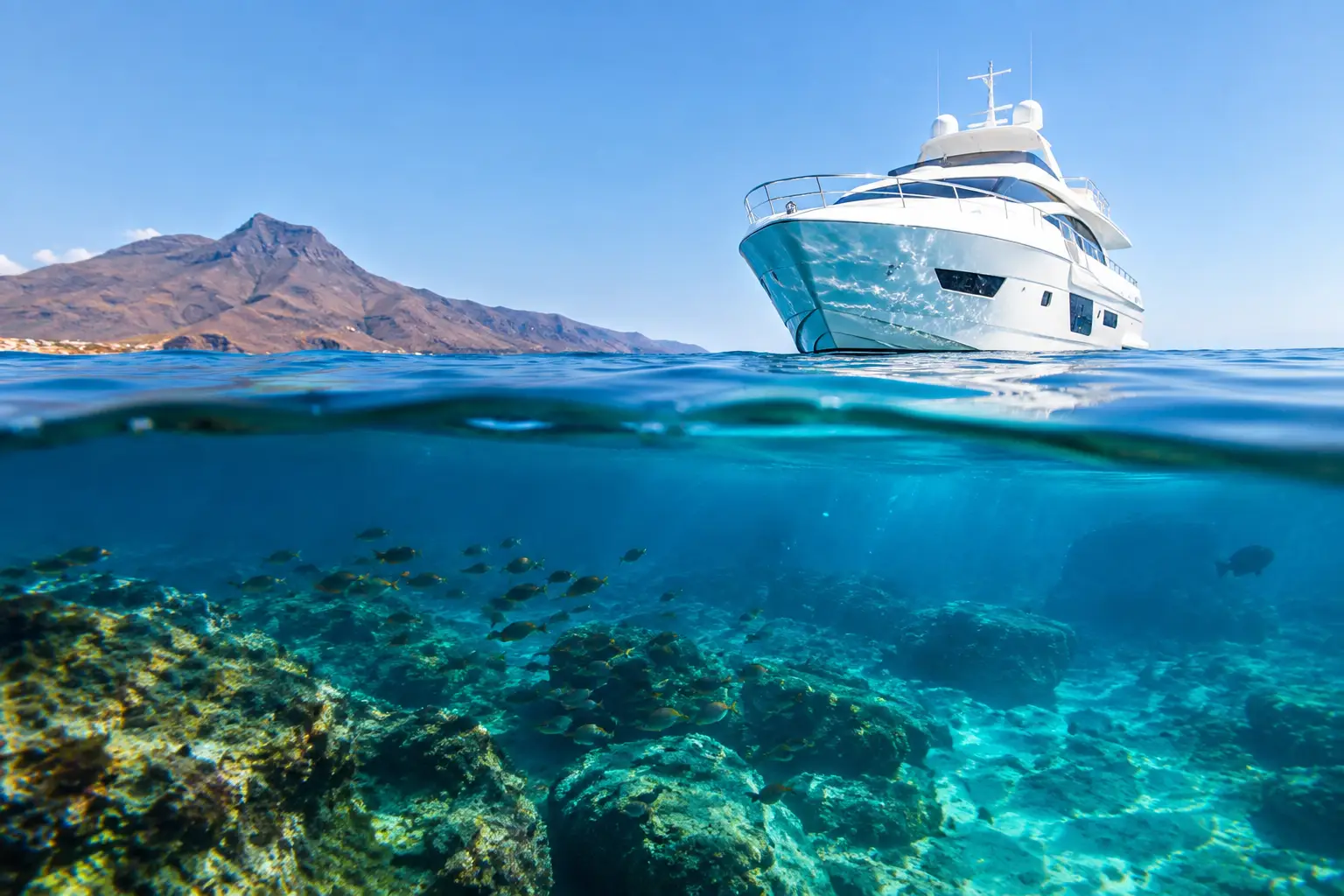
Tenerife is a volcanic island, and its underwater terrain carries the same character as the landscape on shore. Rather than being made up entirely of gently sloping sand, much of the seabed consists of dark basalt rock, lava shelves, gullies and boulders.
In sheltered areas, pale sand can collect between rocky structures. These different surfaces create a variety of small habitats where marine animals can feed, shelter and move between protected areas.
The waters off Costa Adeje and Los Cristianos can also change depth surprisingly quickly. Close to shore, rocky habitats support smaller fish and invertebrates. Further offshore, deeper water becomes part of the wider Atlantic environment used by pelagic fish, turtles and the cetaceans for which Tenerife is well known.
The view from above is not always crystal-clear. Sunlight, swell, currents and the angle of the sun all affect underwater visibility. On a calm, bright day, swimmers may see the contours of volcanic rock below them. On another day, the same water may appear deep blue and reveal very little beneath the surface.
Ancient lava flows have cooled into uneven underwater formations, creating crevices, ledges and overhangs. These structures provide shelter from currents and give smaller marine animals places to hide.
In shallow, well-lit areas, algae and marine plants can grow over the rock, adding colour and texture to the darker volcanic background. Where sand collects, a different community appears. Some animals are extremely well camouflaged against the seabed and can remain almost invisible until they move.
This variety is one reason the waters around Tenerife can feel so alive. The rugged volcanic geology creates many small habitats within a relatively compact area, and the underwater landscape can change significantly from one coastal section to another.
Rays are among the most captivating animals associated with sandy patches and the edges of rocky seabed. Some species can rest partly covered by sand, using camouflage to remain unnoticed. When they eventually move away from the bottom, their movement can be striking to watch.
Octopus favour rocky areas where they can retreat into crevices. They are remarkably difficult to spot when they remain still, using changes in colour and texture to blend into their surroundings. Sometimes a glimpse of an arm or an unusual shape between rocks is the only indication that one is there.
Moray eels can occupy holes in the rock, while wrasse, parrotfish, damselfish and other small coastal fish may move above reef structures. Sea urchins, starfish, crabs and other invertebrates contribute to the quieter activity of the seabed.
None of these encounters is predictable. That is precisely what makes seeing marine life in its natural environment different from visiting an aquarium.
Sea turtles may occasionally be seen around Tenerife. Loggerhead turtles can travel through these waters, but a sighting should never be treated as a promise on a particular trip.
Dolphins and pilot whales are generally encountered in deeper water rather than directly above a particular reef. Even so, the seabed and open ocean are part of the same larger ecosystem. Rocky habitats support smaller organisms and fish, while currents move nutrients through the water column.
What happens below the surface therefore affects what can eventually be seen above it. A healthy marine environment depends on many interconnected habitats rather than a single species or location.
A comfortable day on the water depends on more than the view from the deck. The skipper has to consider weather, swell, wind direction, currents, marine traffic and the comfort of everyone on board when selecting a route or deciding where to pause.
For a swim stop, the most attractive location is not automatically the shallowest or closest point. Conditions need to be suitable for guests to enter and leave the water safely, while the location must also allow the yacht to remain securely positioned.
Sea conditions can change, particularly around exposed sections of the coast. A flexible plan is therefore often more useful than a fixed itinerary.
On a private whale and relaxation cruise, the time on the water can include wildlife watching, swimming and simply enjoying the coastline. The underwater environment remains part of the experience even when it is only partly visible.
The most rewarding way to experience the ocean is to treat it as someone else's home. If you enter the water during a swim stop, avoid standing on rocky reef areas or touching anything beneath the surface.
Volcanic rock may look completely solid, but organisms attached to it can be delicate. Sea urchins and other animals can also make physical contact unpleasant for both you and them.
Keep a calm distance from wildlife you encounter. Do not feed fish, follow turtles or reach towards rays. Even a well-intentioned interaction can change an animal's behaviour or cause unnecessary stress.
A few practical choices can help:
Responsible behaviour also makes the experience more enjoyable. Instead of trying to touch or chase something you have spotted, you can simply observe it and let the encounter unfold naturally.
Looking into the sea from a yacht can give a misleading impression of what is actually below. Even clear Atlantic water does not have uniform visibility at all times.
Sunlight has to travel through the water before reaching the seabed and returning to the observer. Swell and currents can stir particles in the water, while the angle of the sun changes how much light reaches underwater surfaces.
This is why two swim stops on different days can feel completely different. One may reveal dark volcanic rocks, fish and patches of sand beneath the yacht. Another may offer little more than deep blue water and occasional shapes appearing through the surface.
Both are part of the natural character of the Atlantic. The sea does not have to be perfectly transparent to be interesting.
A yacht cruise in Tenerife offers obvious pleasures: warm air, coastal views, the possibility of whales or dolphins and time away from the busy resort. The seabed brings a quieter kind of wonder.
Beneath the hull is a volcanic world of rock, sand, shelter and movement that continues long after the yacht has passed overhead. Some of it may be visible during a swim; much of it will remain hidden.
That is part of what makes the ocean fascinating. You are looking at the surface of a much larger environment, most of which exists beyond what the eye can immediately reveal.
When you next pause for a swim in the Atlantic, take a moment before you step in. Look beneath the surface, follow the crew's guidance and enjoy the opportunity to float above one of Tenerife's remarkable hidden landscapes.
Tenerife's seabed is largely volcanic, with dark basalt rock, lava shelves, gullies and boulders. In sheltered areas, pale sand can collect between rocky structures. The underwater terrain also changes relatively quickly from shallow coastal ground to deeper Atlantic water.
Rays may rest camouflaged on sandy patches, while octopus and moray eels use rocky crevices. Wrasse, parrotfish, damselfish and other small coastal fish can move around reef structures, while sea urchins, starfish, crabs and other invertebrates occupy the seabed. Sightings are never guaranteed.
Loggerhead turtles may travel through Tenerife's waters, but they are not guaranteed on any particular trip. If you encounter one, observe it from a respectful distance and allow it to continue its natural movement.
Avoid standing on rocky reef areas or touching anything beneath the surface. Keep a respectful distance from wildlife and do not feed fish, follow turtles or reach towards rays. Listen to the crew's instructions about where and when it is safe to swim.
A mask can make a short swim much more interesting by allowing you to see below the surface. If your charter permits it, you can also bring suitable swimming or snorkelling equipment. Sun protection and a light layer for the boat are useful as well.