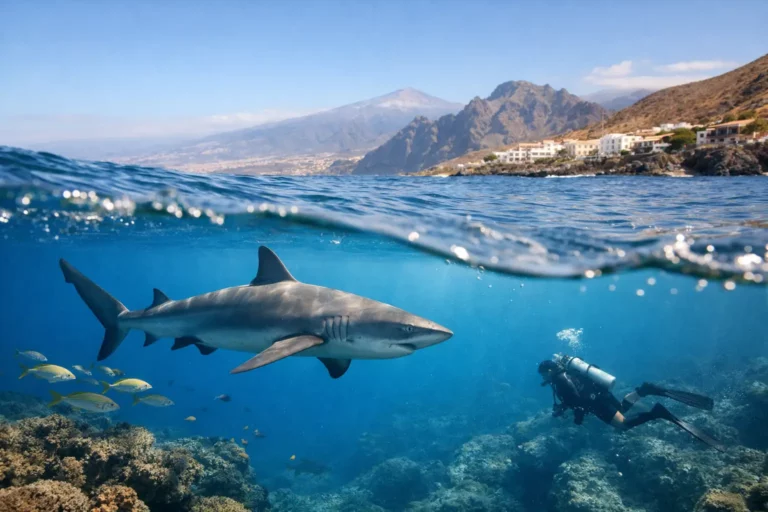
From the marinas of Costa Adeje and Los Cristianos, it can take surprisingly little time to reach waters where whales and dolphins may be encountered. The reason lies largely beneath the surface: Tenerife's volcanic geography brings deep Atlantic water close to the coastline, while currents, temperatures and local conditions create a productive marine environment.
For visitors, this means that a whale-watching trip does not necessarily involve travelling far offshore. You may find yourself watching a pod with Tenerife's cliffs, beaches and the silhouette of Mount Teide still visible in the distance. Of course, wildlife never follows a timetable, but the island's geography gives the surrounding waters particularly interesting conditions for cetaceans.
The key is the seabed. Unlike many mainland coasts with a broad, gently sloping continental shelf, Tenerife's volcanic coastline drops into deep water relatively quickly. Deep Atlantic waters therefore come surprisingly close to land.
This is important for whales and dolphins because deep water supports squid, fish and other prey. The underwater terrain, currents and water temperatures also contribute to productive marine habitats. Around the south-west of Tenerife, these factors combine to create conditions where cetaceans can find food without travelling far from the island.
The Canary Current is another part of the picture. This cool Atlantic current contributes to the movement of nutrients through the wider region, supporting the marine food chain from plankton upwards. It does not mean that animals will be present on every trip, but it helps explain why these waters can support a rich marine ecosystem throughout much of the year.
The south-west coast also benefits from its relative protection from the prevailing north-easterly trade winds. Conditions can often be calmer here than on the northern coast, which makes the area attractive for marine wildlife and more comfortable for people spending time on the water.
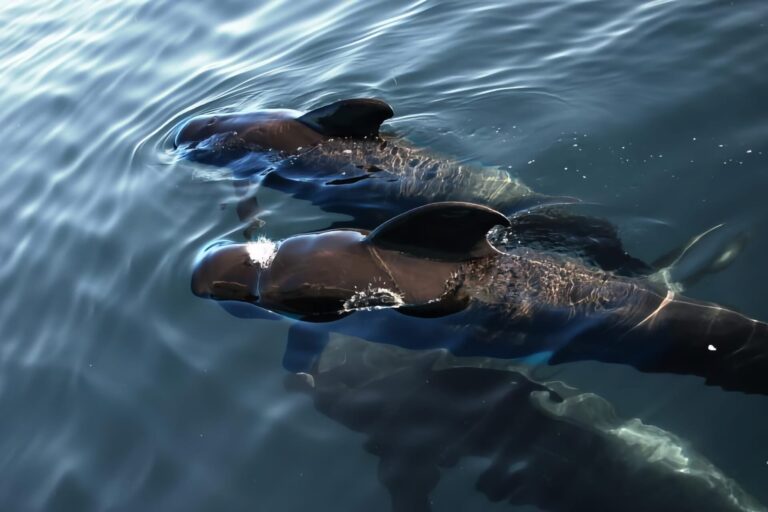
The short-finned pilot whale is the species most closely associated with whale watching around Tenerife. Despite its name, it is actually one of the larger members of the dolphin family. Pilot whales are highly social and often travel in family groups, including in the waters between Tenerife and La Gomera.
One of the most interesting features of the local population is its year-round presence around the Canary Islands. This means Tenerife is not dependent on a single migration season for pilot whale encounters. Their movements still vary with food availability, weather and the needs of the group, so their exact location can change from one day to another.
Pilot whales are recognisable by their rounded heads, dark colouring and relatively unhurried movement at the surface. Watching a family group travel together can be particularly rewarding because their social behaviour is often visible even from a distance.
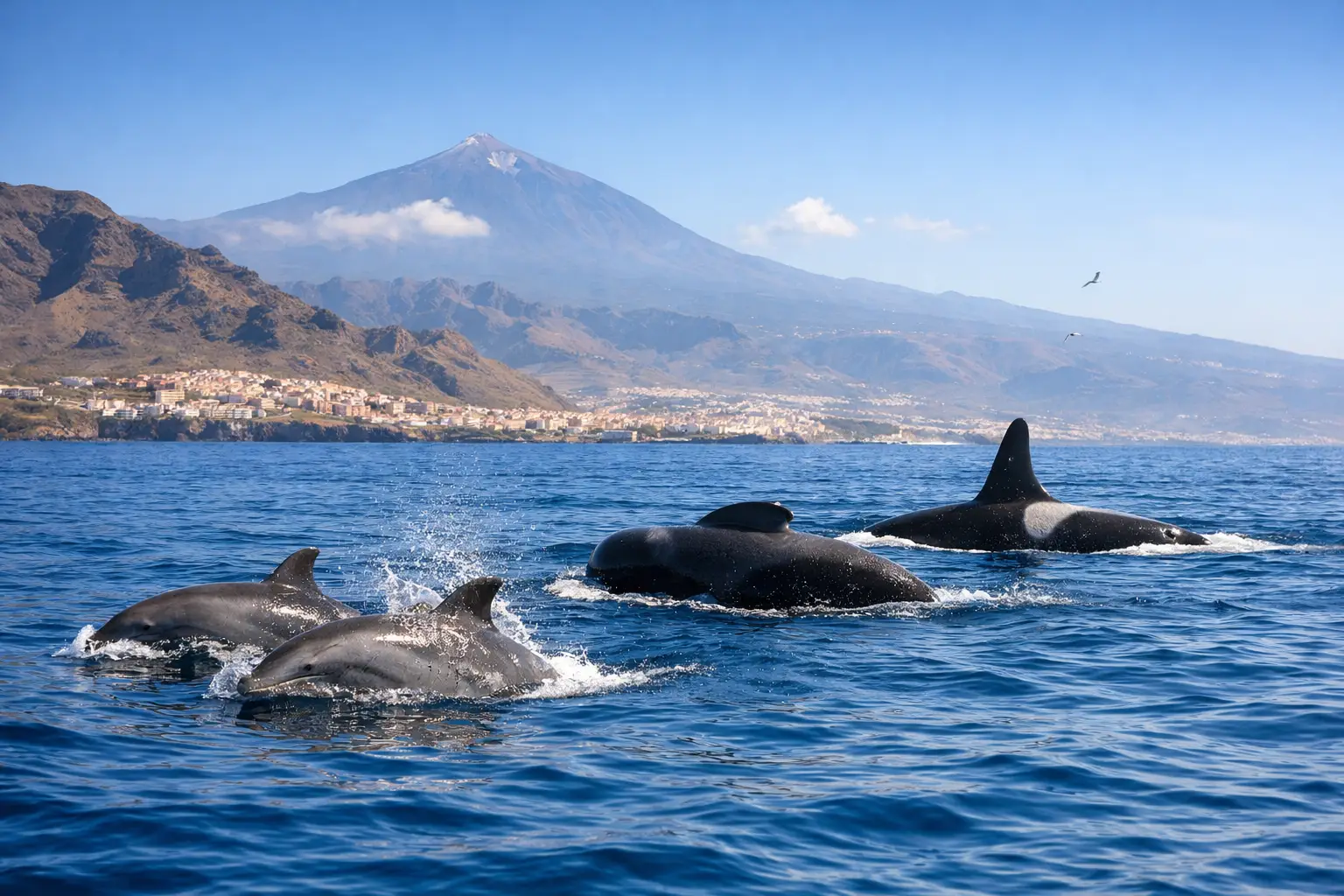
Several dolphin species may be encountered around Tenerife. Bottlenose dolphins are among the most familiar and can sometimes approach a vessel's bow to ride the pressure wave.
Atlantic spotted dolphins may also be seen, particularly during warmer periods, while common dolphins, striped dolphins and rough-toothed dolphins have also been recorded in the surrounding waters. Which species you encounter depends on the day, location and conditions, and their behaviour can vary just as much as their presence.
A cruise might bring a group of pilot whales travelling calmly through the water, dolphins moving rapidly alongside the yacht, or both. It is also possible to have a trip without a close encounter. Responsible wildlife watching leaves room for that uncertainty rather than treating wild animals as something that can be guaranteed on demand.
Tenerife's position in the Atlantic means that other cetaceans can occasionally pass through the Canary Islands. Bryde's whales, fin whales and sperm whales have been recorded in the region, as have orcas.
These larger visitors are much less predictable than the resident pilot whales. They are best regarded as occasional encounters rather than species that visitors should expect to see on a particular trip.
This variety is one of the reasons the waters around Tenerife are so interesting for marine wildlife enthusiasts. The island combines resident cetaceans with occasional visitors passing through the wider Atlantic.
The combination of deep water, food availability, ocean currents and local weather conditions helps explain why the south-west coast has become such a well-known area for whale and dolphin watching.
The relatively sheltered coastline can also provide more comfortable conditions for boat trips than some other parts of the island. That does not mean the sea is always calm: wind, swell and visibility can change, and the crew needs to assess conditions on the day.
The proximity of deep water is particularly significant. A yacht can leave the marina and reach an environment associated with deep-ocean species without a long offshore passage. That unusual relationship between the volcanic island and the surrounding Atlantic is one of Tenerife's defining marine characteristics.
Having whales and dolphins close to shore also creates a responsibility to observe them carefully. The aim should be to watch natural behaviour without causing unnecessary disturbance.
A responsible crew approaches wildlife calmly, keeps an appropriate distance and avoids pursuing, surrounding or cutting across the path of animals. If whales or dolphins change their behaviour because of a vessel, that is a reason to give them more space rather than move closer.
Guests should also avoid expecting direct interaction. Feeding, touching or swimming towards cetaceans is not appropriate wildlife tourism and can create risks for both animals and people.
A swim stop, when conditions allow, is a separate part of a yacht trip. It should take place in an appropriate coastal area rather than being combined with an attempt to swim with whales or dolphins.
The boat can influence how comfortable and enjoyable a wildlife trip feels, particularly when you are spending several hours at sea. Space, seating, shade and the ability to move around the deck can make it easier to watch the water without everyone having to gather in one place.
A private yacht also gives a group more flexibility during the day. On Royal Ocean's Private Whales & Relax Cruise, the route can be adapted to the conditions and the interests of the group, with time for wildlife watching, swimming and enjoying the coastline.
For those who prefer a shared experience, Royal Ocean also offers a shared whale-watching tour. Whichever type of trip you choose, the most important part of wildlife watching remains the same: the animals set the timetable.
There is no single perfect month for whale and dolphin watching in Tenerife. Pilot whales can be present throughout the year, so winter, spring, summer and autumn can all offer opportunities for encounters.
Morning trips are often valued for softer light and can sometimes benefit from calmer sea conditions. Late-afternoon trips offer different light and a more relaxed atmosphere as the coastline changes colour towards sunset.
Weather remains an important factor. Wind, swell and visibility affect both comfort and wildlife viewing, and conditions can change during the day. A professional crew will take these factors into account when planning the route.
For a typical yacht trip around Tenerife, practical preparation is simple. Bring sun protection even when the sky looks hazy, along with a light layer for the breeze. Comfortable clothing and footwear are useful, and anyone prone to seasickness should take appropriate precautions before boarding.
A camera or phone is worth bringing, but wildlife encounters are unpredictable. Sometimes the best moment is a distant group surfacing against the coastline rather than an animal appearing right beside the boat.
Tenerife's volcanic origins mean the seabed drops away relatively quickly, bringing deep Atlantic water close to the coast. Deep water supports squid, fish and other prey, while currents and local ocean conditions contribute to a productive marine environment.
Short-finned pilot whales are the species most closely associated with Tenerife and can be present around the Canary Islands throughout the year. Other whales, including Bryde's whales, fin whales and sperm whales, have also been recorded, but these encounters are much less predictable.
Dolphins that may be encountered include bottlenose, Atlantic spotted, common, striped and rough-toothed dolphins. The species and behaviour observed can vary depending on the day and conditions.
Responsible whale watching means observing animals without pursuing, surrounding or disturbing them. Boats should give cetaceans appropriate space and avoid changing their natural behaviour. Feeding, touching or swimming towards whales and dolphins should be avoided.
Pilot whales can be present throughout the year, so there is no single season that guarantees better sightings. Morning and afternoon trips offer different light and sea conditions, while weather, swell and visibility remain important factors on any particular day.