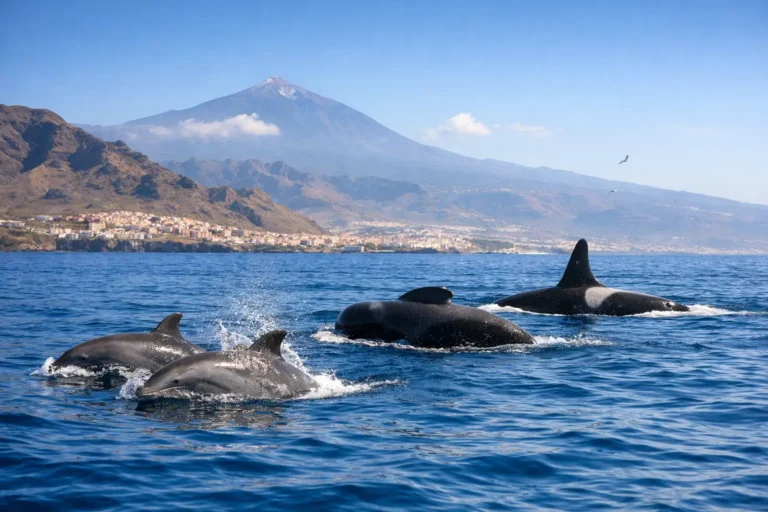
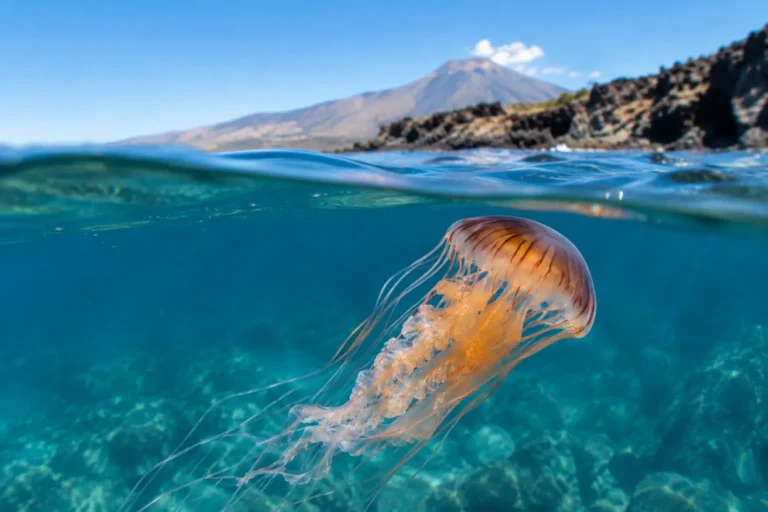
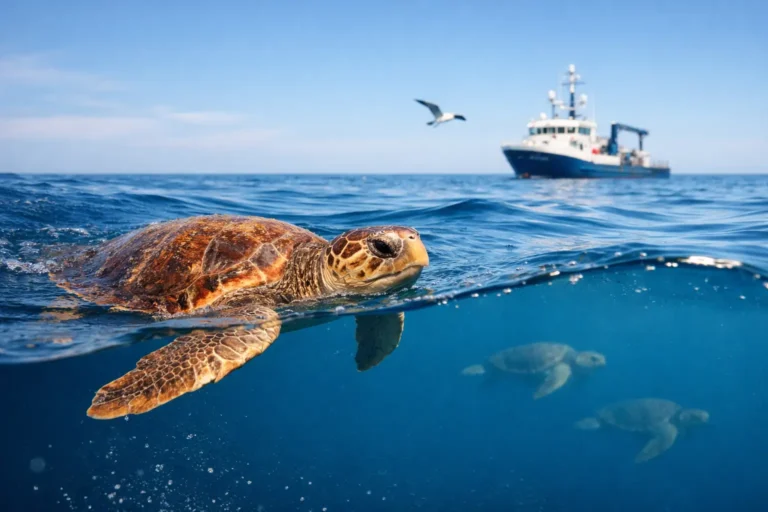
A few miles from the resorts of Costa Adeje and Los Cristianos, Tenerife's coastline drops away with remarkable speed. That dramatic underwater landscape is at the heart of why the Teno-Rasca Marine Area is so rich in marine life. Deep Atlantic water, steep volcanic slopes, ocean circulation and a productive food web come together here to create one of the island's most important marine environments.
For guests aboard a yacht, the experience can feel effortless: blue water, the silhouette of Tenerife behind you and perhaps a pilot whale surfacing nearby. Beneath the hull, however, lies a complex ecosystem shaped by geology and oceanography. Understanding it adds another dimension to seeing marine life in these waters.
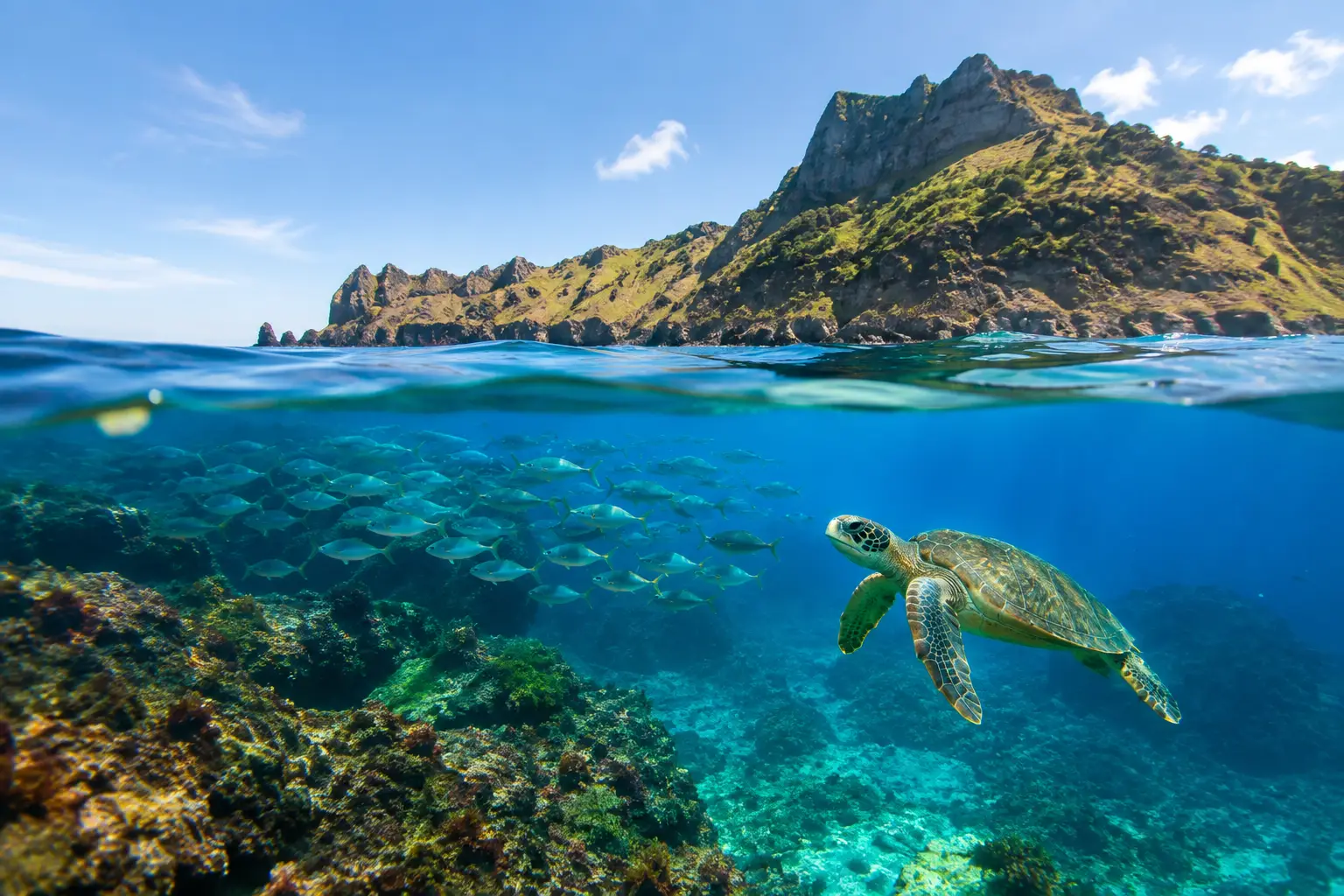
The Teno-Rasca Marine Area runs along a substantial stretch of Tenerife's south-west coast, between the Teno headland in the north-west and the Rasca headland near the south of the island. It is recognised as an important protected marine habitat, particularly for cetaceans.
One of the area's defining features is how quickly the seabed deepens. Tenerife is a volcanic island with steep underwater slopes, so boats do not have to travel vast distances from land before reaching much deeper Atlantic water. Deep channels and submarine terrain provide habitats for species that spend much of their lives beyond the shallow coastal zone.
This is one reason the south of Tenerife is well known for whale and dolphin watching. The distance from harbour to suitable cetacean habitat can be relatively short, although sightings are never guaranteed. Wildlife remains wild, and the animals determine where and when an encounter happens.
The depth also creates ecological variety. Nearer the coast, shallower waters support different communities from those found farther offshore. Below the surface, the transition from coastal habitats to deeper Atlantic environments is not marked by a visible boundary, but it is important to the species living there.
Marine life gathers where there is food, and food depends heavily on the movement of water. Tenerife lies within the wider influence of the Canary Current system, while winds, tides, seabed contours and the island itself all affect how water circulates around the coast.
As water moves around Tenerife, different layers can mix, bringing variations in temperature and nutrient availability. Conditions are not identical every day: season, weather and sea state all play a role. Even so, ocean circulation helps sustain plankton, the microscopic foundation of much of the marine food web.
Plankton may be almost invisible from a yacht, but its importance is enormous. It supports small fish and other organisms, which in turn become food for larger fish, squid, seabirds and marine mammals.
This creates a chain that connects the smallest organisms in the water to some of the largest animals visitors hope to see from a yacht. When the underlying food web is productive, the entire marine ecosystem can benefit.
Short-finned pilot whales are among the marine species most closely associated with Tenerife's south-west coast. A resident population is present in these waters throughout the year, although the animals' exact location and behaviour naturally change from day to day.
Pilot whales are highly social cetaceans and often travel in family groups. Their dark bodies, rounded heads and characteristic surfacing pattern can make them recognisable when conditions are good.
Their presence is closely connected with the area's deep-water environment and prey availability. Pilot whales are adapted to feeding at depth and are known to eat squid and fish. Tenerife's underwater geography gives them access to suitable habitat relatively close to the island.
Bottlenose dolphins are also regularly encountered in the area. Other species, including Atlantic spotted dolphins and common dolphins, can appear as well, while larger cetaceans may occasionally pass through. The frequency of sightings varies with prey, conditions and chance.
A responsible whale-watching operator should therefore focus on giving guests access to a productive marine environment rather than promising a particular species or behaviour.
Cetaceans may be the main attraction, but they are only one part of the marine ecosystem.
Look carefully at the surface and you may notice seabirds concentrating in one area, potentially indicating the presence of bait fish. Flying fish can suddenly break from the water and skim across the surface, while turtles may occasionally appear in warmer or quieter patches of sea.
Below the surface, different habitats support different communities. Rocky areas, open water and deeper slopes are home to a variety of fish and invertebrates. Small pelagic fish move through the water column, while other species are associated more closely with the seabed.
This variety is one reason the coast can feel alive even when whales or dolphins are nowhere to be seen. A yacht trip through the area is an opportunity to observe an entire marine environment rather than simply search for one particular animal.
The Teno-Rasca Marine Area's appeal has made it an important destination for whale watching, which brings a responsibility to minimise disturbance.
Respectful observation means allowing cetaceans room to choose their own course. Boats should approach animals slowly and predictably, avoid cutting across their path, minimise sudden changes of direction and leave when wildlife shows signs of disturbance.
The most memorable encounter is not necessarily the closest one. Seeing a group of pilot whales continue travelling naturally while you observe from an appropriate distance can be far more meaningful than trying to get as close as possible.
For guests, responsible wildlife watching also tends to create a calmer experience. The crew can explain what is happening, follow the animals' movements and adapt the route instead of treating the encounter as a race to reach a fixed point.
Royal Ocean's private whale and relaxation cruise allows the itinerary to be adapted to the conditions, making it possible to combine wildlife watching with time for cruising, swimming or simply enjoying the coastline.
There is no single perfect month for visiting the area. Resident pilot whales are present throughout the year, while other species can be more variable.
For visitors, the conditions on the actual day can be more important than choosing one particular month. Good visibility, manageable swell and suitable wind conditions can make spotting animals easier and make the experience more comfortable for passengers.
Morning and afternoon trips also offer different experiences. Morning light can be soft and the sea may feel calmer on some days, while later trips offer changing colours across Tenerife's cliffs and coastline. Neither time is universally better; the forecast and the day's conditions should guide the decision.
Bring sun protection, a light layer for the breeze and a camera if you want one, but keep your attention on the water too. Marine life can appear with very little warning, and the first person to spot a fin is often the person who has been watching the horizon rather than the screen.
From a yacht, it is easy to focus on what is visible above the surface: cliffs, beaches, birds and the occasional whale or dolphin. Much of the reason this part of Tenerife is so interesting, however, lies below the waterline.
The combination of steep volcanic seabed, deep Atlantic water and ocean circulation creates a range of habitats within a relatively compact area. Those habitats support different species and connect the coastal ecosystem with the deeper waters offshore.
In other words, the abundance of marine life here is not an accident. It is the result of Tenerife's geology interacting with the Atlantic over a much larger scale.
The Teno-Rasca Marine Area is a protected marine habitat along Tenerife's south-west coast, extending between the Teno headland in the north-west and the Rasca headland near the south of the island. It is particularly important for cetaceans.
The area combines deep Atlantic water close to shore, steep underwater terrain and ocean circulation that helps sustain plankton. This supports a food web involving fish, squid, seabirds and marine mammals, including resident short-finned pilot whales.
Short-finned pilot whales are present throughout the year, while bottlenose dolphins are also regularly encountered. Atlantic spotted dolphins and common dolphins can appear as well, together with occasional larger cetaceans. Sightings are never guaranteed.
Pilot whales are adapted to feeding at depth and are known to eat squid and fish. The deep-water environment close to Tenerife provides access to suitable habitat and prey.
Allow animals to choose their own course, avoid sudden manoeuvres or attempts to get unnecessarily close, and follow the crew's instructions. Responsible observation means giving wildlife space to continue its natural behaviour.