A still, sunlit cove can look irresistible from the deck of a yacht, particularly after a warm cruise along Tenerife's south coast. But before stepping into the Atlantic, it is worth knowing what to do if you encounter medusas in Tenerife. Jellyfish sightings are usually occasional rather than a reason to avoid the sea altogether, but conditions can change with wind, currents and weather.
For a comfortable swim stop, the approach is simple: check the water before entering, follow local flags and lifeguard guidance, and listen to the crew. A little awareness goes a long way when swimming from a boat or beach.
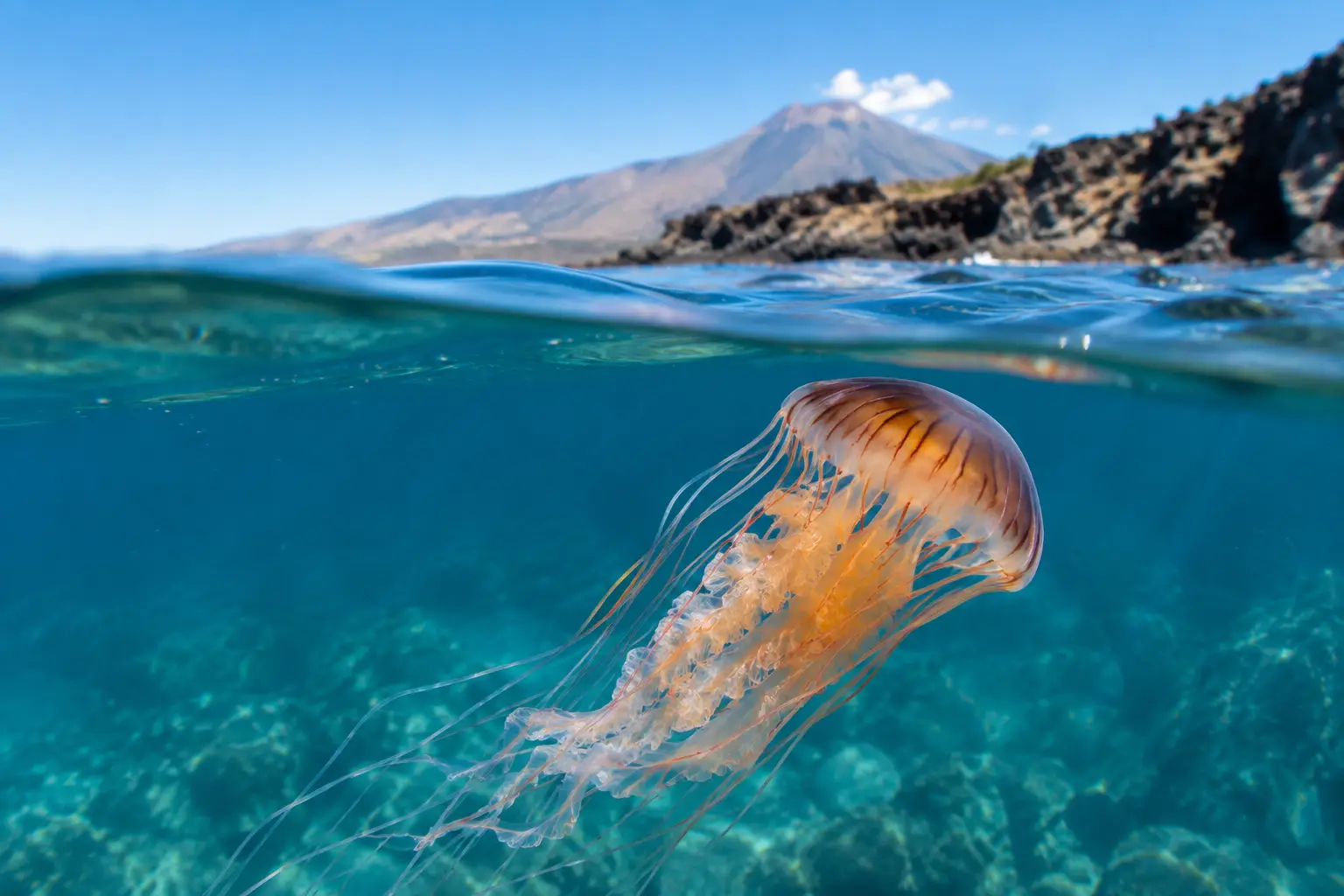
Yes. Tenerife's waters are home to several jellyfish and jellyfish-like species, and some can sting. Sightings vary considerably. You may spend an entire week swimming without seeing one, then find a small number close to shore after a change in weather or sea conditions.
Visitors may encounter species such as mauve stingers and compass jellyfish. Portuguese man o' war can also appear in Canary Island waters. Although it is not technically a jellyfish, it deserves particular care because its long trailing tentacles can cause a painful sting. Even when one is stranded on the sand, it should never be touched.
The presence of jellyfish does not mean that Tenerife's waters are generally unsafe. The Canary Islands are surrounded by open Atlantic waters, and marine life moves with currents and changing conditions. The important thing is to pay attention to current local information rather than assuming that the same conditions will apply everywhere.
There is no guaranteed jellyfish season that applies to every beach and every year. Reports can increase during warmer periods, but wind direction, currents, tides and offshore conditions can have a more immediate effect on whether jellyfish drift towards a particular stretch of coast.
South Tenerife is generally known for sunnier, drier weather and relatively sheltered coastal conditions, which makes it popular for boat trips. Even so, a bay can be clear one day and receive drifting marine life the next. A current assessment of the water is therefore more useful than relying on a seasonal rule you read before your trip.
After rougher weather, it is sensible to be particularly observant near the shoreline. On calm days, jellyfish can also be difficult to see because their bodies are often almost transparent. Before swimming, take a moment to look into the water from the side of the boat or at the waterline.
Beach flag systems are there to help swimmers make informed decisions about current conditions. A red flag means you should not enter the water. A yellow flag calls for caution, while a specific jellyfish warning should be followed according to the instructions given at that location.
Lifeguards have a much better view of local conditions than someone arriving at the beach, including currents and marine life that may not be obvious from the shore. If you are unsure, ask.
On a yacht trip, the skipper and crew can also adapt the plan to the conditions. A planned swim stop may be changed, delayed or replaced with time cruising along the coast if the water is unsuitable. At sea, the conditions on the day matter more than the original itinerary.
Jellyfish are often easier to see from above than when you are already in the water. From a yacht, take advantage of the higher viewpoint and look for translucent bells, trailing threads or clusters of small floating shapes.
Portuguese man o' war can be easier to identify because of its distinctive inflated blue or violet float. However, the visible body does not necessarily show the full extent of its tentacles.
If you see a jellyfish, keep your distance and alert the crew, lifeguard or nearby swimmers without creating unnecessary alarm. Do not try to move or touch it yourself.
Children should be supervised closely during any swim stop, particularly if they are less confident in the water. A calm entry, a suitable swim ladder and attentive supervision can make a significant difference to everyone's comfort.
Jellyfish stings can cause localised pain, redness, itching or raised marks. If you are stung, leave the water carefully and tell a lifeguard or the boat crew straight away. Do not continue swimming simply because the initial discomfort seems mild.
Follow the advice of the professionals present. General first-aid guidance in the source material includes:
Do not rely on old holiday remedies such as urine, alcohol or sand. Vinegar is not a universal treatment either, as the appropriate response can vary between species. Local medical or lifeguard advice should take priority.
Anyone with a history of severe allergic reactions should take particular care and carry any prescribed medication. If a child is stung, seek advice promptly, especially if the affected area is large or symptoms extend beyond local skin discomfort.
If swimming is an important part of your day on the water, a smaller yacht experience can make the swim stop easier to manage. There is more space to enter the water calmly, and the crew can monitor conditions and adjust the plan if necessary.
For couples, families and groups, a private yacht charter also allows the pace of the day to remain flexible. You can combine coastal cruising, wildlife watching and a swim stop when conditions are suitable, rather than having the entire experience depend on one particular beach or swimming location.
At Royal Ocean, swim stops are planned around the conditions on the day. If the water is unsuitable, the crew can adapt the route or recommend enjoying the coastline from the yacht instead.
Yes. A jellyfish warning may affect one beach, a particular time of day or an exposed section of coastline rather than the whole island.
You can still enjoy coastal cruising, wildlife watching and time on deck. A private whale and relax cruise, for example, can be adapted around the conditions rather than relying on a fixed swim location.
The best approach is to come prepared but remain flexible. Bring a cover-up, stay hydrated and follow the advice of the crew or lifeguards. If a swim stop needs to change, there is still plenty to see and enjoy from the water.
Before you swim, take a moment to look, ask and listen. That small habit can help you enjoy Tenerife's Atlantic waters with greater confidence while respecting the conditions around you.
Yes. Tenerife's waters are home to several jellyfish and jellyfish-like species, including mauve stingers, compass jellyfish and Portuguese man o' war. Sightings vary considerably.
There is no guaranteed season that applies everywhere. Reports can increase during warmer periods, but wind direction, currents, tides and offshore conditions can have a more immediate influence. After rougher weather, be especially observant near the shoreline.
Keep a generous distance and tell the crew, lifeguard or nearby swimmers. Do not touch or attempt to move it, even if it appears stranded on the beach.
Leave the water and alert a lifeguard or boat crew. General guidance includes rinsing the affected area with seawater, avoiding rubbing the skin and carefully removing visible tentacle material. Seek urgent medical help for serious symptoms such as breathing difficulty, chest pain, faintness, widespread rash or severe pain.
Yes. A warning may affect one beach or part of the day rather than the entire coastline. Coastal cruising and wildlife watching can still be enjoyed, while the crew can adapt the route or swim stop to the conditions.