A dark opening in a cliff can look almost theatrical from the deck of a yacht: a narrow band of shadow beneath sun-warmed rock, where the Atlantic changes from sapphire to deep indigo. Tenerife's sea caves and underwater volcanic landscapes tell a story shaped by eruptions, waves, erosion and thousands of years of change.
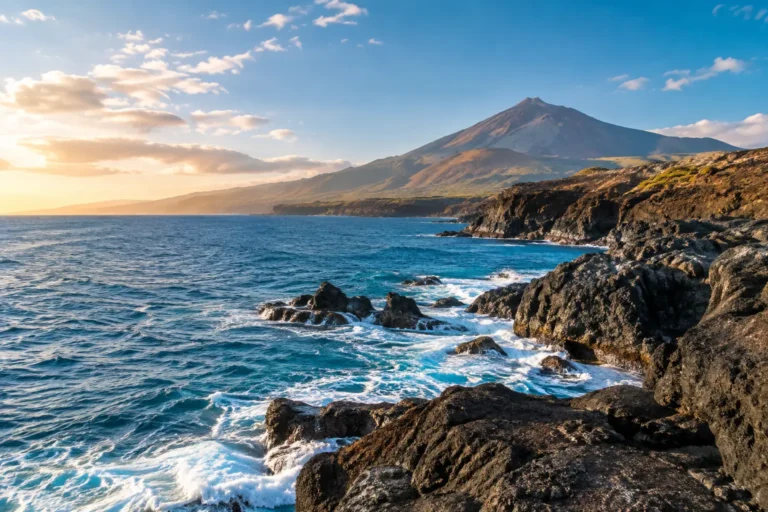
From the sea, the volcanic character of the island becomes especially easy to appreciate. Cliffs, lava shelves, rocky ledges and caves reveal how Tenerife continues beneath the surface, while changing light and water colour bring out details that are easy to miss from land.
Tenerife was built by volcanic activity. Successive eruptions produced lava flows that reached the coast and cooled into hard volcanic rock, including basalt. Different flows cooled and solidified in different ways, leaving cliffs, fractures, cavities and other structures within the coastal landscape.
The Atlantic then began working on this volcanic foundation. Waves repeatedly strike cracks, joints and weaker sections of rock, forcing water and air into small openings. Over time, repeated wave action and abrasion by sand and rock fragments can enlarge these weak points and create coastal recesses and caves.
The result is rarely a perfectly shaped chamber with an easy entrance. Tenerife's coastal caves tend to be rugged and closely connected to the surrounding volcanic cliffs. Some are shallow recesses, while others extend deeper into the rock. Their appearance also changes with the light, sea state and viewing angle.
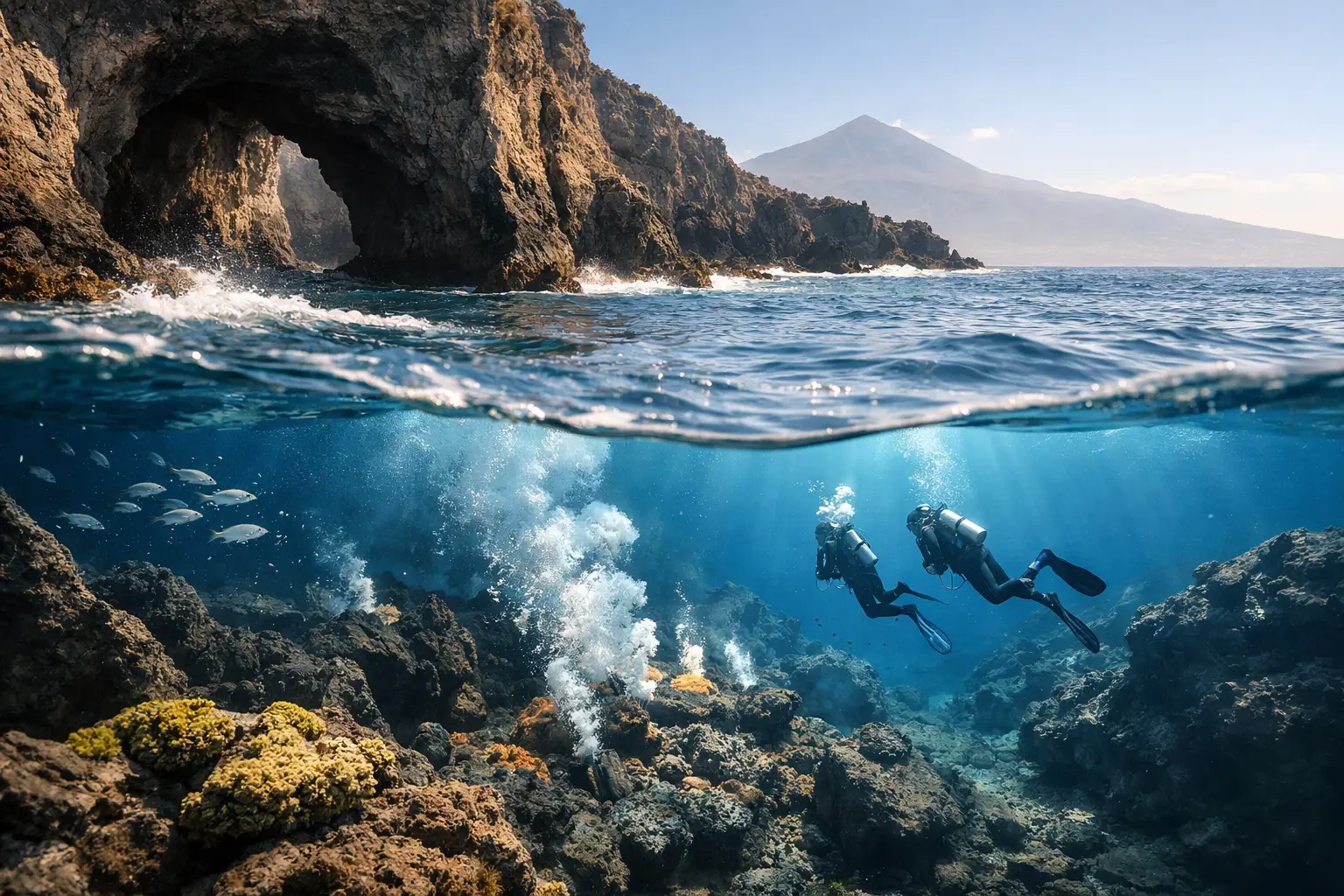
From a yacht, the contrast can be particularly striking: dark basalt above the water, clear blue or green water around the rocks and deep shadows where the cliffs meet the Atlantic.
What you see above the surface is only part of the landscape. Old lava flows continue beneath the water, creating shelves, slopes, crevices and fields of volcanic rock. Where a cliff reaches the sea, the underwater terrain often continues its shape rather than ending abruptly at the waterline.
In sheltered conditions, differences in depth can be visible from the surface. Shallow volcanic shelves may appear lighter or more turquoise, while deeper water becomes progressively darker blue. The changing colours reveal something about the shape of the seabed even when you are looking from the yacht rather than underwater.
This volcanic structure also creates habitats for marine life. Crevices and overhangs provide shelter for smaller fish and invertebrates, while rocky seabeds support communities that differ from those found over sand. The exact species and visibility depend on the location and conditions, but the complex volcanic terrain is an important part of Tenerife's coastal marine environment.
It is easy to assume that every opening in a volcanic cliff is a lava tube, but coastal caves can form in several different ways.
A lava tube develops during a volcanic eruption when the surface of a lava flow cools and hardens while molten lava continues moving underneath. If the flow eventually drains away, it can leave a tunnel-like space inside the solidified lava. Where such a structure reaches the coastline, later erosion can expose it.
Other caves are primarily created by wave erosion. The sea exploits existing cracks and weaknesses in the volcanic rock, gradually enlarging them through repeated impact and abrasion.
In reality, the processes can overlap. A volcanic structure may create a natural weakness, and the Atlantic can then enlarge it over time. This combination helps explain why Tenerife's coastal formations vary so much in shape and size.
Some are broad, open recesses that can be viewed easily from offshore. Others are narrow and dark, with their internal structure impossible to judge safely from outside. The coastline is still being shaped by the interaction between the volcanic island and the ocean.
A yacht provides a useful perspective for understanding the scale of the volcanic coastline. From the water, you can see the full height of the cliffs and follow the transition from exposed rock to submerged volcanic terrain.
Along the south coast, the landscape can change quickly. Open Atlantic views give way to rugged volcanic headlands, cliffs and smaller coastal formations. The angle of the sun also changes the appearance of the rock, with dark basalt taking on warmer tones later in the day.
A private yacht charter allows the route to remain flexible. The crew can adapt the cruise to sea conditions and choose how closely to approach particular sections of the coastline, while guests have time to enjoy the scenery rather than treating every formation as a fixed sightseeing stop.
Photographs can make entering a sea cave look effortless, but conditions around cave entrances can be very different from what they appear to be from shore.
Waves can rebound from the walls, creating confused water near the entrance. A narrow opening can also leave little room for manoeuvre, while changes in swell can make an approach that looks calm one moment considerably more difficult a short time later.
For this reason, experienced skippers assess the sea state, wind, visibility and available clearance before approaching rocky formations. Often, the best way to appreciate a cave is from outside, where its entrance and surrounding cliffs can be seen as part of the larger volcanic landscape.
The same principle applies to swimming. A suitable swim stop in calm water can be a highlight of a yacht trip, while swimming close to a cave entrance or directly beneath unstable cliffs presents different risks. The crew's assessment of the conditions should always take priority.
There is no single perfect time for every coastal itinerary. Morning light can give the cliffs a clean, clear appearance, while late afternoon brings longer shadows and warmer colours. Around sunset, the contrast between dark volcanic rock and the sky can become particularly dramatic.
Sea conditions matter more than the clock, however. A beautiful sunny day does not automatically mean that every exposed section of the coast will be comfortable to approach. Wind, swell and local conditions can influence the route much more than the date or time of departure.
For that reason, the crew can adapt the itinerary according to what the sea is doing on the day. A private sunset cruise can be a particularly atmospheric way to see the changing colours of the volcanic coastline, provided conditions allow.
Yes. The waters off southern Tenerife offer opportunities to experience both the open Atlantic and the island's volcanic coastline during the same outing. Wildlife sightings are never guaranteed, so the exact balance between time in deeper water and coastal cruising depends on the conditions and the day.
A private whale and relax cruise can be adapted around the sea conditions, allowing time for wildlife watching as well as a scenic return along the coast. This makes the volcanic landscape part of the overall experience rather than a separate sightseeing stop.
Tenerife's sea caves are a reminder that the island's volcanic history is still visible at the water's edge. Lava created the original geological framework; the Atlantic continues to modify it through waves, erosion and weathering.
Look closely from the water and the coastline becomes much more than a line of cliffs. You can see shelves continuing beneath the surface, cavities formed along weaknesses in the rock, and different volcanic layers exposed by erosion.
That is what makes exploring Tenerife's coast by yacht so interesting from a geological perspective. You are seeing an active landscape shaped by two powerful forces: the volcanic processes that built the island and the Atlantic Ocean that continues to reshape its edges.
Some coastal caves develop where waves exploit cracks and weaker sections of volcanic rock. Others may be associated with lava tubes formed during volcanic eruptions. In many cases, volcanic structures and later marine erosion have both contributed to the final shape.
Not necessarily. Some openings may be related to former lava tubes, but many coastal caves are primarily the result of wave erosion acting on fractures and weaknesses in volcanic rock.
It depends entirely on the cave, vessel, sea state and local conditions. Cave entrances can contain confused water and leave limited room for manoeuvre, so experienced crews may choose to view them from a safe distance instead.
Old lava flows can create rocky shelves, slopes, crevices and boulder fields beneath the surface. These structures provide habitats for a variety of marine life, although visibility and species vary with location and conditions.
Morning can offer clear, softer light, while late afternoon and sunset can bring warmer colours and longer shadows across the volcanic cliffs. Sea conditions are more important than the exact time, so the best itinerary depends on the conditions on the day.