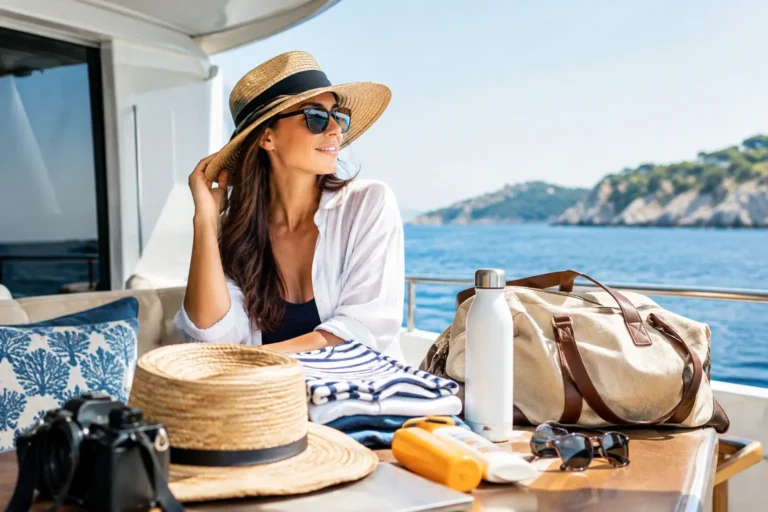
The last edge of the sun drops behind Tenerife’s Atlantic horizon, the yacht settles into a gentle rhythm, and the light changes by the second. For guests who enjoy marine photography, capturing a sunset or the elusive green flash is less about owning the most expensive camera and more about being ready for a brief, beautiful moment.
A sunset at sea never performs on cue. Cloud, haze, swell, and the clarity of the horizon all matter. That uncertainty is part of the appeal: the best photographs come from observing the conditions, anticipating what may happen next, and allowing the experience to remain enjoyable even when nature chooses a quieter display.

South Tenerife offers several qualities photographers appreciate: wide views across the Atlantic, an open western horizon, and evening light that can continue well beyond the moment of sunset. From the water, the coastline, volcanic slopes, and the distant outline of La Gomera can add scale and character to maritime photographs.
A yacht also provides a constantly changing viewpoint. You may photograph the sun low above open water, turn towards the island for warm light across the landscape, or frame companions against the evening sky. The trade-off is movement. Even on a calm evening, a boat is never completely still, so successful photography requires a balance between creative choices, practical camera settings, and stable technique.
For couples, families, and private groups, the atmosphere matters as much as the photograph itself. A relaxed deck and enough personal space make it easier to enjoy the cruise rather than spend the entire evening looking through a viewfinder. Often, the unplanned photographs—a laugh, a toast, or someone quietly watching the horizon—become the images people value most.
The green flash is a genuine optical phenomenon caused by the way Earth's atmosphere refracts and disperses sunlight. As the upper edge of the sun slips below a clear and distant horizon, different wavelengths of light are bent by slightly different amounts. Under suitable conditions, a thin green rim or brief flash can remain visible for a fraction of a second.
A clear, unobstructed horizon and relatively transparent air improve the chances of seeing it. A low bank of cloud may obscure the effect completely, while haze can soften it beyond recognition. In some atmospheric conditions, layers of air or cloud can produce unusual variations in the appearance of the final light.
There is no reliable promise that the green flash will appear. That unpredictability is precisely what makes seeing it memorable.
Never stare directly at the sun while it remains bright, particularly through an optical viewfinder. If you are photographing the final stages of sunset, use your camera's rear screen or an electronic viewfinder where appropriate, and remain aware of your position and surroundings on board.
If you are travelling with a group, one person can operate the camera while others simply watch the horizon. The green flash may be over before you fully recognise it, so there is little value in turning the entire experience into a technical exercise.
Begin preparing your camera around 20 to 30 minutes before sunset. This period often provides attractive directional light for portraits while giving you time to test your settings before the sun reaches the horizon.
Do not treat the published sunset time as the end of the shoot. The afterglow can continue to develop for another 10 to 20 minutes, sometimes producing deeper colours and softer light than the actual moment when the sun disappears.
Keep your lens clean throughout the trip. Salt spray, moisture, and sunscreen fingerprints can reduce contrast and create distracting flare when shooting towards the sun. A small microfibre cloth stored in a dry pocket is one of the simplest and most useful items to bring.
On a yacht, a sharp photograph is often more valuable than the lowest possible ISO.
Modern cameras generally handle a moderate increase in ISO better than a photograph lost to camera shake or vessel movement.
For broad sunset scenes, an aperture around f/5.6 to f/8 often provides good overall detail without forcing excessively slow shutter speeds. For portraits with a softer background, wider apertures can work well, but focus becomes more critical when both the photographer and subject are moving slightly with the boat.
Sunset scenes contain a large range between bright highlights and dark foregrounds. Start by protecting the brightest part of the sky so that colour and detail are retained.
For silhouettes, expose for the sunset and allow people, railings, or the yacht's profile to become dark shapes against the sky. For portraits where facial detail matters, position the subject towards the remaining ambient light or use subtle fill light where appropriate.
Check your histogram or highlight warnings if your camera provides them. A small test sequence before the sun reaches the horizon can save time when the light begins changing rapidly.
RAW files provide more flexibility when recovering detail from shadows and adjusting colour later. JPEG remains an excellent choice for photographers who prefer to share images immediately. The best format depends on how much post-processing you actually intend to do.
A wide lens around 24mm to 35mm on a full-frame camera is useful for placing people within the wider environment. Include part of the yacht, a railing, the bow, or the coastline to give the photograph a stronger sense of place.
Keep the horizon level unless a deliberate angle genuinely improves the composition. A slightly tilted horizon is particularly noticeable in seascapes.
A telephoto lens can isolate distant details and make the sun appear larger in the frame, but it also magnifies hand movement and the yacht's motion. Use a faster shutter speed, keep your elbows close to your body, and take several frames rather than relying on a single shot.
Smartphones can also produce excellent sunset photographs. Tap the brighter part of the sky to control focus and exposure, then reduce exposure slightly if your camera app allows it. Avoid excessive digital zoom. Often, changing your physical position or using foreground elements produces a stronger image than zooming into a distant horizon.
Tenerife's waters are home to cetaceans, including pilot whales and dolphins, which can make a sunset cruise particularly rewarding for photographers.
Wildlife photography should never interfere with the animals or override safe navigation. Keep movements quiet, avoid flash, follow the crew's instructions, and do not expect the vessel to change course or approach animals solely to create a closer photograph.
A moderate telephoto lens can help capture distant subjects, but wider images can be equally memorable: a fin against golden water, the reaction of people on board, or the changing texture of the ocean after the animals have disappeared from view.
The strongest wildlife photographs usually show natural behaviour rather than an animal crowded into a frame.
The green flash is a natural optical phenomenon that can occur as the sun's upper edge disappears below a clear, distant horizon. Atmospheric refraction separates different wavelengths of sunlight, occasionally leaving a brief green rim or flash visible for a fraction of a second. A clear horizon and relatively transparent air improve the chances of seeing it, but it cannot be guaranteed.
Start with a shutter speed of around 1/250 second for people on deck and increase to 1/500 second or faster when using longer lenses or dealing with more noticeable boat movement. For broad scenes, f/5.6 to f/8 is a useful starting range. Raise ISO when necessary to maintain a shutter speed capable of handling vessel movement.
A wide lens between 24mm and 35mm on a full-frame camera works well for showing the yacht, guests, and surrounding landscape together. A telephoto lens can isolate distant details and make the sun appear larger in the frame, but it requires faster shutter speeds and careful handling because boat movement is magnified.
Begin preparing around 20 to 30 minutes before sunset. This gives you time to test settings while the light is still suitable for portraits. Continue shooting after the sun disappears, as the afterglow can produce attractive colours for another 10 to 20 minutes.
Yes, provided you do so responsibly. Follow the crew's instructions, avoid flash, keep a safe position on deck, and allow the animals to behave naturally without attempting to force a closer encounter. A telephoto lens can help, but wider photographs showing the animals within the surrounding seascape can be equally effective.
Yes. The open Atlantic horizon off South Tenerife, views towards La Gomera, and the changing perspective from the water can create excellent conditions for sunset photography. However, the final result always depends on weather, cloud, haze, sea conditions, and the natural variability of the atmosphere.