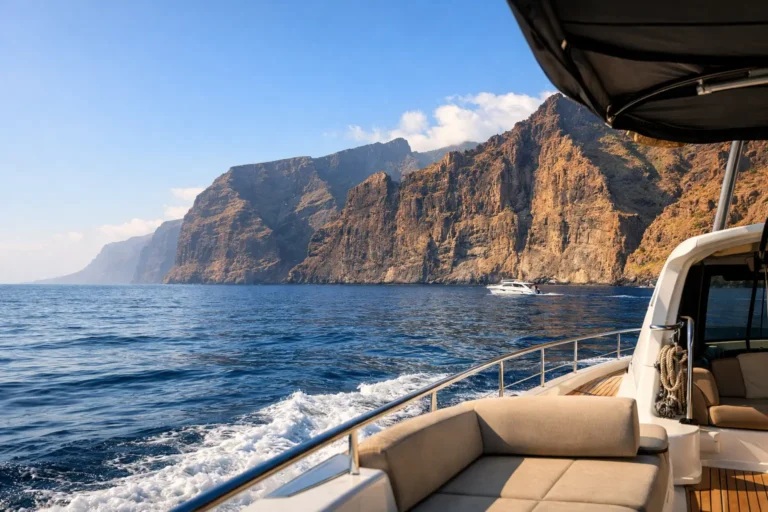
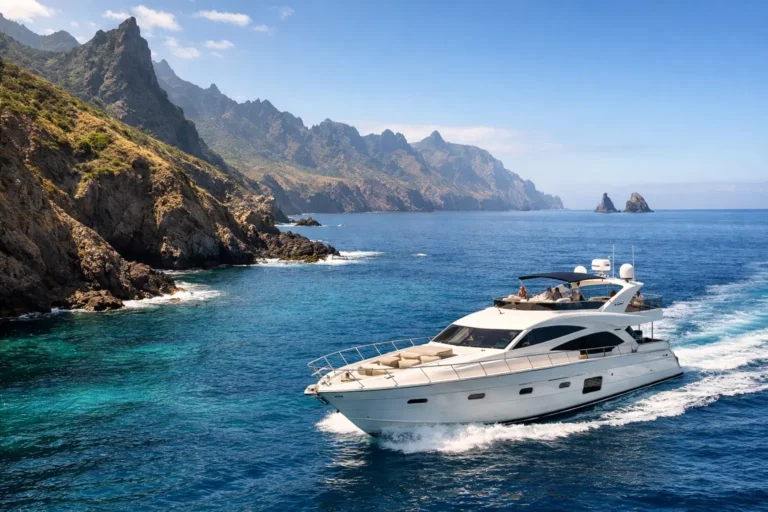
El Puertito de Adeje is an attractive stop along Tenerife's southwest coast, known for its volcanic shoreline, clear Atlantic water and quieter atmosphere. For a yacht trip, however, the appeal of the bay has to be considered together with the conditions on the day. Wind, swell, seabed, marine activity and local regulations can all determine whether it is a comfortable place to stop.

El Puertito is a small coastal settlement with a natural bay that attracts visiting yachts and day boats looking for a scenic pause away from the larger harbours. The surroundings have the characteristic volcanic landscape of Tenerife, with dark rock, low cliffs and clear water.
The setting can look calm and inviting from the shore, but El Puertito should not be confused with a sheltered marina. There are no permanent breakwaters or marina-style berths protecting a yacht from changing Atlantic conditions. A long-period swell can also make a boat move at anchor even when the surface initially appears relatively calm.
For that reason, a good yacht itinerary treats El Puertito as a possible stop rather than a guaranteed destination. The crew can assess the bay on arrival and decide whether it is the right place to spend time in the water or relax on deck.
There is no written guide that can confirm whether El Puertito is suitable for anchoring at a particular moment. The relevant conditions can change during the day, and the skipper needs to consider the latest marine forecast together with what is actually happening on the water.
Sunny weather does not necessarily mean calm conditions. Trade winds can affect different sections of Tenerife's southwest coast in different ways, particularly around headlands and exposed sections of coastline. A light breeze may be pleasant on deck, while stronger or shifting winds can make an anchorage less comfortable.
Swell is equally important. Atlantic swell generated some distance from Tenerife can reach the coast even when the local weather is bright and relatively calm. Depending on its direction and period, it can produce noticeable rolling at anchor.
The skipper therefore looks at how the yacht responds to the combined wind and swell, rather than judging the bay by appearance alone. If the boat is moving too much for comfortable dining, relaxing or using the swim ladder, another location may provide a better experience.
The seabed around Tenerife can change over relatively short distances, with areas of sand, volcanic rock and marine vegetation. Choosing a suitable anchoring position therefore requires knowledge of the bottom, appropriate depth and sufficient room for the yacht to swing safely.
Reliable anchoring technique and ground tackle are important, but so is selecting the right location in the first place. The skipper must take nearby vessels, rocks, swimmers and changes in wind or swell into account.
Environmental considerations are part of the same decision. Anchoring should avoid sensitive marine habitats wherever applicable, and crews should follow current maritime guidance and use designated or suitable sandy areas where required.
El Puertito is a recreational coastal area rather than an isolated anchorage. Depending on the season and time of day, swimmers, paddleboarders, kayaks, small leisure boats and other water users may share the bay.
Even with good visibility, people in the water can be difficult to see because of sunlight reflection, surface chop and the movement of small craft. Approaching and manoeuvring slowly, maintaining a proper lookout and clearly managing the swimming area are therefore essential.
If activity increases or the conditions deteriorate, shortening a swim stop or moving elsewhere can be the sensible choice. The goal is to enjoy the bay, not to remain there for a predetermined amount of time.
Anchoring and navigation requirements can change, particularly in coastal areas where tourism, marine wildlife and recreational activities overlap. Charter operators should verify the current local rules before planning a stop, including requirements relating to anchoring, bathing areas, navigation, waste discharge and protected marine habitats.
The waters around southern Tenerife are also important for marine wildlife, including whales and dolphins. Responsible boating means keeping appropriate distances from wildlife, avoiding unnecessary disturbance and following the applicable regulations.
For visitors, this usually means leaving the operational decisions to the crew. A professional skipper can combine the day's conditions with local knowledge and current requirements when deciding where the yacht should stop.
When the sea is settled, El Puertito can make a beautiful addition to a private cruise along the south Tenerife coast. The natural surroundings provide a pleasant setting for a swim, a drink on deck, lunch or simply some time enjoying the coastline.
The bay can be particularly appealing to couples and small groups who prefer a natural coastal setting rather than spending the entire trip around the busier tourist areas.
Conditions may make another option preferable, however. Noticeable swell, stronger or shifting winds, heavy activity on the water or unsuitable holding can all be reasons for the skipper to change the plan.
On a private charter, this flexibility is one of the main advantages. The route can be adapted to the actual conditions instead of requiring the yacht to follow a fixed itinerary regardless of what is happening at sea.
If El Puertito is uncomfortable or unsuitable when the yacht arrives, there is no reason for the day to be spoiled. The crew can consider another location, continue cruising along the coast or spend more time underway enjoying the scenery and marine wildlife.
A private yacht charter for a special occasion can also be adapted around the preferences of the group and the conditions that day. A swim stop may become a scenic cruise, or the itinerary may simply move to calmer water.
The important point is that the most suitable location can only be determined with the conditions in front of the skipper. A beautiful bay is worth visiting when it is comfortable; there is little benefit in forcing the stop when the sea says otherwise.
If you would like El Puertito to be part of your route, mention it to the charter team before departure. It is better to treat it as a preferred option than as a guaranteed stop, since the final decision depends on the sea conditions.
No. El Puertito is a natural coastal anchorage rather than a fully protected harbour. Wind and Atlantic swell can affect conditions, so the skipper needs to assess the bay on the day.
Whether and where a yacht can anchor depends on the current local regulations, seabed conditions, available space and the state of the sea. The crew should verify the applicable restrictions and choose a suitable position before anchoring.
Swimming may be possible when wind, swell, visibility and local activity make it appropriate. The crew will assess the conditions and surrounding water users before allowing guests to enter the water.
No. Sunshine does not rule out wind or Atlantic swell. A bay can look calm from the shore while long-period swell creates noticeable movement at anchor.
The skipper can adapt the itinerary by choosing another suitable location, continuing along the coast or concentrating on scenic cruising and wildlife watching. On a private charter, the route can be adjusted according to the conditions.