A yacht resting quietly in clear blue water can make anchoring look effortless. In reality, anchoring techniques in deep ocean waters involve a series of practical decisions about depth, seabed conditions, weather, currents, available equipment, and local regulations. It is not simply a matter of dropping an anchor and waiting for it to hold.
For guests enjoying a yacht charter in Tenerife, the reassuring part is that a well-planned day at sea is normally built around suitable coastal conditions rather than dramatic attempts to anchor far offshore. Comfortable swim stops and relaxed pauses are chosen where the captain can manage the vessel safely and responsibly.
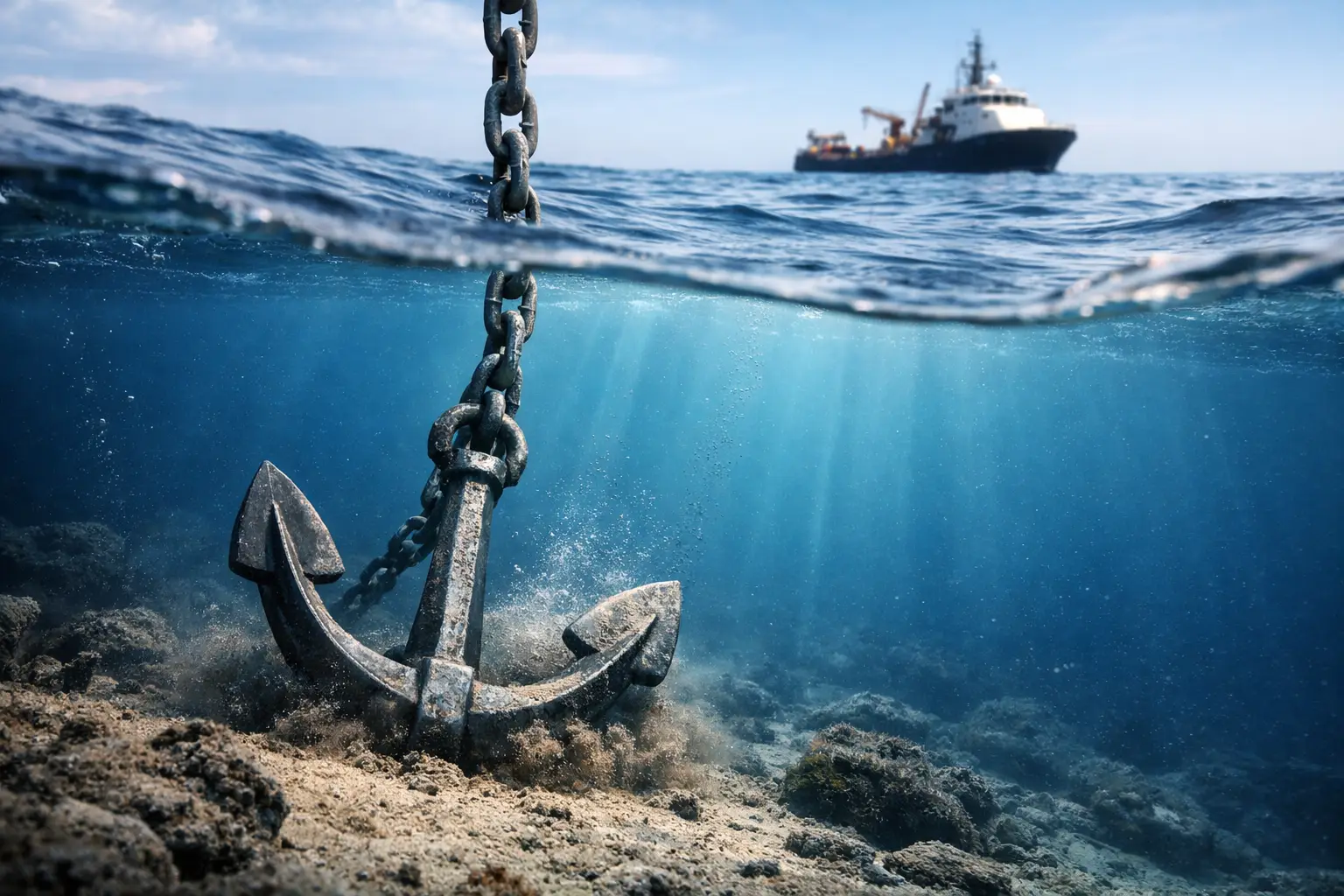
The main challenge is the amount of chain or other anchor rode required. An anchor works most effectively when the pull along its shank remains relatively low and close to horizontal, allowing it to set properly in the seabed. As water becomes deeper, substantially more rode must be deployed to achieve a suitable angle.
This relationship is known as scope: the ratio between the length of anchor rode paid out and the relevant vertical distance to the seabed. The appropriate scope depends on factors including the type of rode, water depth, wind, waves, current, and expected loads on the vessel.
In deeper water, the required length can quickly become impractical for a leisure yacht. Carrying, deploying, and recovering hundreds of metres of heavy chain requires suitable equipment and places significant loads on the windlass and the anchoring system.
Even when a vessel has enough rode, anchoring far offshore creates another problem: if the wind or current changes, the yacht requires a large area in which to swing safely around its anchor point.
Anchoring begins long before the anchor reaches the water. A captain considers the depth, seabed, available swing room, weather forecast, current conditions, surrounding vessels, and the possibility of leaving the area quickly if conditions deteriorate.
| Factor | Why It Matters | Deep-Water Challenge |
|---|---|---|
| Scope | Helps maintain an effective angle of pull on the anchor. | Greater depth requires much more chain or rode. |
| Seabed Composition | Determines how effectively an anchor can set and hold. | Rock, vegetation, uneven terrain, and steep slopes can make holding unreliable. |
| Swinging Room | Provides space for the yacht to move as wind and current change. | A long rode can create a very large swinging circle. |
| Weather and Current | Increase the loads acting on the anchor and rode. | Changing conditions can quickly turn a comfortable anchorage into an exposed one. |
| Equipment Capacity | Determines how much rode can be safely deployed and recovered. | Heavy chain and long retrieval times increase mechanical demands. |
The length of chain or rode deployed affects both the anchor's holding performance and the amount of space the yacht requires. More scope generally reduces the angle at which the anchor is pulled, but it also increases the vessel's potential swinging radius.
The anchor itself is only one part of the system. Wind acting on the yacht's superstructure, current acting on the hull, wave motion, and the vessel's overall profile all create forces that are transferred through the rode to the anchor.
A captain therefore monitors the yacht's position after anchoring rather than assuming that the anchor will remain secure indefinitely. If conditions change or the vessel begins to drag, the engines may need to be started and the yacht repositioned or moved elsewhere.
Different anchors perform differently depending on the seabed. Firm sand and suitable mud can provide reliable holding conditions, while rock, dense vegetation, coral, loose gravel, or uneven terrain may make it difficult for an anchor to set properly.
This is particularly relevant around volcanic islands. Tenerife's underwater landscape can change rapidly from relatively shallow coastal areas to steep slopes and deeper water. Local knowledge, nautical charts, depth information, and an understanding of the conditions are therefore important when selecting a place to anchor.
A yacht at anchor does not remain fixed in one position. Wind and current can cause it to move around the anchor point, sometimes changing direction over the course of a stop.
The more rode that has been deployed, the larger the area the yacht may require. In a crowded anchorage, near reefs, beaches, other vessels, or charted hazards, insufficient swing room can make anchoring inappropriate even when the seabed itself is suitable.
A location that feels calm in the morning may become uncomfortable later in the day. Wind can strengthen, swell can change direction, and conditions around headlands and exposed sections of coastline may differ significantly from those only a short distance away.
For this reason, professional captains do not treat an itinerary as a fixed promise. A preferred swim stop may be replaced with a more sheltered location if the actual conditions make it the better choice.
For guests, flexibility is usually a benefit rather than a compromise. A quieter bay with comfortable conditions is generally more enjoyable than insisting on a planned location simply because it appeared on the original route.
When water is too deep, the seabed is unsuitable, or conditions do not support a safe anchorage, there are several alternatives.
The waters around South Tenerife offer dramatic coastlines, open Atlantic views, and frequent opportunities to encounter marine wildlife. However, the quality of a yacht charter is not measured by how deep the water is or how far offshore the vessel anchors.
The more important factor is how well the route and stopping points match the actual conditions on the day. Before departure, the crew considers weather, sea state, the length of the charter, the guests on board, and the most suitable areas for swimming, sightseeing, or wildlife observation.
A responsible yacht operator may change the route, select another stopping point, or decide that remaining underway provides the safest and most comfortable experience. Those decisions are part of professional seamanship.
Anchoring can also affect the seabed. An anchor and its chain may disturb sensitive habitats, particularly when dragged across coral, seagrass, or other vulnerable marine environments.
Where appropriate, using established moorings or selecting suitable sandy areas can reduce unnecessary disturbance. Avoiding unsuitable anchoring locations protects both the environment and the equipment on board.
You do not need technical knowledge to choose a professionally operated charter, but a few questions can reveal how an operator approaches safety and comfort.
A professional operator should not promise a perfectly flat sea, a specific anchorage, or a guaranteed wildlife encounter. Instead, the crew should explain how the experience is adapted to give guests the best possible conditions.
The appeal of anchoring is easy to understand: the engines quieten, the yacht settles, and the water suddenly feels like a private place to swim or simply enjoy the view.
But in deep ocean conditions, the best decision is often not to anchor at all. Choosing the right location, depth, and conditions is more important than demonstrating how much chain a yacht can deploy.
For guests, the result should feel simple: a comfortable place, a relaxed atmosphere, and a crew quietly managing the details that make the experience possible.
Some vessels can anchor in deep water, but it is generally impractical for many leisure yachts. Greater depth requires much more chain or rode, suitable equipment for deployment and recovery, adequate swing room, and a seabed capable of providing reliable holding.
Anchor scope is the relationship between the amount of anchor rode deployed and the relevant vertical distance to the seabed. Adequate scope helps maintain a suitable angle of pull so the anchor can set and hold effectively.
Different seabed types provide different holding conditions. Suitable sand or mud may allow an anchor to set effectively, while rock, dense vegetation, coral, loose gravel, or steep terrain can make anchoring more difficult or inappropriate.
Depending on the location and conditions, alternatives may include approved moorings, sheltered coastal anchorages, temporarily maintaining position under engine control, or simply continuing to cruise.
Anchoring can disturb sensitive habitats, particularly when anchors or chains drag across coral, seagrass, or other vulnerable seabed environments. Using appropriate anchoring areas or established moorings can help reduce this impact.