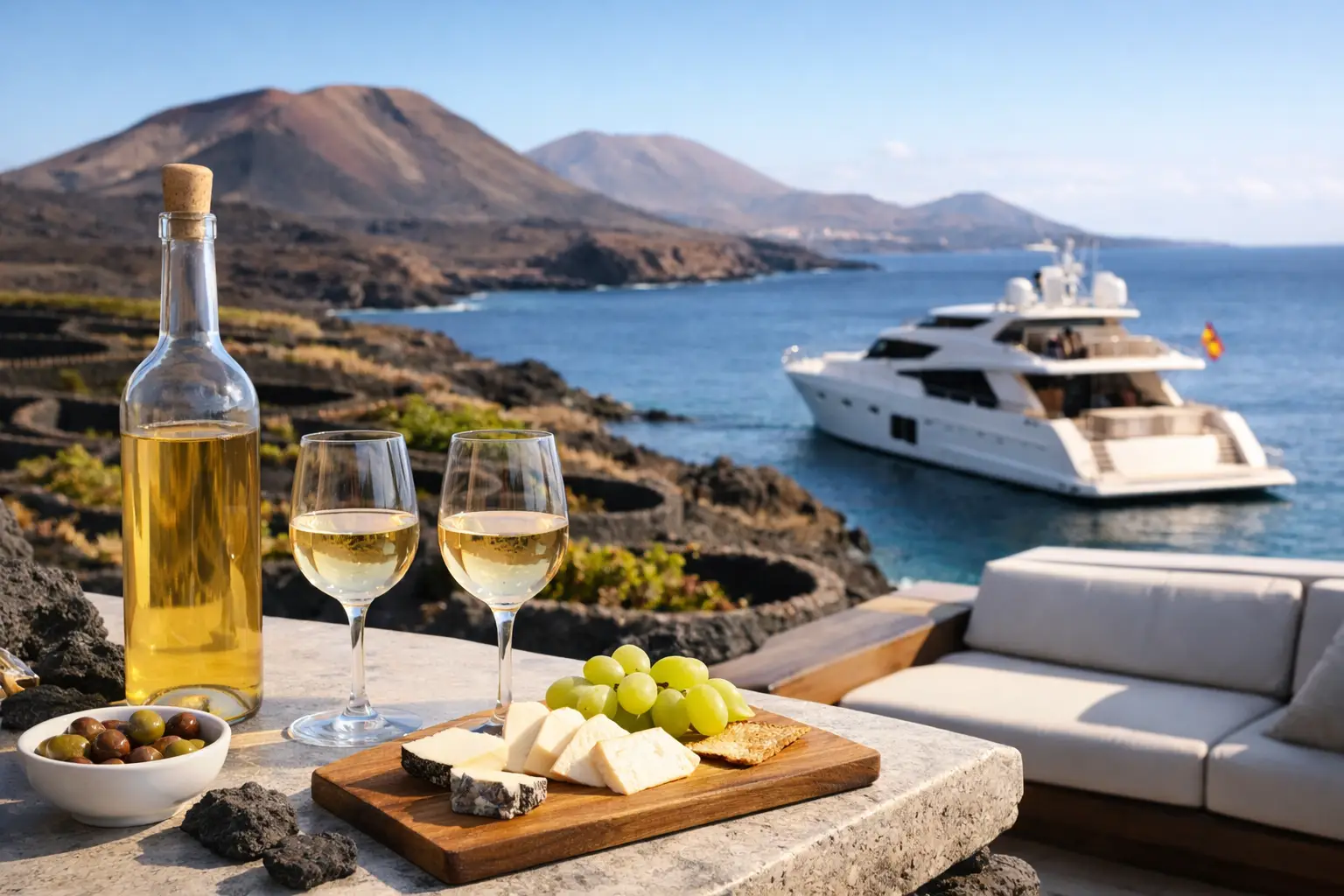
A chilled glass of Canary Malvasia, a few slices of local cheese and the Atlantic stretching beyond the yacht's rail can make a very Tenerife kind of moment. The island's food and wine traditions work particularly well at sea because the best pairings do not need to be complicated. Fresh flavours, good local ingredients and food that is easy to share are usually all you need.
Malvasia is a natural starting point. Tenerife's volcanic landscape, distinctive vineyards and tradition of making aromatic wines give visitors plenty to explore, while local goat's cheeses, seafood, fruit and almonds provide easy companions. The key is to keep the food fresh, balanced and practical enough to enjoy while the yacht is moving.
Malvasia is one of the best-known traditional grape varieties of the Canary Islands. Its character can vary considerably depending on the grape, vineyard and winemaking style. Some examples are dry and citrus-led, while others are more aromatic, fruity or noticeably sweet.
For a yacht cruise, a dry or off-dry Malvasia is often the easiest choice. Served chilled, it feels refreshing in Tenerife's warm climate while still having enough flavour and texture to work alongside food.
There is also something appealing about serving a wine from the islands themselves. Instead of being another generic drink brought on board, it becomes part of the experience and gives guests a connection to the place they are exploring.
A sweeter Malvasia can still be excellent, particularly with fruit or dessert. It simply needs different companions. Delicate fish and salty cheeses can be better suited to a drier style, while ripe fruit, almond cake or a light honey dessert can complement a sweeter wine beautifully.
Tenerife's vineyards grow in very different conditions from those found in many mainland European wine regions. Altitude, steep slopes, volcanic soils and the influence of the Atlantic all play a role in how the grapes develop.
The phrase volcanic wine should not be taken literally. It does not mean that the wine tastes of lava or smoke. Instead, wines from volcanic growing environments can have a fresh, stony or saline character that works particularly well alongside seafood and the atmosphere of the Atlantic.
On a yacht, this freshness is useful. Warm weather, salty air and sunshine can make rich foods feel heavier, while wines with good acidity and a clean finish tend to remain refreshing throughout the meal.
Canarian cheese is an easy way to bring local flavour on board without turning the cruise into a formal meal. The best selection is relatively simple: a few good cheeses, fresh fruit, bread and perhaps some nuts or a little local honey.
Goat's cheese is particularly well suited. Tenerife and the other Canary Islands have a long tradition of goat-milk cheeses, including young and semi-cured varieties with a creamy texture and gentle tang. These flavours sit comfortably alongside a dry Malvasia.
Smoked cheese can provide a stronger contrast, especially during an evening or sunset cruise. However, it is better served in modest portions. Heavy smoke, chilli or paprika can quickly dominate an aromatic white wine.
For a more mature, nutty cheese, try simple accompaniments such as toasted almonds, quince paste, local honey or fresh fruit. There is no need to add several strong flavours at once.
Presentation matters just as much as the ingredients on a moving yacht. Pre-cut cheese, small wooden picks and low-sided serving dishes are easier to handle than a large board that requires guests to cut their own portions while the boat is underway.
A good onboard menu should develop gradually rather than putting every dish on the table at the same time.
As the yacht leaves the harbour, start with a chilled glass of dry Malvasia and a few small snacks. Green olives, toasted almonds, crisp breadsticks and mild goat's cheese are simple choices that allow guests to settle into the cruise without filling up too early.
Once the yacht is underway and the group is ready for something more substantial, seafood is an obvious direction. A private yacht cruise along Tenerife's coast can be accompanied by fresh prawns, lightly dressed white fish or simply prepared octopus. Lemon, herbs and olive oil generally work better here than heavy cream sauces or strongly spiced marinades.
Chicken can also work well, particularly when prepared with citrus and herbs. The idea is not to create a formal tasting menu but to choose food that complements the wine without taking attention away from the sea, the coastline and the people around you.
After a swim stop or later in the afternoon, a small cheese selection can follow. Young goat's cheese with grapes and toasted nuts is an easy combination, while semi-cured cheese can be served with quince paste or a little honey.
If the Malvasia is on the sweeter side, finish with fruit or a small dessert. Mango, grilled pineapple, almond cake and delicate honey-based desserts are all natural options. On a hot afternoon, however, fresh fruit and chilled water may be all anyone wants.
Some foods are simply less comfortable at sea. Very rich or heavily spiced dishes can overpower Malvasia, while large charcuterie boards may feel salty and heavy after swimming in the sun.
Blue cheeses, truffle-heavy dishes and strong raw onion are also difficult matches for a delicate aromatic white wine. They can dominate the palate and leave persistent aromas in a relatively confined space.
Practicality matters too. Loose sauces, fragile plating and food that requires concentrated knife-and-fork work are better suited to a restaurant table. On deck, food should be easy to hold, share and enjoy without taking guests away from the experience.
The menu can be adapted easily to the type of cruise. On a private sunset cruise, one well-chosen Malvasia, a couple of local cheeses, fruit and a selection of seafood bites may be enough. The food adds to the evening without competing with the changing light along the coast.
For birthdays, family gatherings or groups of friends, a broader selection makes sense. Alongside chilled Malvasia, include non-alcoholic sparkling drinks, water, mild cheeses, seafood, fresh fruit and a few more substantial bites.
Dietary requirements are worth discussing before departure. Vegetarian, vegan, gluten-free and allergy-related requirements are much easier to accommodate when the crew knows about them in advance.
If the cruise includes wildlife watching, food service should remain flexible. When everyone is watching for whales or dolphins, there is little reason to interrupt the moment with a full service. Drinks and small plates can be brought out once the yacht is settled again.
For a birthday, proposal or other special occasion, this flexibility makes it possible to build the food around the event rather than making the meal the centre of the day.
Temperature makes a noticeable difference. Keep the bottle properly chilled in an ice bucket with ice and water, rather than allowing it to warm in the sun.
Stable stemless glasses or good-quality acrylic glassware can be a practical choice on deck. They are less vulnerable to accidental knocks while still allowing the wine to be presented attractively.
Moderate pours are useful on a warm day. Smaller servings stay cold for longer and encourage guests to enjoy the wine gradually. Still and sparkling water should also remain available throughout the cruise, particularly during sunny afternoon trips.
Non-alcoholic options should receive the same attention as the wine. Chilled sparkling water, alcohol-free sparkling drinks and fresh fruit-based refreshments can fit naturally into the same table setting.
A yacht day is not the ideal setting for a complicated wine seminar or a formal multi-course dinner. The strongest combinations are often the simplest: a well-chilled Canary Malvasia, a good local goat's cheese, fresh seafood, fruit, almonds and the volcanic coastline in the background.
The food should support the experience rather than interrupt it. Whether the yacht is anchored for a swim, cruising along the coast or watching dolphins offshore, the best pairing is the one that feels natural to the moment.
That is what makes local wine particularly well suited to a Tenerife charter. The landscape, the food and the sea are already doing most of the work.
Canary Malvasia refers to wines made from Malvasia grape varieties grown in the Canary Islands. Depending on the style, the wine can be dry and citrus-led, aromatic and fruity, or richer and sweeter. Dry and off-dry examples are particularly versatile with yacht food.
It refers primarily to wines produced from grapes grown in volcanic soils and landscapes. It does not mean that the wine tastes like lava or smoke. Tenerife wines can show fresh, stony or saline characteristics that work well with seafood and other light foods.
Young and semi-cured goat's cheeses are particularly suitable for dry Malvasia. Smoked cheeses can also work when served in smaller portions. More mature cheeses can be paired with almonds, quince paste, honey or fresh fruit.
Fresh prawns, lightly dressed white fish, simply prepared octopus, mild goat's cheese, olives, almonds and fresh fruit are all suitable choices. Light seasoning, citrus, herbs and olive oil generally work better than heavy sauces.
Keep the bottle chilled in an ice bucket with ice and water, and serve moderate pours so the wine stays cool. Stable stemless or quality acrylic glasses are practical on deck. Still and sparkling water should also be available throughout the cruise.