A meal on a Tenerife yacht can be more than a pleasant part of the day. Local flavours offer a direct connection to the island and the Atlantic surrounding it. Canarian seafood gastronomy, cherne, vieja and traditional accompaniments such as papas arrugadas and mojo all reflect the character of the islands: fresh ingredients, straightforward preparation and food designed to be enjoyed without unnecessary fuss.
For guests enjoying a more intimate charter or cruise, food naturally becomes part of the atmosphere. It may accompany a relaxed afternoon on the water, a celebration with friends and family, or the changing light of a sunset cruise. Choosing flavours connected to Tenerife can make the experience feel more rooted in the place rather than interchangeable with any other destination.
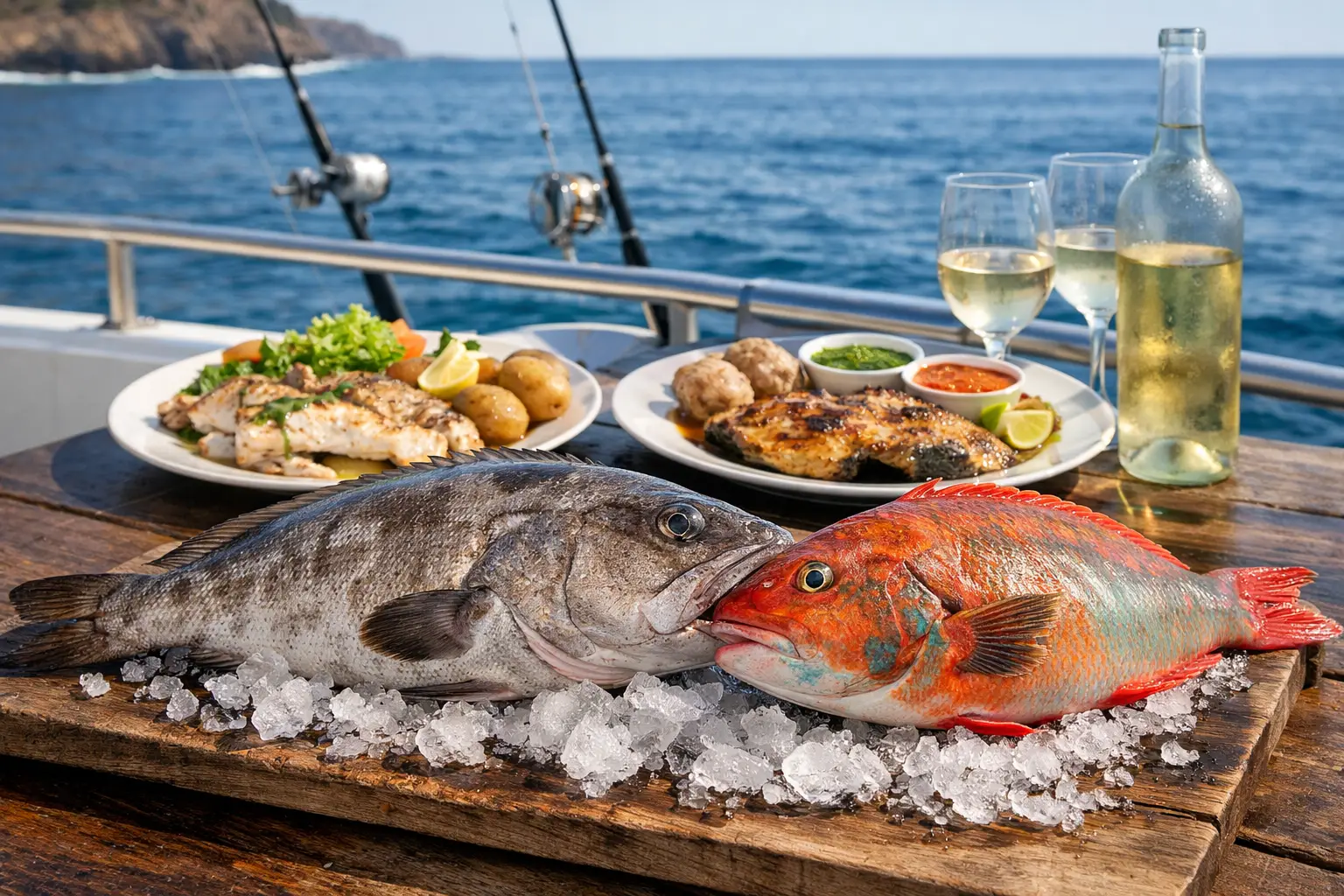
Canarian cooking is often straightforward in the best sense of the word. Fresh fish does not need to be hidden beneath heavy sauces or complicated techniques. Olive oil, garlic, herbs, lemon, potatoes and the islands' traditional mojos are often enough to complement the natural flavour of the catch.
That approach also works particularly well on the water. A yacht galley has different practical considerations from a restaurant kitchen, and the setting itself changes how people eat. During a warm afternoon cruise, lighter dishes can feel more natural than an elaborate multi-course meal. On a longer private experience or around sunset, grilled fish and more substantial plates can suit the pace of the occasion.
Local seafood also adds another dimension to time spent along the coast. From Costa Adeje and Los Cristianos, the Atlantic is known for its scenery and frequent wildlife encounters, but food provides another way to connect with the Canary Islands. A meal inspired by local ingredients can bring a little of that maritime culture on board.
Cherne is one of the best-known fish in Canarian cuisine. The name is commonly associated with wreckfish and is used for fish with firm, white flesh and a mild but rich flavour. Its texture makes it particularly suitable for grilling, baking or other simple preparations where the fish remains the focus of the plate.
That firmness is also useful when serving fish on board. Cherne holds together well and can be paired with uncomplicated ingredients such as garlic, herbs, lemon or a light Canarian mojo. Small potatoes and seasonal vegetables make natural accompaniments without overwhelming the fish itself.
Availability, however, should always come before expectation. The best seafood experience should not depend on serving a particular species regardless of season, weather or supply. When cherne is available from an appropriate source, it can be an excellent choice. When it is not, another fresh seasonal fish may be the better option.
For a birthday, anniversary or family gathering, cherne has a broad appeal. Its flavour is delicate enough for guests who prefer milder fish while still offering the texture and character expected from a special seafood dish.
It also works well with the relaxed nature of a private yacht experience. A beautifully prepared fish dish does not need a formal restaurant setting to feel special. Shared with good company, a glass of wine and the Tenerife coastline in view, simplicity can be part of the appeal.
Dietary requirements and allergies should always be discussed before departure, particularly where shellfish, sauces or shared preparation areas may be involved.
Vieja is another fish strongly associated with traditional Canarian cuisine. Often referred to in English as parrotfish, it is valued for its tender white flesh and delicate flavour. Simple preparations are particularly well suited to it, allowing the character of the fish to remain at the centre of the dish.
Vieja is often served with some of the ingredients most closely associated with Canarian food: potatoes, olive oil, garlic and mojo. For visitors, it offers a flavour that feels distinctly connected to the islands rather than simply another item on an international seafood menu.
At the same time, responsible sourcing matters. Availability can be affected by local regulations, fishing conditions and seasonal factors. A thoughtful menu should leave room for flexibility and use the best suitable fish available rather than treating every traditional species as permanently available.
That flexibility does not mean losing the local character of the meal. Fresh seasonal fish served with papas arrugadas, mojo verde, vegetables and other Canarian ingredients can still provide the same sense of place.
Fish may be the centre of the plate, but some of the most recognisable flavours of the Canary Islands come from what accompanies it.
Papas arrugadas are small potatoes traditionally cooked in salted water until their skins develop their characteristic wrinkled appearance and a light salt coating. They are commonly served with mojo, one of the defining elements of Canarian cuisine.
There are several variations of mojo. Mojo verde is commonly prepared with herbs, garlic, oil and vinegar, giving it a fresh flavour that works well with delicate fish. Mojo rojo is generally richer and more pepper-forward, making it a natural companion to potatoes and more robust dishes.
The aim is balance. These sauces and accompaniments should add character without masking the flavour of fresh seafood.
The type of cruise can help determine what feels most appropriate to eat.
The occasion matters as well. A couple may prefer something simple and intimate, while a family or group of friends may enjoy sharing dishes that encourage everyone to stay around the table and enjoy the moment together.
A crisp dry white wine is a natural companion to delicate fish, particularly when the dish includes citrus, herbs or mojo verde. Sparkling wine can add a celebratory touch to a special occasion, while chilled alcohol-free drinks, citrus water or fresh juice can be equally refreshing in the Tenerife sun.
The goal is not to overcomplicate the pairing. Fresh seafood, a balanced drink and the setting of the Atlantic already provide much of what is needed.
The best meals on board do not need to follow a rigid formula. Cherne and vieja are part of the culinary identity of the Canary Islands, but the day's best choice may depend on what is fresh, seasonal and responsibly available.
That flexibility is part of good food rather than a compromise. A fresh local fish, traditional potatoes, a well-made mojo and ingredients chosen with care can create a meal that feels genuinely connected to Tenerife.
Whether the day includes a quiet cruise along the coast, a swim in clear Atlantic water or simply time spent watching the sunset, local flavours can add another layer to the experience. The real pleasure lies in enjoying good food in good company, with the island and the ocean providing the setting.
Cherne is a name commonly associated with wreckfish in Canarian cuisine. It is valued for its firm white flesh, delicate flavour and versatility. It can be grilled, baked or prepared simply with ingredients such as garlic, herbs, lemon or mojo.
Vieja is a traditional fish speciality of the Canary Islands, commonly known in English as parrotfish. It is valued for its tender white flesh and delicate flavour and is often prepared simply with potatoes, olive oil and Canarian mojo.
No. Availability can vary according to season, weather, fishing conditions, market supply and local regulations. When a particular fish is unavailable, another fresh seasonal species may be a better and more responsible choice.
Papas arrugadas are small Canarian potatoes traditionally cooked in salted water until their skins become wrinkled and lightly coated with salt. They are commonly served with mojo, a traditional Canarian sauce made with ingredients such as garlic, oil, vinegar, herbs or peppers.
The best choice depends on the type and timing of the cruise. Lighter dishes often suit daytime trips and swim stops, while longer or sunset experiences may be better suited to grilled fish or more substantial locally inspired food.
A crisp dry white wine pairs naturally with delicate fish, particularly with citrus, herbs or mojo verde. Sparkling wine can suit celebrations, while chilled alcohol-free drinks, citrus water and fresh juices are refreshing alternatives for a day on the water.