From the deck of a yacht off Costa Adeje, the answer to why Tenerife’s ocean water is so clear can seem almost obvious. On calm days, the sea reveals shifting shades of cobalt, turquoise and deep sapphire, with sunlight illuminating the water below. Yet this remarkable clarity is not simply a feature of a beautiful island. It results from a combination of Tenerife’s volcanic geology, its position in the Atlantic, relatively limited river runoff and the conditions that influence how light travels through seawater.
For guests enjoying a coastal cruise, the difference is easy to appreciate. The water can look exceptionally transparent beside the hull, and a swim stop may feel more like entering a natural pool than swimming in the open ocean. Conditions vary with weather, season and location, but Tenerife benefits from several natural characteristics that help give its coastal waters their distinctive appearance.
One important reason begins on land. Tenerife is a volcanic island with steep slopes and no large permanent rivers carrying continuous quantities of soil into the sea. On many mainland coastlines, rivers transport silt, clay, organic matter and agricultural runoff towards the coast. Fine particles can remain suspended in the water, scattering light and reducing underwater visibility.
Tenerife does receive rainfall, particularly during the cooler months and at higher elevations. However, the island’s volcanic ground can absorb some of this water, while other rainfall runs through ravines and reaches the coast in occasional flows. This means that many coastal areas experience less continuous river-borne sediment input than regions with extensive river systems.
The island’s offshore setting also matters. Tenerife lies in the open Atlantic, rather than within a shallow, enclosed sea. Ocean circulation and local water movement help exchange coastal water with the surrounding ocean. This does not guarantee clear conditions every day, but it is part of the wider environment that shapes the island’s marine waters.
In simple terms, underwater visibility is generally better when there are fewer suspended particles and when plankton concentrations and other sources of turbidity are relatively low. Tenerife often benefits from this combination, although conditions can vary considerably between locations and from one day to another.
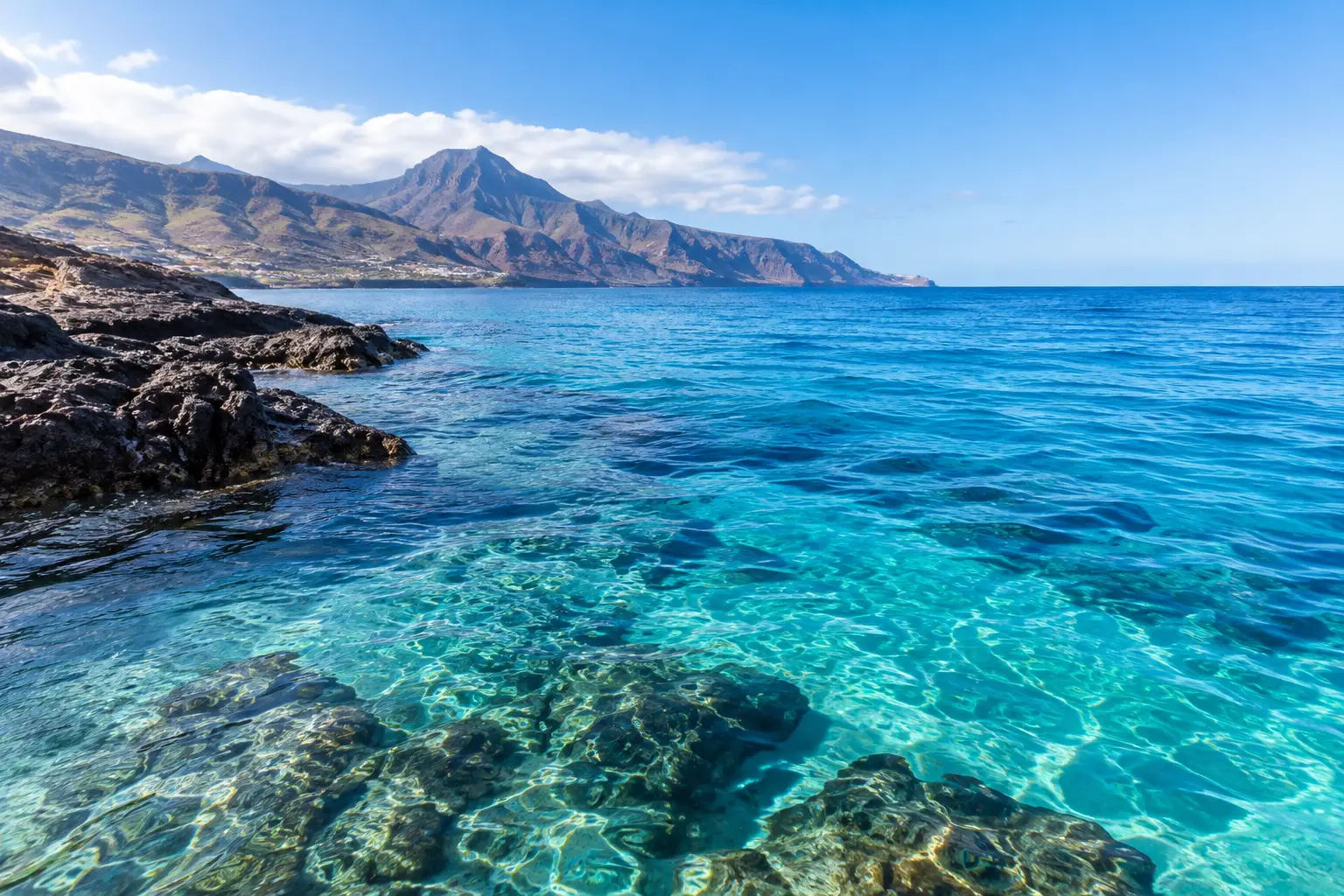
Tenerife’s dark volcanic cliffs and seabed give its coastline a distinctive appearance. They also influence how visitors perceive the colour of the water. Deep blue water beside black rock can look especially intense, while sunlight reaching a pale sandy seabed in shallow water can create luminous turquoise patches.
There is a scientific explanation for the difference. Water absorbs longer red wavelengths more readily than blue wavelengths, so blue light tends to dominate the colour of deeper water. The seabed also plays a role: when sunlight reaches a light-coloured bottom and is reflected back towards the surface, shallow water can appear much brighter and more turquoise.
Sunlight, cloud cover, depth and the angle from which the water is viewed all affect the final appearance. A clear ocean does not always look turquoise, and a bright turquoise surface does not necessarily indicate exceptional underwater visibility.
Water clarity and water colour are closely related, but they are not the same thing. Clarity describes how far light can travel through the water before being scattered or absorbed. Colour is influenced by depth, light, suspended particles and the seabed beneath the surface.
Around southern Tenerife, the sea can change appearance noticeably during a single cruise. Over deep Atlantic water, it may look like dark navy or sapphire. Closer to a sheltered cove, where the seabed is shallower, sunlight can create brighter blue-green shades.
The position of the sun makes a difference too. Strong daylight can reveal underwater colours more clearly, while late-afternoon light creates warmer reflections across the surface. During a sunset cruise, the attraction is less about seeing details beneath the water and more about watching the Atlantic reflect shades of gold, rose and violet around the yacht.
Parts of southern Tenerife are often more sheltered from the prevailing north-easterly trade winds than exposed areas of the northern coast. The island’s mountainous terrain influences local wind patterns, while its coastline creates different levels of exposure to wind and swell.
Around Costa Adeje and Los Cristianos, conditions are often favourable for leisure cruising. When the sea is relatively calm, there is less surface disturbance, making it easier to look into the water from a yacht. Swimming and snorkelling can also be more comfortable when wind and swell are limited.
However, calm-looking water should not be confused with an absence of currents, and the south coast is not sheltered from every weather system. Wind direction, swell, tides and local geography all influence conditions. A clear morning can become breezier later in the day, while heavy rainfall may temporarily carry sediment towards parts of the coast.
The best experiences at sea work with these natural conditions rather than assuming they will remain unchanged. A professional crew assesses the weather and sea state before selecting a route or swimming location.
Even in Tenerife, underwater visibility is not constant. Several natural factors can temporarily make the water appear darker, greener or less transparent.
Strong winds create surface chop, while larger waves can disturb sand and sediment in shallow coastal areas. These particles scatter light and can reduce visibility, particularly near beaches and exposed sections of coastline.
After heavy rainfall, water flowing through ravines may carry soil and other material towards the coast. This can temporarily affect the appearance of the sea near river mouths, drainage outlets and coastal areas receiving runoff.
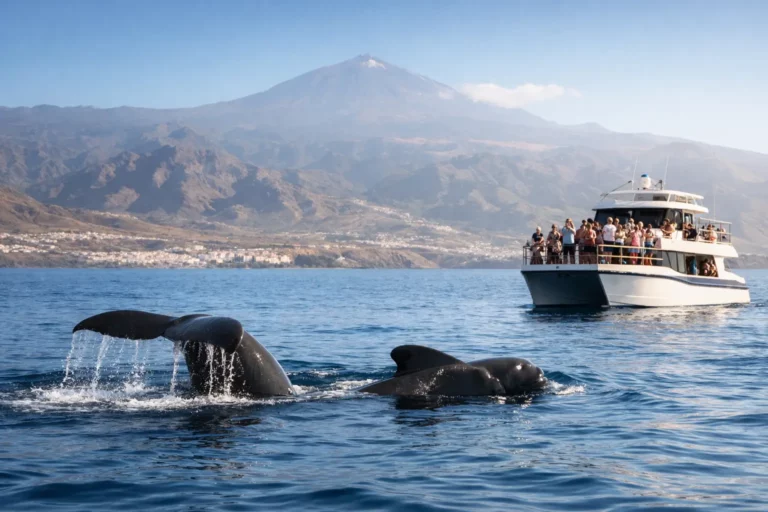
Plankton is an essential part of the marine food web. It supports small marine organisms and fish, which in turn provide food for larger animals, including cetaceans. At certain times, higher concentrations of microscopic organisms can give the water a greener appearance or reduce underwater visibility slightly.
This is not automatically a sign of pollution or poor water quality. It can simply reflect natural biological activity in the ocean.
Occasionally, Saharan dust carried by winds from North Africa reaches the Canary Islands. This phenomenon, known as calima, can make the horizon hazy and soften the sunlight. The sea may appear less vividly blue because the light reaching and reflecting from its surface has changed.
Calima is primarily an atmospheric phenomenon, so its effect on the sea’s appearance should be distinguished from changes in underwater visibility caused by suspended particles or plankton.
Calm weather and good daylight generally provide the best conditions for appreciating the colour and transparency of the sea. Morning trips can offer a peaceful atmosphere and, on many days, lighter winds. Strong daylight around midday and early afternoon can make underwater colours easier to see, particularly in shallow areas.
A daytime private charter is a particularly good choice for guests who want to swim, snorkel or simply enjoy the view from the yacht. If wildlife watching is the priority, clear conditions can make an encounter even more memorable, although whales and dolphins around Tenerife are wild animals and sightings can never be guaranteed.
A sunset cruise offers a different experience. The lower angle of the sun creates softer reflections and warmer colours, making the coastline particularly attractive, even though it may be less suitable for seeing details beneath the surface.
The choice of swimming location is just as important as the time of day. A professional crew considers swell, wind, currents, nearby boat traffic and guests’ swimming abilities before choosing where to stop. Clear water is a wonderful feature, but suitable conditions are what make a swim genuinely enjoyable.
Tenerife’s remarkable coastal clarity comes from a combination of natural factors: volcanic terrain, relatively limited continuous river runoff, open Atlantic circulation, varied underwater landscapes and favourable light conditions. None of these guarantees perfectly transparent water every day, but together they help explain why the island’s sea can look so striking.
The real pleasure is experiencing it from the water: watching sunlight move across the surface, seeing the coastline from a different perspective and taking a refreshing swim when conditions allow.
Royal Ocean offers private yacht experiences that give guests the space and time to enjoy Tenerife’s coastline at a relaxed pace. Whether you choose a daytime cruise with an opportunity to swim or an evening on the Atlantic, the sea itself becomes part of the experience.
Tenerife has no large permanent rivers carrying continuous loads of sediment into the sea. Its volcanic terrain and rainfall patterns limit some sources of coastal sediment, while its position in the open Atlantic allows coastal waters to exchange with the wider ocean. Visibility still varies with weather, location and plankton levels.
No. Deep, clear water often looks dark blue, while shallow water over a pale seabed can appear turquoise. Water clarity and colour are different properties, influenced by depth, sunlight, suspended particles and the seabed.
Parts of the south and south-west coast are often more sheltered from the prevailing north-easterly trade winds than exposed areas of the north. However, wind direction, swell, tides and local geography still influence conditions, so calm water is never guaranteed.
Strong winds, larger swells, rainfall runoff, natural plankton increases and atmospheric conditions during calima can affect the sea’s appearance. Some of these factors reduce underwater visibility, while others mainly change the colour and light seen from the surface.
Calm weather and bright daylight generally provide good conditions for seeing underwater colours. Morning trips can offer a peaceful surface, while midday and early afternoon light can make shallow water appear particularly vivid. Actual conditions depend on the weather and location.