A pale sand beach can feel familiar. Tenerife’s black beaches feel cinematic: dark grains against bright Atlantic surf, volcanic cliffs and, on a clear day, the distant outline of neighbouring islands. So, why are there black sand beaches in Tenerife? The answer lies beneath the island itself. Tenerife was built by volcanoes, and its coastline still carries the evidence in every dark, mineral-rich grain.
For visitors staying in Costa Adeje, Los Cristianos or the south of the island, this contrast is part of Tenerife’s appeal. One morning might begin on a golden, resort-style beach; later, a cruise along the coast reveals rugged black coves and dramatic lava formations that make the island look entirely different from the water.
Tenerife is the largest of the Canary Islands, an archipelago formed through volcanic activity over millions of years. Its most recognisable landmark, Mount Teide, is a volcano, but the landscape is the result of many eruptions, lava flows and geological changes across an extraordinarily long period.
When molten lava reaches the surface and cools, it hardens into volcanic rock. Much of this rock is basalt, a dark, dense material rich in minerals such as iron and magnesium. Atlantic waves, wind, rain and changing temperatures gradually break exposed basalt down. Over time, those fragments are ground smaller and smaller, eventually becoming the dark sand seen on many Tenerife beaches.
It is a slow process, but the result is striking. Black sand is not dyed, imported or a novelty created for visitors. It is the natural coastline of a volcanic island, shaped continuously by the sea.
Tenerife has more variety than many first-time visitors expect. There are natural black-sand beaches, beaches with darker pebbles, sheltered coves edged by lava rock and broad golden sands around some of the island’s busiest resorts.
The difference often comes down to geology and beach management. Natural local sediment is commonly dark because it comes from volcanic rock. Golden or pale sand may be made from lighter marine material, such as shells and coral fragments, or it may have been brought in to create wider, softer beaches for bathing and tourism.
This is why a beach in the south can look quite different from one on the north coast. The south is generally sunnier and drier, with well-developed resort beaches and calmer areas created by breakwaters. The north is greener, wilder and more exposed to the Atlantic, where natural black sand and powerful waves are often part of the scene.
Neither is necessarily better. Golden beaches can be ideal for an easy, relaxed day near hotels, restaurants and facilities. Black-sand beaches offer a stronger sense of place - a reminder that Tenerife is not simply a sun destination, but a living volcanic landscape.
The journey from lava flow to soft beach is a lesson in patience. Fresh volcanic rock can be sharp and uneven, especially around newer lava fields. It takes relentless wave action to knock and roll the rock fragments against one another, smoothing their edges and reducing them to sand.
The colour can range from charcoal grey to near-black, depending on the minerals in the rock, the size of the grains and whether lighter sediment is mixed in. Wet black sand often appears much darker than dry sand, which is why the shoreline can look almost polished after a wave retreats.
Not every lava flow becomes a beach. The coast needs the right combination of rock supply, wave patterns, currents and a sheltered enough bay for sediment to gather rather than be swept away. That is why Tenerife’s coast alternates between sandy stretches, rocky platforms, cliffs and small coves.
Black sand beaches are beautiful, but they are not always identical to the soft, pale sand found at a classic resort beach. The texture can vary considerably. Some beaches have fine, comfortable sand, while others are mixed with small stones or coarser volcanic grains.
There is one practical detail worth remembering: dark sand absorbs more heat from the sun. On a bright afternoon, it can become very hot under bare feet. Sandals or water shoes are a sensible addition to a beach bag, particularly for children or anyone planning to walk along the shore before swimming.
The sea conditions also matter more than the colour of the sand. On exposed northern beaches, Atlantic swells and currents can be strong, even when the water looks inviting from the shore. Always follow local flags and lifeguard guidance, and choose supervised bathing areas when conditions are uncertain. A beautiful beach is best enjoyed with a little respect for the ocean.
Playa Jardín in Puerto de la Cruz is one of the island’s best-known black-sand beaches. It combines dark volcanic sand with gardens, palms and views towards Mount Teide, creating a setting that feels designed yet unmistakably natural. It is a good choice for travellers who want the visual impact of black sand without leaving the convenience of a town.
Further west, Playa de la Arena near Puerto de Santiago is known for its dark shore and clear water, framed by the high cliffs of Los Gigantes nearby. It is more polished than some wilder volcanic beaches, with a setting that suits an unhurried afternoon.
In the north-east, beaches around the Anaga area can feel more remote and elemental. Their dramatic backdrop is part of the attraction, though access, surf and facilities vary. These are places to approach with flexibility rather than a rigid beach-day plan.
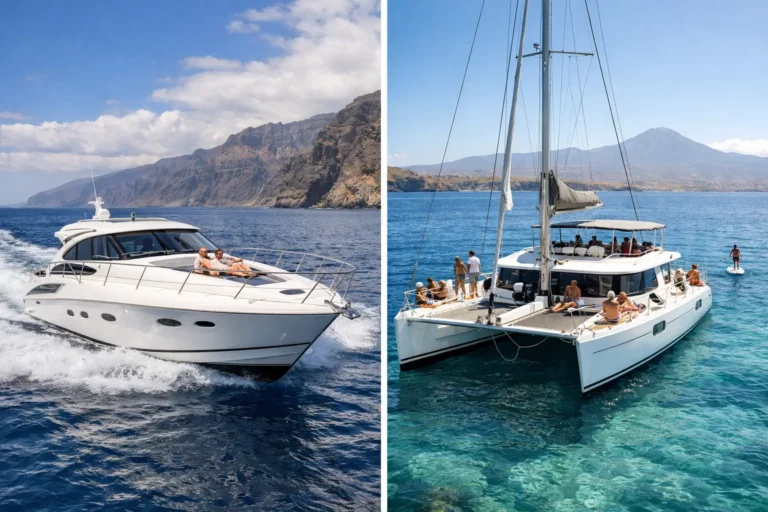
From the sea, Tenerife’s volcanic character becomes even more apparent. Between the marina areas of south Tenerife and the cliffs further west, the coastline reveals layers of dark rock, hidden inlets and weathered formations that are easy to miss from the road. On a private cruise with Royal Ocean, guests can enjoy that scenery in comfort while seeing how the island’s land and ocean meet beyond the busier resort frontages.
Black sand itself does not make a beach unsafe. Safety depends on the water conditions, the beach layout and the presence of lifeguards. A sheltered bay with calm water may be excellent for a swim, while a broad, beautiful black-sand beach facing open Atlantic swell may be better appreciated from the shore on a rough day.
Check the flag system before entering the water. Green usually means conditions are suitable for swimming, yellow calls for caution, and red means do not enter. Avoid swimming alone, keep clear of rocky areas where waves can push swimmers against the shore, and do not underestimate a current simply because the water is warm.
For a more relaxed swim stop, many visitors prefer sheltered locations reached by boat, where the crew can select conditions carefully and provide clear guidance. It is a different experience from surfing waves at the shoreline: quieter, more private and often with a clearer view of Tenerife’s volcanic coast.
There is a reason black sand photographs so well, but its appeal is more than visual. It creates a distinct atmosphere. The deep colour sharpens the blue of the ocean, makes white foam stand out and gives even a simple walk along the waterline a sense of drama.
It also rewards travellers who look beyond the familiar. Tenerife offers golden sands and polished resort living, but its black beaches reveal something older: an island formed by fire, softened by time and continually reshaped by the Atlantic. Bring footwear for the warm sand, check the sea conditions, and allow enough time simply to stand at the water’s edge and take it in.