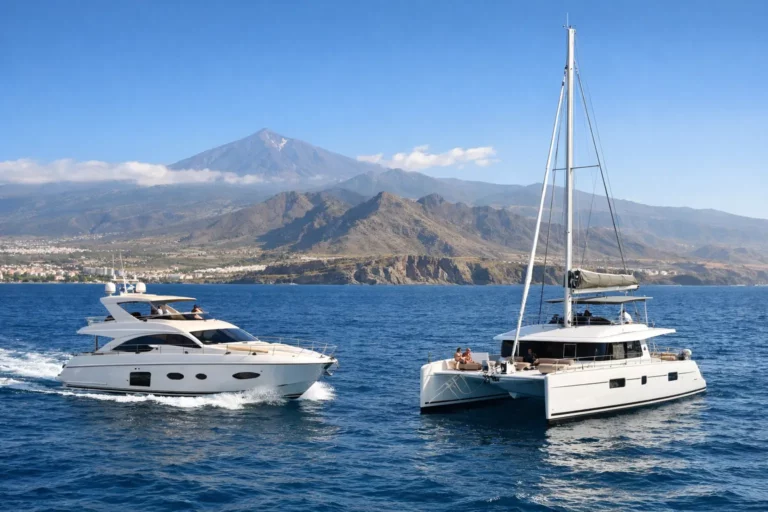
A peaceful cruise off Tenerife can change in seconds if a person enters the water unexpectedly. So, what happens if someone falls overboard from a yacht? On a professionally operated vessel, the crew follows a clear man-overboard procedure designed to keep the person in sight, stop the yacht safely and recover them without creating further risk.
For guests, the most reassuring fact is that an experienced crew does not improvise in that moment. Training, onboard safety equipment, weather awareness and calm communication all have a role. A luxury yacht experience should feel relaxed, but the professionalism behind that relaxation is what matters most.
The person who sees someone fall should immediately shout, “Man overboard”, or “Person overboard”, and point continuously towards them. It may feel obvious, but this simple action is vital. On open water, a swimmer can be difficult to spot surprisingly quickly, particularly where there is glare from the sun, a small swell or wind chop.
The crew will be alerted at once and one person will be assigned to maintain visual contact. They will not take their eyes off the casualty while the yacht is manoeuvred. Other guests should stay calm, give the crew room to work and avoid crowding the side of the yacht. Clear decks make a safe recovery much easier.
A flotation device, such as a lifebuoy or buoyant cushion, may be thrown towards the person in the water. This is not a substitute for recovery, but it gives them something visible and buoyant to hold while the yacht returns. It can also help mark their position if conditions are choppy.
The skipper will reduce speed and manoeuvre the yacht back towards the person, taking account of wind, current, sea state and the yacht’s own momentum. A yacht cannot simply reverse directly towards someone in the water. Propellers, blind spots and drift all need to be managed carefully.
The approach is usually made slowly and under control, often from a position that allows the vessel to drift safely towards the casualty rather than pushing them away. Depending on conditions, the skipper may use a controlled turn, sometimes referred to as a man-overboard manoeuvre, to return to the last known position.
On a well-run charter, the crew will also assess whether the person is conscious, able to swim, injured or showing signs of panic. Those details influence the recovery plan. A confident swimmer on a calm, warm afternoon requires a different approach from someone who has been injured, is exhausted or has fallen in rougher conditions.
A natural instinct is to jump in and help. Unless directed by the skipper, this should be avoided. A second person in the water can turn one casualty into two, especially if the first person is panicking or the sea is moving.
The safest support is usually to stay aboard, keep pointing, speak reassuringly and let the trained crew manage the recovery. If another guest has thrown a buoyancy aid, they should tell the crew exactly where it landed and then step back.
Bringing a person alongside is only part of the task. Getting them back on board can be physically demanding, particularly if they are tired, wet, injured or unable to use a swim ladder independently.
If the person is uninjured and conditions allow, the crew may bring them to the bathing platform or swim ladder, supporting them as they climb aboard. On larger yachts, recovery equipment and well-positioned handholds make this safer. The crew may also use a line, harness or other suitable method if the person needs more assistance.
Once aboard, the priority becomes their wellbeing. They may be cold even in Tenerife’s inviting waters, especially after stress and exertion. The crew will help them into a sheltered area, provide towels or dry clothing where available, and check for injuries, shock or signs of inhaled water.
A person who seems fine immediately afterwards should still be monitored. Coughing, breathing difficulty, chest discomfort, confusion, unusual tiredness or persistent shivering deserve prompt attention. If there is any concern, the skipper will contact the relevant maritime authorities and arrange medical assistance or return to port as appropriate.
Tenerife offers beautiful cruising conditions, but the Atlantic deserves respect. Around the south coast, the weather may look calm close to shore while wind and swell develop farther out. Currents, boat traffic and changing light near sunset can also affect a recovery.
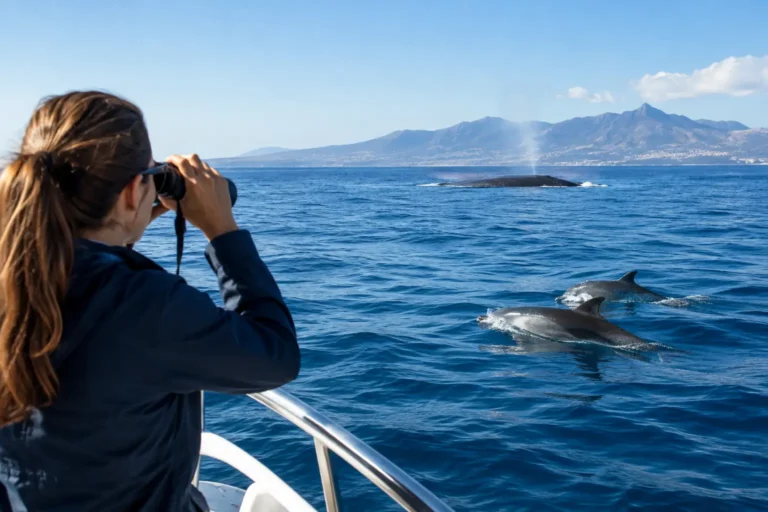
This is why a responsible crew checks the forecast, plans the route sensibly and gives a safety briefing before departure. On wildlife cruises, for example, guests may become absorbed in seeing pilot whales or dolphins, moving between viewing areas and taking photographs. The crew’s role is to keep that excitement enjoyable without allowing people to take unnecessary risks near rails, steps or the stern.
The precise response also depends on where the yacht is operating. Close to a marina or shore, assistance may be readily available. Further offshore, the skipper may call maritime rescue services while continuing the recovery. In all cases, the immediate priorities remain the same: locate, protect, approach safely and recover.
Most overboard incidents are preventable. Guests do not need to feel nervous on a yacht, but they should treat the sea with the same respect they would give any natural environment.
Wear appropriate footwear where requested, use handrails when moving around the yacht, and take extra care on wet decks. Avoid sitting on rails or leaning far over the side for photographs. If you have had a drink, move more deliberately, particularly when the yacht is underway or turning. Parents and guardians should keep children within close reach and follow crew guidance around swimming stops.
A good crew will make these expectations feel natural rather than restrictive. They will explain where it is safe to sit, when it is appropriate to enter the water, and how to return via the swim platform. On a refined yacht charter, attentive service includes watching the small details before they become a problem.
At Royal Ocean, every cruise is built around comfort, considered hospitality and professional care on the water. That means guests can focus on the coastline, marine life and time with the people they came to celebrate, while the crew remains attentive to the conditions around them.
Your job is simple: alert the crew loudly, point at the person continuously and follow instructions. Do not attempt to steer the yacht, launch equipment without direction or jump into the water. If you can safely throw a lifebuoy or flotation aid, do so only when the crew asks or when it is immediately available.
If you are the person in the water, try to stay calm, float if possible and keep your eyes on the yacht. Avoid swimming towards the propellers or attempting to climb aboard until the crew has positioned the vessel and instructed you. Holding onto a flotation device conserves energy and makes you easier to spot.
The best yacht days are defined by unhurried moments: a swim in clear Atlantic water, a quiet sunset, dolphins passing in the distance and a glass raised with friends. A capable crew protects that sense of ease by treating safety as a constant, calm part of the experience.