From the calm, glassy waters often pictured around the Balearics to the trade-wind swells off Tenerife, Mediterranean vs Atlantic islands sailing conditions create two very different kinds of yacht holiday. Neither is automatically better. The right choice depends on whether your idea of time at sea is a gentle swim stop beneath a quiet coastline, or a more open-ocean cruise with dramatic horizons, wildlife and a fresh Atlantic breeze.
For guests visiting south Tenerife, the Atlantic character is part of the appeal. A well-planned yacht trip from Costa Adeje or Los Cristianos can feel wonderfully relaxed, yet the sea retains a sense of energy and scale that is less common in many sheltered Mediterranean bays.
The Mediterranean is largely enclosed by land. That geography limits the long-distance swell that can build across open water, particularly in settled summer weather. Many famous sailing areas - including Mallorca, Menorca, the Côte d’Azur, Sardinia and the Greek islands - offer protected anchorages, clear water and short passages between ports. For first-time charter guests, families with young children, or anyone prioritising long swims and lunch at anchor, this can be an exceptionally easy setting.
Atlantic islands sit in a far more exposed ocean environment. Tenerife, Madeira, the Azores and Cape Verde each have their own local weather patterns, but they share an Atlantic reality: swells may travel from weather systems hundreds of miles away, even when the sky overhead is blue. The water can therefore have more movement than visitors expect from the sunshine alone.
That movement is not necessarily rough weather. On a comfortable motor yacht, a gentle Atlantic roll and cooling breeze can be part of a beautiful cruise. It does, however, mean that the crew’s route choice, the time of day and the shelter offered by the coastline matter more. A premium experience is not about promising a perfectly flat sea every day. It is about reading conditions carefully and choosing the most enjoyable, comfortable plan available.
Mediterranean summer sailing is often shaped by local afternoon winds. Heat builds over land during the day and draws in a sea breeze, which can turn a still morning into a lively afternoon. Regional winds can be much stronger and more persistent: the Meltemi in the Aegean, the Mistral in southern France and the Tramontana around parts of the western Mediterranean are well known examples. They can deliver outstanding sailing, but they also occasionally change an itinerary at short notice.
In Tenerife, the north-easterly trade winds are a defining feature for much of the year. They are one reason the island enjoys such a favourable climate, but their effect is not uniform. The south and south-west coasts, where many leisure cruises operate, are often sheltered by Tenerife’s high terrain. This creates a valuable contrast: the north of the island can be windier and cloudier while the waters near Costa Adeje remain sunny and relatively comfortable.
Local shelter should not be confused with a guarantee. Wind direction, strength and offshore swell still influence the sea state. Experienced crews monitor marine forecasts, observe conditions at the harbour and adjust the route where necessary. For guests, that professional judgement is far more reassuring than a rigid itinerary that ignores the day’s reality.
In the Mediterranean, a summer cruise may begin in near-still water, with a light breeze arriving as the afternoon warms. In Tenerife, there is often more breeze from the outset, which is welcome when the sun is strong. The air feels fresher, views along the volcanic coast are often exceptionally clear, and the yacht can make comfortable progress along the sheltered southern shoreline.
Those prone to seasickness should be honest when booking any sea trip. A Mediterranean morning may suit them particularly well, but Tenerife remains a very enjoyable choice when conditions are favourable, the route is selected thoughtfully and the guest takes simple precautions such as eating lightly beforehand and looking towards the horizon while underway.
A Mediterranean bay can be calm even when the wider sea is unsettled, because headlands and nearby islands break up the waves. This makes anchoring for a swim, paddle or leisurely meal feel especially tranquil. The trade-off is that popular bays can become busy in high season, with frequent boat traffic and limited privacy.
Around Atlantic islands, the ocean has greater fetch - the uninterrupted distance over which wind can create waves. A long-period swell may arrive on an otherwise bright, low-wind day. It tends to feel like a slow rise and fall rather than sharp wind chop, though its exact character depends on its size, direction and local coastline.
For a private Tenerife charter, this makes location important. The crew may favour calmer coves, adjust the distance travelled or choose the best moment for a swim stop. Guests benefit from a yacht with generous outdoor seating, shaded areas and a stable, well-maintained platform, rather than a crowded vessel built simply to carry large numbers of passengers.
The classic Mediterranean charter season runs from late spring into early autumn. June and September are often prized for warm water, pleasant weather and fewer crowds than July and August. High summer brings long, hot days and generally reliable conditions, alongside the busiest marinas and beaches of the year. Outside that season, the weather becomes less predictable, and many charter operations reduce their schedules.
Tenerife offers a longer window for leisure cruising. The island’s mild climate makes time on the water attractive throughout the year, which is especially appealing to British travellers escaping a grey winter. Sea temperatures are cooler than the Mediterranean at its August peak, but a sunny winter cruise, a warm drink after a swim and an attentive crew can be a much more inviting prospect than waiting for summer at home.
Winter Atlantic conditions can be more variable. Passing systems may bring stronger winds, larger swells or rain, and the sea may change quickly over a few days. Summer is often more settled, although trade winds remain part of the experience. The practical lesson is simple: do not select Tenerife purely by a calendar month. Select a reputable operator that treats the forecast, guest comfort and safety as central to the day.
Mediterranean sailing is often defined by village harbours, pine-covered headlands, pale beaches and water clear enough to see the seabed. It is highly social and shoreline-focused. You can often anchor close to a restaurant, explore an old town or move between several islands in a week.
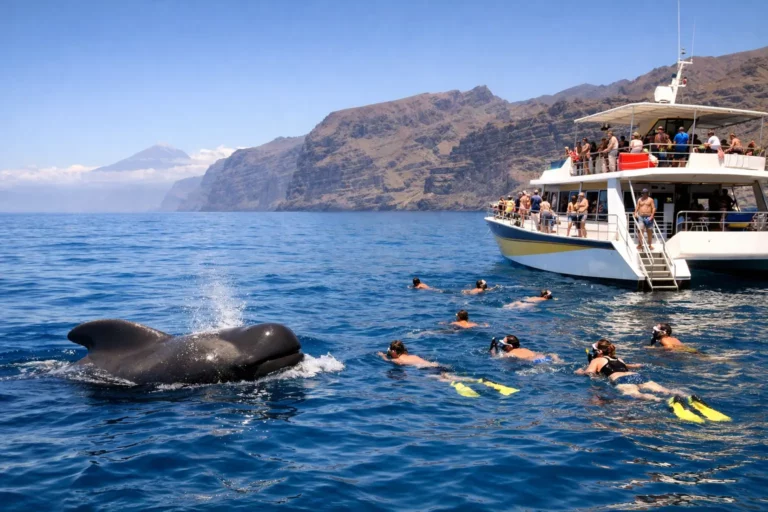
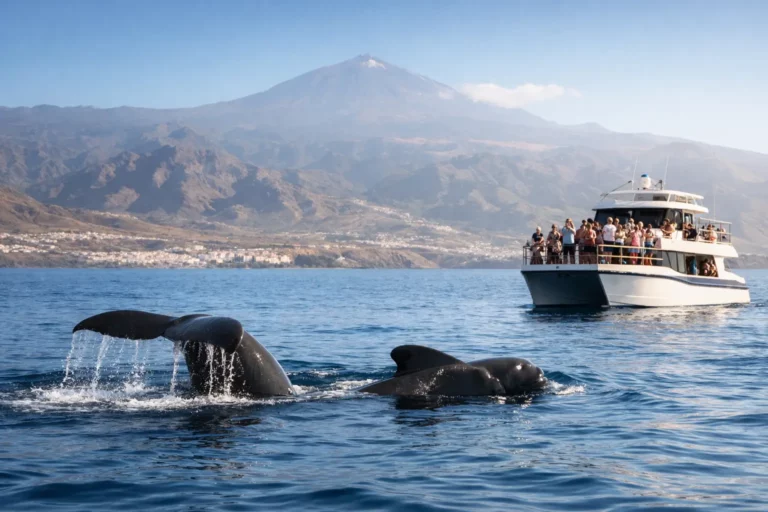
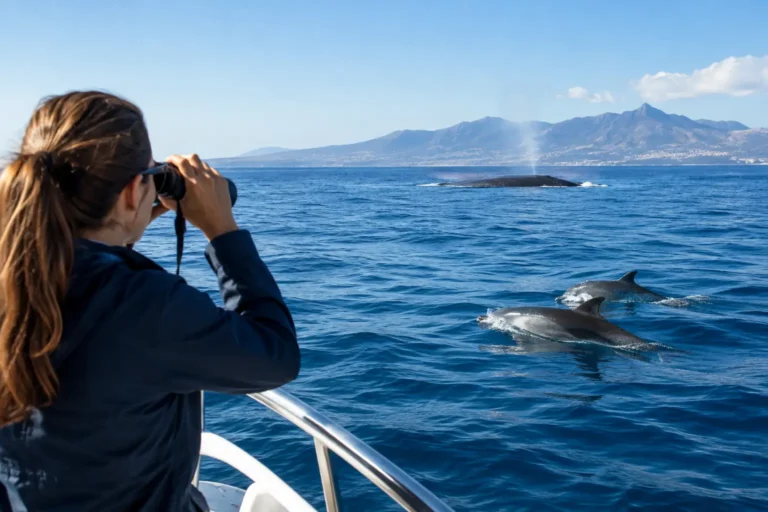
Atlantic island cruising feels wilder. Tenerife’s volcanic coastline rises sharply from deep water, and the open horizon gives even a short trip a feeling of escape. The waters off the south-west coast are also known for whale and dolphin sightings, adding a meaningful dimension beyond scenery alone. Wildlife is never a performance and sightings can never be guaranteed, but respectful encounters in an animal’s natural environment are among the most memorable moments a yacht trip can offer.
This is where an Atlantic cruise can be particularly compelling for couples, families and celebration groups. There is space to relax with a drink, enjoy freshly prepared food, watch the coastline change colour in late afternoon and, with good fortune, see marine life from a respectful distance. The experience has less of a marina-hopping feel and more of a genuine connection to the ocean.
Choose the Mediterranean if your priorities are sheltered swimming, short island hops, warm high-summer water and an itinerary built around beaches, restaurants and picturesque ports. It is often the simpler choice for a week-long bareboat or crewed charter where multiple stops are the focus.
Choose the Atlantic islands if you want year-round sunshine, volcanic scenery, a more refreshing climate and the possibility of wildlife encounters. Tenerife is particularly well suited to a half-day or private day cruise from a resort stay, where the yacht itself becomes the elegant setting for the occasion rather than merely transport between destinations.
A calm day in Tenerife can be as serene as any holiday postcard, while a windy day in the Mediterranean can be surprisingly demanding. Conditions always depend on the precise coast, season, time of day and forecast. That is why the best charter choice starts with a conversation about who is coming aboard, what they hope to feel and how much flexibility they have.
At Royal Ocean, the aim is to make that decision feel effortless: a considered route, a comfortable yacht, thoughtful hospitality and enough time to enjoy the sea rather than rush through it. If your holiday calls for sun, space and an experience shaped around your group, let the day’s conditions guide the route and let the Atlantic provide the occasion.