Long before Tenerife became a global byword for winter sun, private catamaran charters, and elegant days at sea, the island’s immense wealth was driven by steep agricultural terraces, volcanic soil vineyards, and a tiny, highly prized insect. The economic history of the Canary Islands before the dawn of mass tourism is not just a niche historical footnote. It is a fascinating maritime saga of how these Atlantic islands became a critical hub for global trade, how massive fortunes were made and lost, and why today’s coastal landscape still carries the physical architecture of those pioneering industries.
For travellers who primarily know the islands through their modern holiday infrastructure, luxury marinas, and dramatic volcanic scenery, this older economic story adds a profound sense of place. The stunning views from the water are beautiful in their own right, but they also frame a coastline that was once entirely tied to merchant shipping lanes, international export routes, and grand plantation wealth. Tenerife, La Palma, and Gran Canaria were never isolated outposts; they were the active, beating commercial crossroads between Europe, Africa, and the Americas.
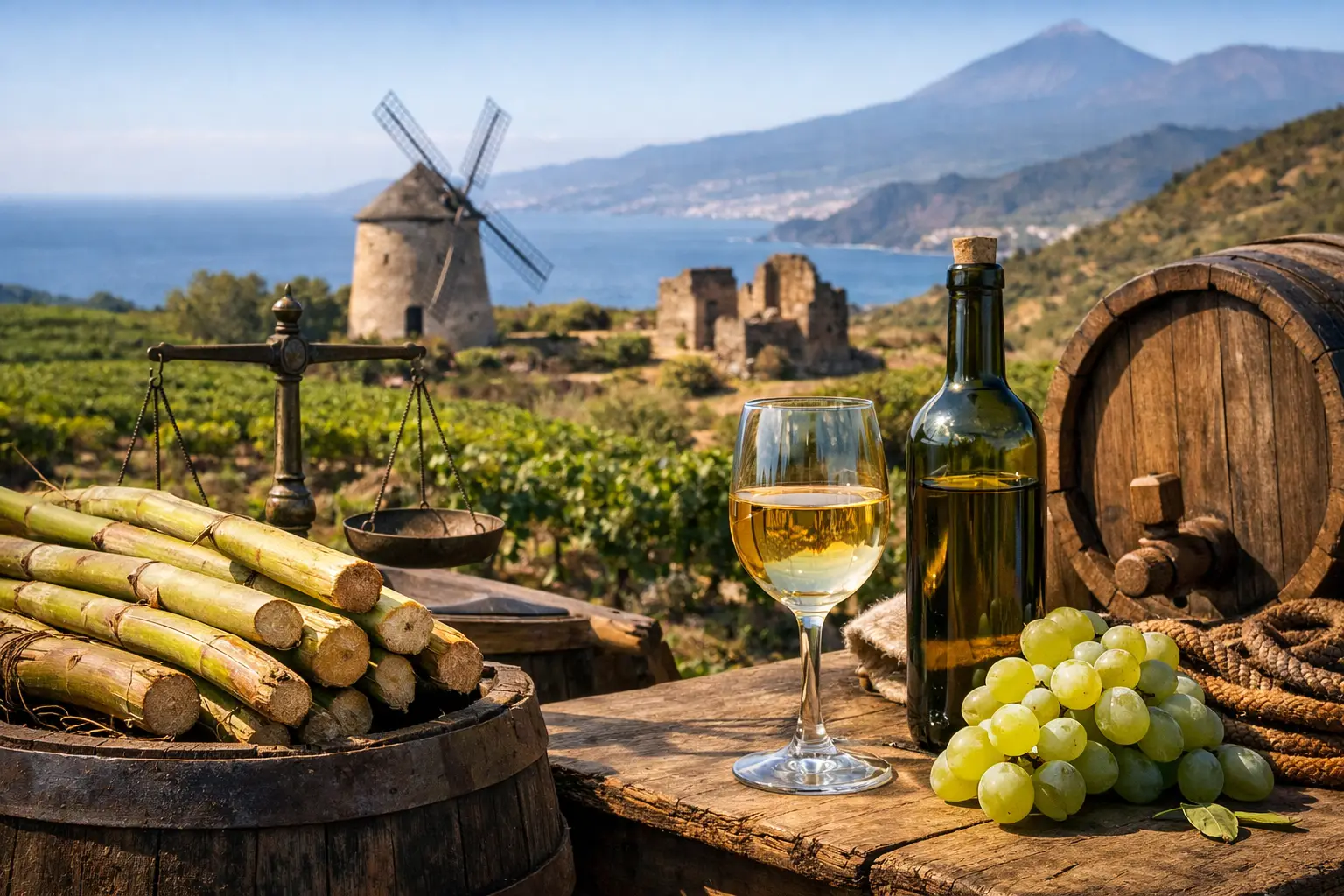
The economic evolution of the Canary Islands developed in three distinct, dramatic phases. Each export economy rose rapidly under favorable global conditions, generated incredible wealth, and then collapsed when international markets shifted or cheaper competitors emerged.
Sugar cane was the great early cash crop of the colonial era. Wine followed, carving out a highly profitable niche in European high society. Finally, cochineal arrived in the 19th century, sparking a massive agricultural boom tied to the industrial revolution. What connects all three industries is maritime adaptation. The islands repeatedly reshaped their land use, water distribution, and coastal infrastructure around whatever premium product promised the highest international demand.
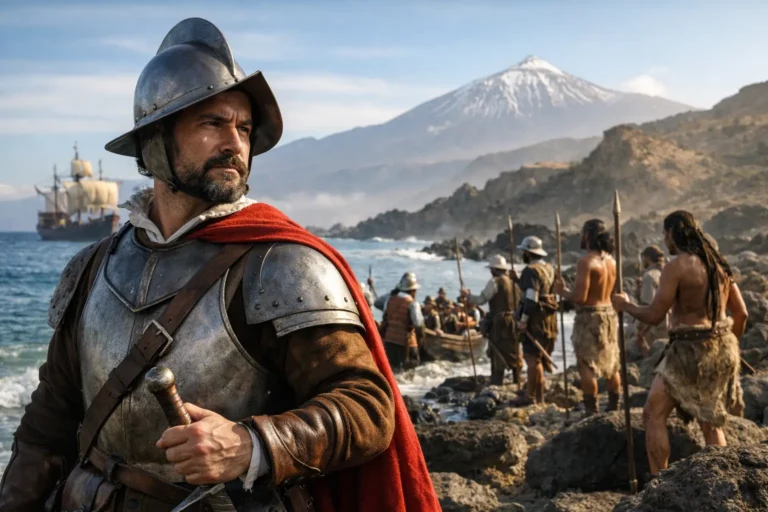
Following the Castilian conquest in the late 15th century, sugar cane became the primary engine of wealth in the Canaries. The crop perfectly suited the fertile coastal valleys of Tenerife, La Palma, and Gran Canaria, which possessed the rare combination of year-round mild temperatures and fresh water flowing down from the mountain peaks.
Canarian sugar was a highly capital-intensive industry. It required massive land concentration, complex stone aqueduct systems for irrigation, and heavy industrial milling technology (known as ingenios). Because of the scale required, the industry was dominated by powerful merchant families from Genoa, Portugal, Flanders, and Castile, pulling the islands into the center of the developing Atlantic economy.
For nearly a century, Canarian sugar commanded premium prices across European markets. However, the boom was not permanent. As the 16th century progressed, massive, low-cost slave plantations in Brazil and the Caribbean began producing sugar at a scale the mountainous Canaries couldn't match. As production costs rose and water grew scarce, the islands lost their competitive edge, forcing a complete economic reinvention.
As the sugar market collapsed, Canarian landowners made a brilliant commercial pivot toward viticulture. Vineyards rapidly spread across the volcanic slopes of Tenerife, particularly in the northern valleys and southern midlands, where the rich, mineral-heavy soils and unique microclimates gave birth to deeply distinctive, high-quality wines. Among these, the sweet, rich Malvasia (Malmsey) wine earned a legendary reputation across Europe.
English merchants quickly became the islands' most important trading partners. By the late 16th and 17th centuries, Canary wine had secured an elite status in British and colonial markets. It was celebrated in royal courts, heavily traded by merchant syndicates, and even immortalized by William Shakespeare in his plays. For the Canaries, wine offered what sugar no longer could: a premium product with a globally recognized regional prestige that cheaper overseas plantations couldn't replicate.
The success of the wine trade permanently reshaped Tenerife’s coastline. Coastal ports grew into bustling international towns, powerful foreign merchant houses established permanent bases, and the islands' strategic location became an indispensable maritime pitstop for ships crossing the Atlantic. However, the wine economy was deeply vulnerable to international geopolitics. Trade wars with England, shifting customs tariffs, and the rising popularity of Port and Madeira wines eventually caused demand to decline by the 18th century.
If sugar belonged to the age of discovery and wine to the early modern trading world, cochineal was the great boom of the 19th century. Cochineal is a brilliant, highly durable red dye extracted from a tiny scale insect that lives on the prickly pear cactus (nopal). Before the invention of synthetic chemical dyes, this natural pigment was intensely sought after by European textile factories for dyeing military uniforms, royal garments, and luxury fabrics.
The timing for Tenerife and its neighboring islands was perfect. European industrial manufacturing was expanding exponentially, and the arid, sunny coastal slopes of the Canaries provided the absolute ideal environment for cultivating the cactus host plants. Within a few decades, cochineal production exploded across Tenerife, Gran Canaria, and Lanzarote, becoming known as the region's "red gold."
When prices peaked, the cochineal trade brought immense wealth to the islands, totally transforming rural life. Traditional food crops were pushed aside to make room for endless cactus plantations. Yet, this boom-and-bust cycle proved to be the most fragile of all. In the late 19th century, European scientists successfully invented cheap, synthetic aniline dyes. Almost overnight, the global demand for natural cochineal plummeted. Prices crashed, shipping lanes went quiet, and Canary islanders faced a brutal period of economic hardship and mass emigration.
For a modern business rooted in life on the water, this rich merchant history has a natural, powerful relevance. The ocean surrounding Tenerife has never been just a beautiful view; it was the vital highway through which sugar left the valleys, Malvasia wine reached the tables of kings, and cochineal entered global textile markets.
Our historic harbours and coastal towns were built as commercial gateways to the world, designed to weather both the Atlantic elements and the arrival of global merchant fleets. When you board a luxury yacht today and cruise along the southern coast of Tenerife, you are literally tracing the exact nautical paths that once carried wooden galleons, heavy wine barrels, and international mercantile ambitions.
The difference today is simply our purpose. Where older maritime traffic served extraction and intense trade, today’s Atlantic setting is dedicated to leisure, personal escape, wildlife encounters, and a refined appreciation of the natural coast. However, that same historic Canarian spirit—outward-looking, cosmopolitan, and intimately connected to the sea—remains completely unchanged. Knowing what once sailed across these waters doesn't make a modern cruise feel heavier; it makes the experience infinitely richer, deeper, and more unforgettable.