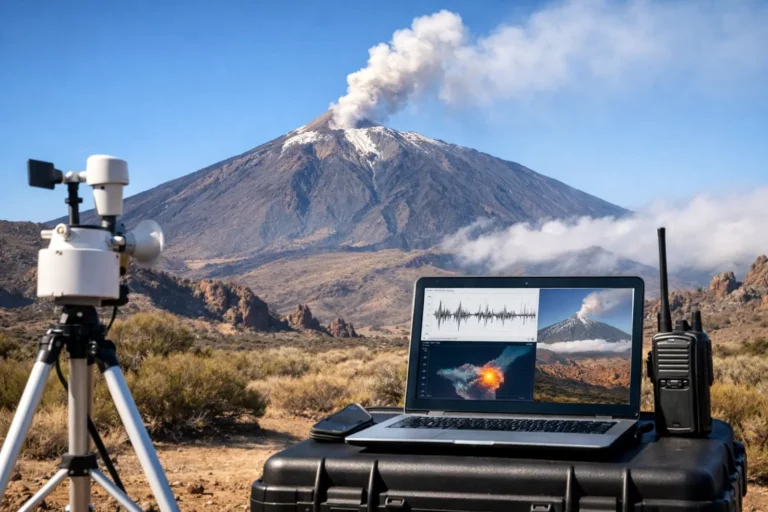
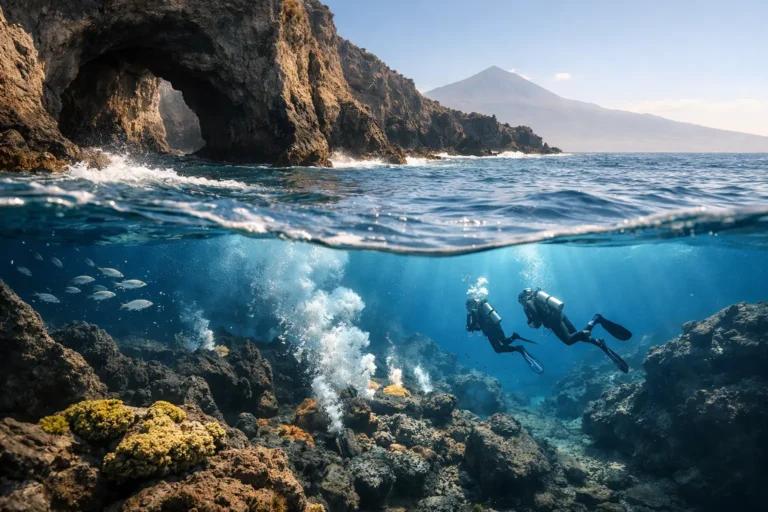
Stand on Tenerife’s sunlit surface, and it is easy to assume the island’s natural drama is entirely confined to soaring volcanic peaks, dramatic sea cliffs, and black-sand beaches. Yet, some of the most profound geological intrigue lies hidden completely out of sight, deep beneath your feet. The subterranean world of Tenerife’s volcanic lava tubes tells a fascinating story—one aggressively forged by fast-moving basaltic flows, collapsing stone roofs, expanding volcanic gases, and hundreds of thousands of years of systemic island construction.
For visitors who primarily know Tenerife for its world-class whale watching, coastal vistas, and warm Atlantic horizons, a journey into the **Cueva del Viento** (Cave of the Wind) offers a completely different kind of spectacle. It is quieter, cooler, and highly scientific, yet utterly breathtaking. For travellers who prioritize intellectual depth and want to understand the true anatomy of a destination rather than simply skimming its surface, this cave system stands as one of the most rewarding geological sites in Europe.
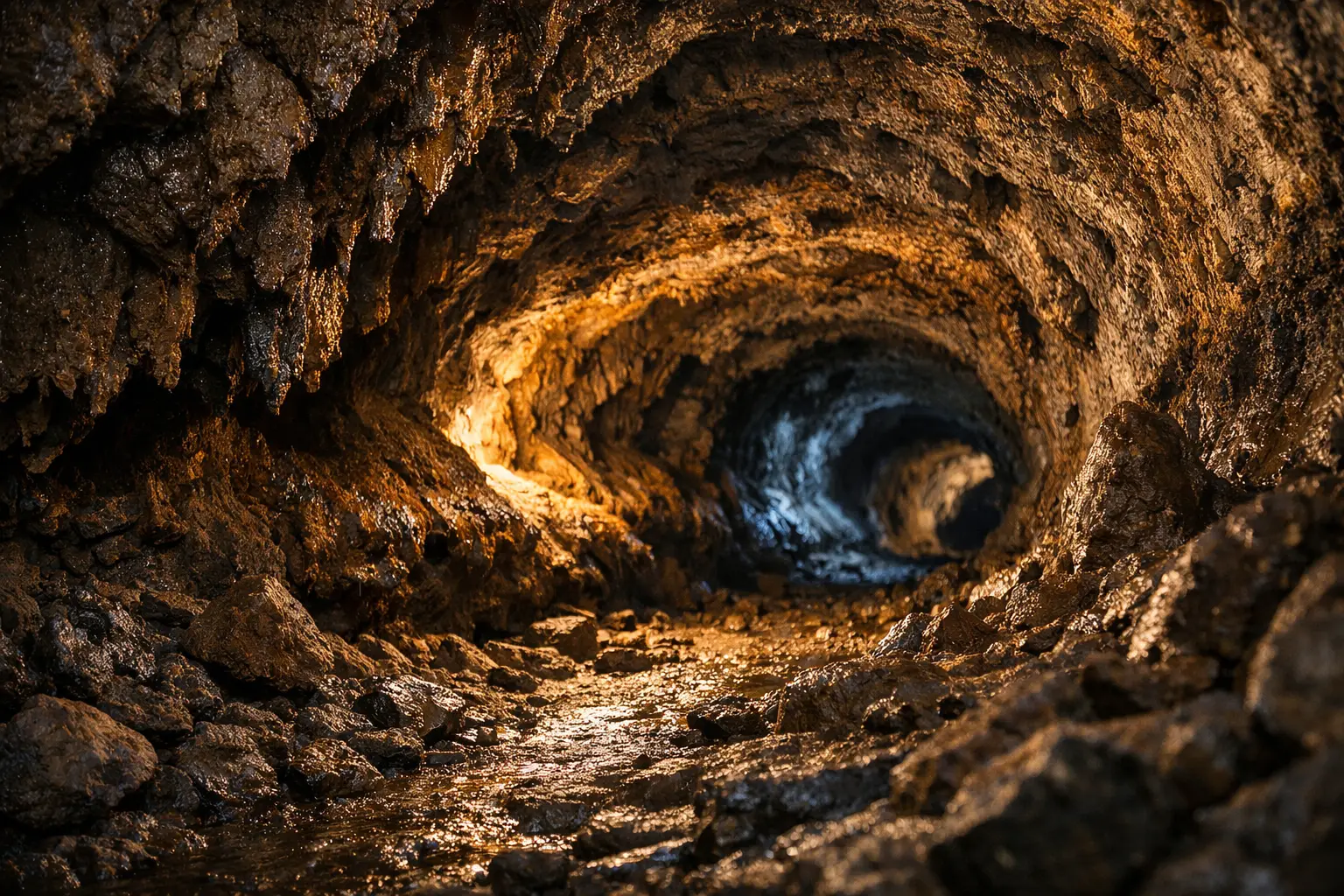
Nestled near the historic town of Icod de los Vinos in the north of Tenerife, Cueva del Viento is not just a local cave; it is one of the largest volcanic tube systems on Earth. Stretching over **18 kilometers (11 miles)** of mapped subterranean passages, it stands proudly as the most complex, multi-level lava tube network in the European Union.
This massive labyrinth was carved out roughly 27,000 years ago during a major eruption of Pico Viejo, a majestic twin crater sitting adjacent to Mount Teide. While many volcanic landscapes look like chaotic, jumbled fields of rock from the outside, Cueva del Viento is highly structured. It acts as a flawless, preserved archive of volcanic fluid mechanics, revealing exactly how lava moves, cools, and drains away, leaving behind a perfectly hollowed-out geological monument.
The science behind a volcanic tunnel, or lava tube, relies on an elegant process of natural insulation. It begins during a highly fluid eruption when a massive river of molten rock pours down the mountain slopes. As the outer edges and surface of the lava river come into contact with the much cooler air, they begin to solidify, forming a thick, rock-hard crust.
Beneath this newly formed protective stone ceiling, the core river of molten magma remains intensely hot and liquid, continuing to flow rapidly down the slope like water through a pipe. Once the eruption slows down and the primary magma source is cut off, the remaining liquid lava simply drains out of the bottom of the tube by gravity, leaving behind an empty, hollowed-out subterranean chamber.
What makes Cueva del Viento uniquely famous among geologists is that it did not form from a single, simple eruption. It is a spectacular **three-tiered labyrinth**, featuring three distinct levels of tunnels stacked perfectly on top of each other. This multi-level structure proves that the Pico Viejo eruption experienced multiple distinct pulses of lava over time, with younger flows dramatically carving paths directly beneath or inside the older, hardened tubes.
Tenerife's unique volcanic chemistry is perfectly suited for creating these majestic underground tunnels. The island is built primarily from **basaltic lava**, which contains a low concentration of silica. This chemical makeup means the molten rock is highly fluid, possesses a low viscosity, and can travel at high speeds for long distances without cooling too quickly.
Thick, sticky, silica-rich lavas tend to pile up heavily around a volcano’s vent, forming jagged duds. Basaltic lava, conversely, flows effortlessly like a river, creating the long, continuous streams required to form hollowed insulation crusts. Combined with the steep, sloping terrain of Tenerife’s midlands, this chemistry created the perfect environment for hollowing out deep underground passages that have remained structurally sound for millennia.
Stepping inside Cueva del Viento reveals a stunning array of internal rock formations that directly record the final moments of the ancient liquid eruption. These shapes are not random decorations; they are the frozen physics of liquid fire:
After the liquid magma fully drains from a tunnel, the newly hollowed structure is left vulnerable to gravity and tectonic shifting. Over centuries, sections of the ceiling can weaken and cave in, creating dramatic vertical openings known as **skylights (jameos)**. These natural light shafts are crucial to the cave's ongoing evolution, introducing fresh oxygen, shifting airflow patterns, and allowing plant seeds and organic matter to filter down into the dark depths.
This isolation has allowed Cueva del Viento to evolve into a highly sensitive, unique ecosystem. Biologists have successfully documented **over 190 cave-adapted species**, including 15 completely new to science, such as blind, wingless beetles and specialized troglobitic invertebrates. These creatures survive in absolute darkness, relying on stable temperatures and limited organic matter. To protect this delicate biological and geological framework, access to the cave is strictly regulated, rejecting mass commercial crowds in favor of intimate, expertly guided, low-impact groups.
At first glance, a day spent exploring a cool, dark volcanic tunnel in the north seems completely disconnected from a sun-drenched afternoon enjoying a luxury yacht charter along the south coast. In reality, they are two sides of the exact same story. The majestic sea cliffs of Los Gigantes, the striking black-sand coves, and the very outline of the coast you see from the deck exist entirely because of the same basaltic forces that hollowed out Cueva del Viento.
When you unwind on a private yacht cruise with Royal Ocean, navigating the crystal-clear waters of the Atlantic, you are admiring the exterior of a magnificent volcanic fortress. Complementing that coastal perspective with a visit to the island's interior adds a sophisticated dimension of depth and context to your holiday. It reveals Tenerife as a layered, intellectually fascinating destination—where the serene luxury of the modern coast is beautifully anchored by the raw, untamed power of the earth.