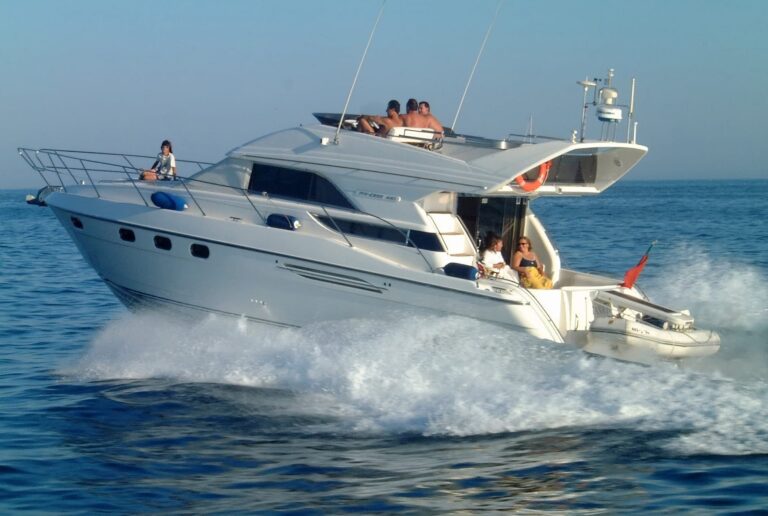
A calm sea off Costa Adeje can make a yacht trip feel beautifully simple: the coastline in the distance, the Atlantic stretching towards the horizon and perhaps a pod of dolphins moving across the bow. Behind that relaxed experience, however, is careful preparation and marine technology.
Radar and VHF radio have different jobs, but together they help a yacht crew remain aware of the surrounding water, communicate with other vessels and respond sensibly when visibility, traffic or weather conditions change.
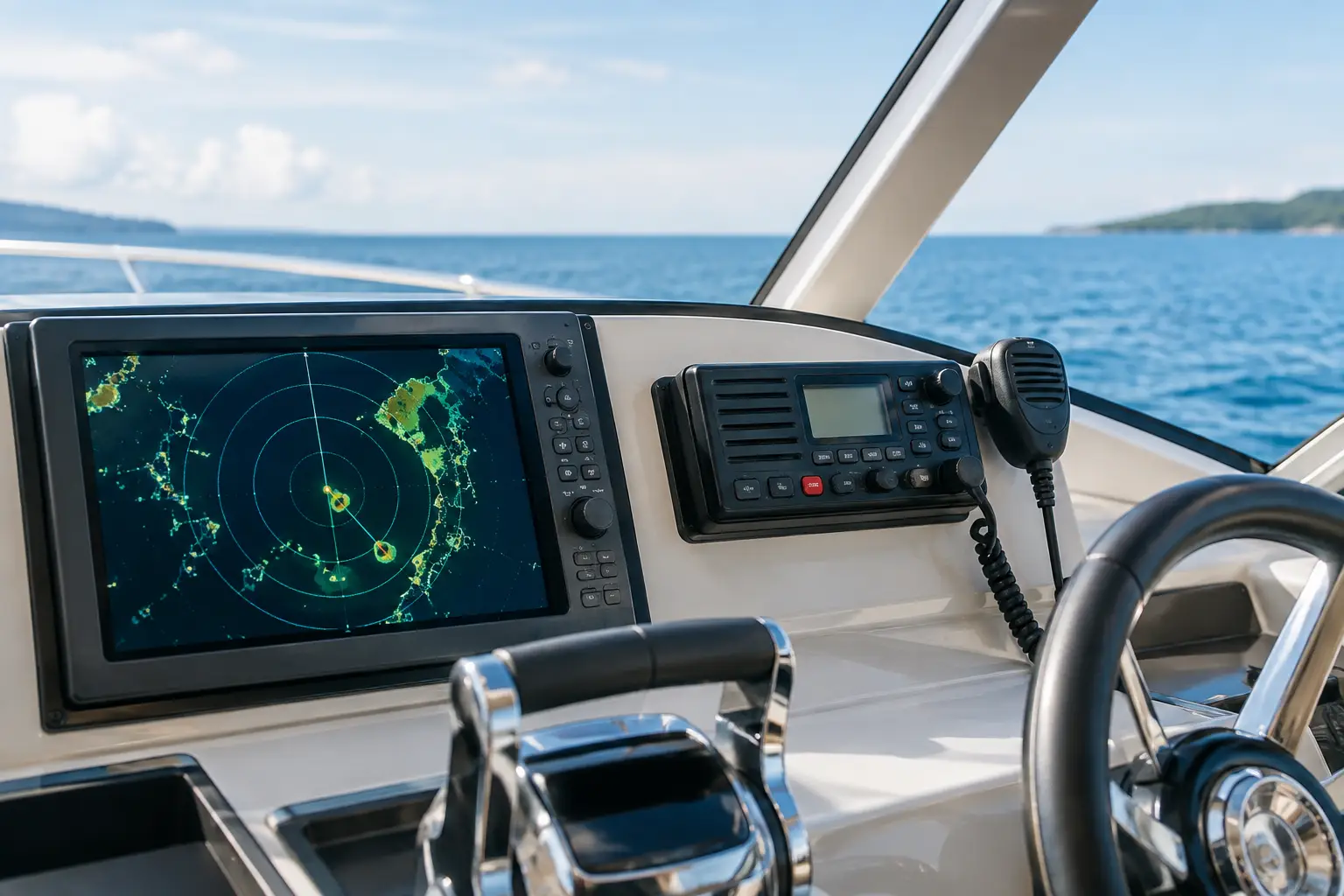
Radar and VHF radio serve completely different purposes.
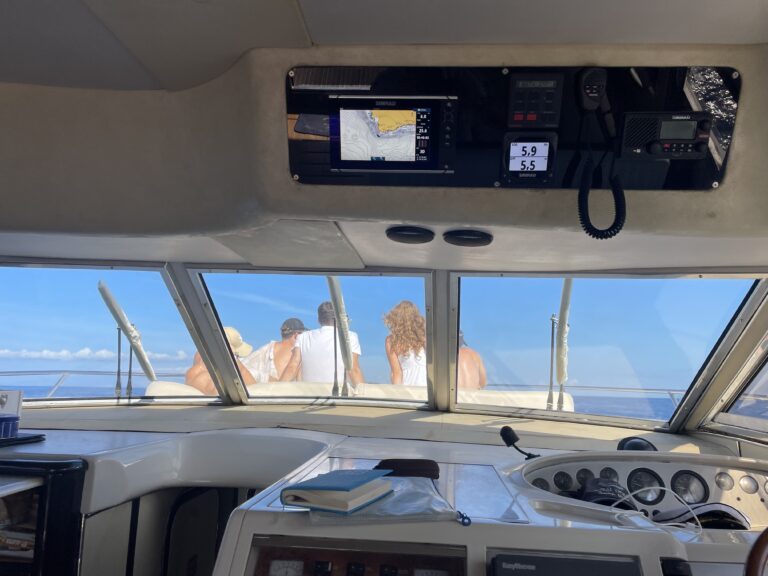
Marine radar helps the skipper build a picture of the area around the yacht by detecting returning radio-wave echoes. Depending on the conditions and the characteristics of the target, radar can help identify coastline, headlands, vessels and other objects.
VHF radio is primarily a communication system. It allows the crew to communicate with marinas, port authorities, other vessels and, when necessary, emergency services.
Neither system replaces an experienced skipper, a proper visual lookout or a careful assessment of the weather and sea state. Electronics provide information; professional seamanship turns that information into decisions.
| System | Main Function | Why It Matters at Sea | Guest Benefit |
|---|---|---|---|
| Marine Radar | Detects returning radio-wave echoes from suitable targets | Provides additional situational awareness around the yacht, particularly when visibility is reduced | Helps the crew maintain awareness of surrounding traffic and coastline |
| VHF Radio | Provides short-range marine communication | Allows communication with marinas, port authorities, nearby vessels and emergency services | Supports an organised and well-coordinated journey |
A yacht radar sends out radio waves and displays returning echoes on a screen. In practical terms, this can help the skipper identify the coastline, headlands, larger vessels and other objects that reflect the signal.
Radar becomes particularly useful when visibility is less straightforward. Haze, rain, low light and other conditions can make visual identification more difficult, while radar can provide another source of information for the person at the helm.
Around Tenerife, conditions can change during a single trip. The south of the island often provides excellent cruising conditions, but wind, swell and local sea conditions can vary with the route and time of day. A proper visual lookout remains essential, while radar provides an additional layer of situational awareness.
Returning towards a marina requires particular attention. Leisure craft, fishing boats, tour vessels and other marina traffic may all be operating in the same area.
Radar can help the skipper monitor developing situations and maintain awareness of traffic that may be difficult to see clearly from the helm. It is another tool that can support decisions about course and speed before a situation becomes urgent.
Radar is not an electronic version of human eyesight. Small floating objects, very low-profile craft and marine animals may not produce a reliable radar echo. Waves and sea clutter can also make the display more difficult to interpret in rough conditions.
For that reason, responsible crews use radar together with visual observation, navigational charts, local knowledge, weather information and an appropriate speed. Radar is an aid to navigation, not permission to continue without caution.
VHF radio is strongly associated with emergency communication, and for good reason. It is one of the key communication systems used by vessels at sea.
Channel 16 is internationally recognised for distress, urgency and safety calling. Where a vessel is equipped with Digital Selective Calling (DSC) and the system is correctly configured, it can also be used to transmit an emergency alert containing vessel information.
But VHF is useful long before an emergency occurs.
A skipper may use the radio to communicate with a marina, coordinate a harbour arrival, exchange information with another vessel or receive relevant safety information. These short exchanges may be barely noticeable to guests, but they are part of normal professional operation at sea.
Radio communication at sea needs to be concise and accurate. The crew needs to understand the yacht's position, what is happening and which channel or procedure is appropriate for the situation.
This is where experience matters. A sophisticated radio does not make decisions by itself. The crew must know how to interpret information, communicate clearly and respond appropriately.
Good preparation also reduces the number of situations that become urgent in the first place. Before leaving the berth, the crew can consider the forecast, sea state, planned route, guest comfort and the capabilities of the yacht.
If conditions are unsuitable for a particular plan, changing the route, adjusting the timing or remaining closer to sheltered water may be the sensible choice.
Tenerife's south-western waters are well known for encounters with whales and dolphins. When wildlife appears, responsible observation depends on careful boat handling rather than simply finding the animals.
The crew needs to remain aware of other vessels, changing sea conditions and the yacht's position while giving marine animals appropriate space. Radar and VHF radio contribute to that awareness indirectly.
Technology does not locate whales on demand, and it does not guarantee a sighting. Instead, these systems help the skipper maintain a clear picture of the surrounding environment while attention can remain focused on safe navigation and responsible wildlife observation.
For guests interested in spending more time around Tenerife's marine environment, the Private Whales & Relax Cruise combines wildlife watching with time for swimming and snorkelling, depending on the conditions and route.
The same principle applies during a swim stop. Before guests enter the water, the crew needs to consider boat traffic, current, wind, swell and the suitability of the location. A sheltered-looking area is not necessarily suitable under every set of conditions.
Guests do not need to understand marine electronics in detail to assess whether a yacht operation appears professional. There are several practical things worth looking for.
The right experience also depends on the purpose of the trip. A private cruise may allow a more flexible route and pace, while a shared excursion can be a good option for guests who want to combine wildlife watching with a more social experience.
For a smaller-group wildlife experience, Royal Ocean also offers a shared whale-watching excursion from Las Galletas, with a swim stop when conditions allow.
Radar screens, radio calls and other navigation procedures are rarely what guests remember about a yacht trip. That is exactly how they should feel.
The technical side of the journey should remain largely in the background while the crew uses it to stay aware, communicate clearly and respond to changing circumstances.
The result is a more relaxed experience for everyone on board. Guests can concentrate on the coastline, wildlife, swimming and the Atlantic horizon while the crew manages the navigation and communication that make the trip possible.
Radar and VHF radio are only two parts of professional yacht operation. Their real value comes from being used together with good preparation, local knowledge, visual observation and experienced seamanship.
The best days at sea are not measured by how far the yacht travels or how complicated the technology appears. They are measured by how comfortably and safely everyone can enjoy the time on the water.
When you are watching the coastline disappear behind the yacht, listening to the water and waiting to see the next dolphin surface, the technology may be almost invisible. The preparation behind it is not.
Radar helps the skipper build a picture of what is around the yacht by detecting returning radio-wave echoes. VHF radio is primarily used for short-range marine communication with marinas, port authorities, nearby vessels and emergency services.
Small floating objects, low-profile craft and marine life may not always produce a reliable radar echo. Sea clutter can also affect the display in choppy conditions. Radar should therefore be used together with visual observation, charts, local knowledge and appropriate speed.
Channel 16 is internationally recognised for distress, urgency and safety calling. It is also used for initial contact before communication is moved to another appropriate channel.
Radar does not locate whales or dolphins on demand. It supports the skipper indirectly by improving awareness of surrounding vessels, coastline and other suitable radar targets, allowing more attention to remain on safe and responsible boat handling.
Look for an experienced crew, clear safety procedures, appropriate navigation and communication equipment, sensible decisions about weather and sea conditions, and responsible wildlife-watching practices.