A gentle ocean swell can feel incredibly romantic for about five minutes. After that, if a boat is continuously rocking from side to side while you are trying to sip a chilled drink, spot pilot whales on the horizon, or settle into a sunset private cruise, physical comfort rapidly becomes the only detail that matters. This is why understanding modern yacht stabilization systems and how they actively reduce rolling is one of the most practical questions you can ask when selecting a premium maritime experience.
On a world-class charter, guest comfort is never accidental. It relies on a meticulous combination of advanced naval architecture, expert seamanship, and cutting-edge technology designed to neutralize the side-to-side motion known as "roll." Rolling is not just the movement most likely to cause seasickness; it is the primary distraction that disrupts fine dining, open conversation, and overall confidence on deck. Utilizing active engineering ensures the ocean remains a space of absolute relaxation.
A vessel encounters six distinct degrees of freedom at sea, but "rolling"—the rotational movement along the boat's longitudinal (fore-and-aft) axis—is what causes the most discomfort. Even in seemingly calm weather, beam seas (waves striking the side of the hull), tidal currents, and the waking wash from passing commercial vessels can trigger a rhythmic, exhausting swaying motion.
For guests, excessive rolling turns a scenic cruise into a balancing act where glasses slide across tables, moving along the deck feels unsafe, and capturing a steady photograph becomes a challenge. In premium marine leisure, especially during sensitive excursions centered around wildlife watching or coastal exploration, dampening this specific rotational energy is critical to maintaining an atmosphere of uncompromised luxury.
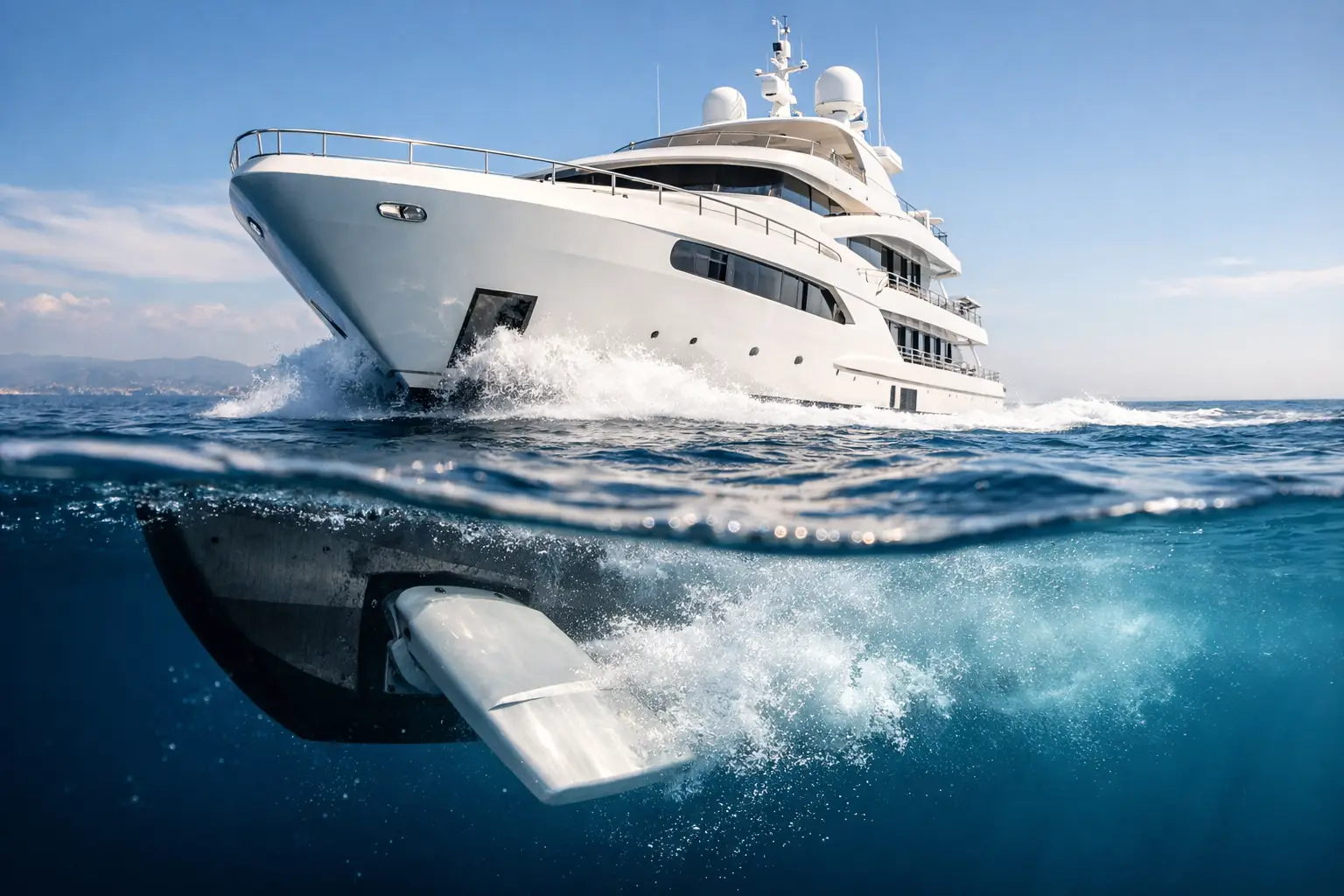
The most widely utilized systems for managing roll while a vessel is underway are active fin stabilizers. These are pair of hydrofoil wings fitted symmetrically below the waterline on both sides of the hull's bilge. Operating via complex internal hydraulic or electric actuators, these fins constantly rotate and adjust their angle of attack relative to the water flowing past the hull.
When an oncoming wave forces the yacht to heel to the port side, the starboard fin instantly rotates to generate downward force while the port fin creates upward hydrodynamic lift. This immediate, opposing force counteracts the wave’s energy, reducing the overall roll angle by up to 80% to 90%. Fin stabilizers are incredibly efficient during active navigation, flattening out beam seas and providing an incredibly smooth, linear passage between coastal bays. However, because they rely entirely on the constant flow of water over the foil surfaces, traditional fins lose their effectiveness when the yacht slows down or comes to a complete stop.
To solve the challenge of stabilizing a vessel when stationary, marine engineers developed gyroscopic stabilizers. Unlike external fins, a gyro stabilizer operates entirely inside the yacht’s engine room or hull structure, meaning it has zero drag and no moving parts exposed to the marine environment.
The core mechanics rely on a heavy flywheel spinning at immense speeds—often between 3,000 and 5,000 RPM—sealed inside a low-friction vacuum chamber. When a wave tilts the yacht, the spinning flywheel precesses (tilts fore and aft), generating a powerful gyroscopic counter-torque that instantly pushes back against the hull's side-to-side movement. This angular momentum works perfectly whether the vessel is moving at 20 knots or sitting dead in the water. For guests enjoying an extended swim stop, waiting quietly for whale sightings, or dining at anchor, a gyro system transforms the onboard experience by erasing the erratic sways caused by coastal chop.
True luxury on the water is not merely defined by polished woodwork or attentive service; it is directly connected to how your body responds to the environment. When a hull rolls sharply, your core muscles continuously contract to maintain posture, leading to physical fatigue, anxiety, and a heightened risk of motion sickness.
A stabilized yacht eliminates this constant physical strain. Walking across the deck becomes effortless, pouring a glass of champagne is safe, and your focus can remain entirely on the stunning scenery rather than your center of gravity. Furthermore, by flattening the vessel's motion, stabilizers significantly minimize the visual and vestibular sensory conflicts that cause seasickness, providing an inclusive, safe environment for children, elderly relatives, and first-time sailors alike.
While advanced stabilization systems are revolutionary, they are most effective when paired with exceptional naval design and professional seamanship. A yacht’s beam (width), center of gravity, displacement, and hull shape (such as a deep-V or a multi-hull catamaran platform) fundamentally dictate how it responds to the Atlantic ocean.
The decisions made by the skipper are equally vital. An experienced captain does not simply rely on automation; they actively read the swell, adjust the vessel’s speed, and alter the cruising heading to ensure oncoming waves meet the hull at the most comfortable angle. Around the unique microclimates of Tenerife, wind directions and sea states can shift rapidly between coastal zones. A premium operator continuously tailors the navigation route to utilize the natural wind shadows of the island, prioritizing passenger comfort over rigid schedules.
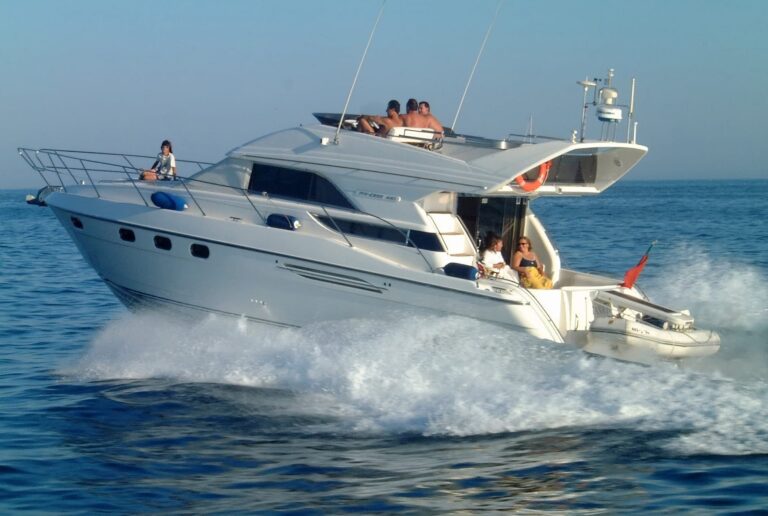
When selecting a boat trip along the south coast of Tenerife, the size and layout of the vessel play an important role. Smaller, basic speedboats are highly susceptible to ocean movement, whereas premium flybridge motor yachts—such as those curated by Royal Ocean—possess the necessary mass, structural engineering, and hull balance to handle open coastal waters with absolute elegance.
By keeping guest capacities strictly limited and utilizing well-maintained, high-tonnage vessels, we create an environment that naturally resists the chaotic movements of the sea. This structural stability supports the unforgettable details that define a luxury escape: the uninterrupted view of the coast, the ease of shared drinks on the aft deck, and the peaceful confidence to explore the open Atlantic. When planning your next charter, choose the standard of engineering that lets you focus entirely on the horizon—not the movement beneath your feet.