Whales and dolphins are among the most intelligent creatures on Earth. Around Tenerife, one of the most fascinating species you can observe is the pilot whale. These highly social animals live in stable family groups and rely heavily on communication to survive. In the deep, murky corridors of the Atlantic, sound travels five times faster than in air, making it their primary tool for reality.

To understand "whale talk," we must break down their signals. Scientists generally divide whale and dolphin communication into four key types of signals. While humans use an alphabet, pilot whales use a combination of pitch, rhythm, and sequence to convey meaning.
| Signal Type | How It Sounds | Primary Function | Human Analogy |
|---|---|---|---|
| Whistles | Long, melodic sounds | Social communication, identification | Names and greetings |
| Clicks | Short pulses, rapid sequences | Echolocation, navigation, hunting | Radar or sonar |
| Codas | Rhythmic click patterns | Group identity, “phrases” | Dialects or passwords |
| Pulsed Sounds | Irregular, noisy signals | Emotions, coordination, alerts | Tone of voice or shouting |
Did you know? Some dolphins and pilot whales develop "signature whistles." Research published in PNAS suggests these unique sound patterns act like names. Whales can recognize and respond specifically to these individual "calls," allowing them to find family members across miles of ocean.
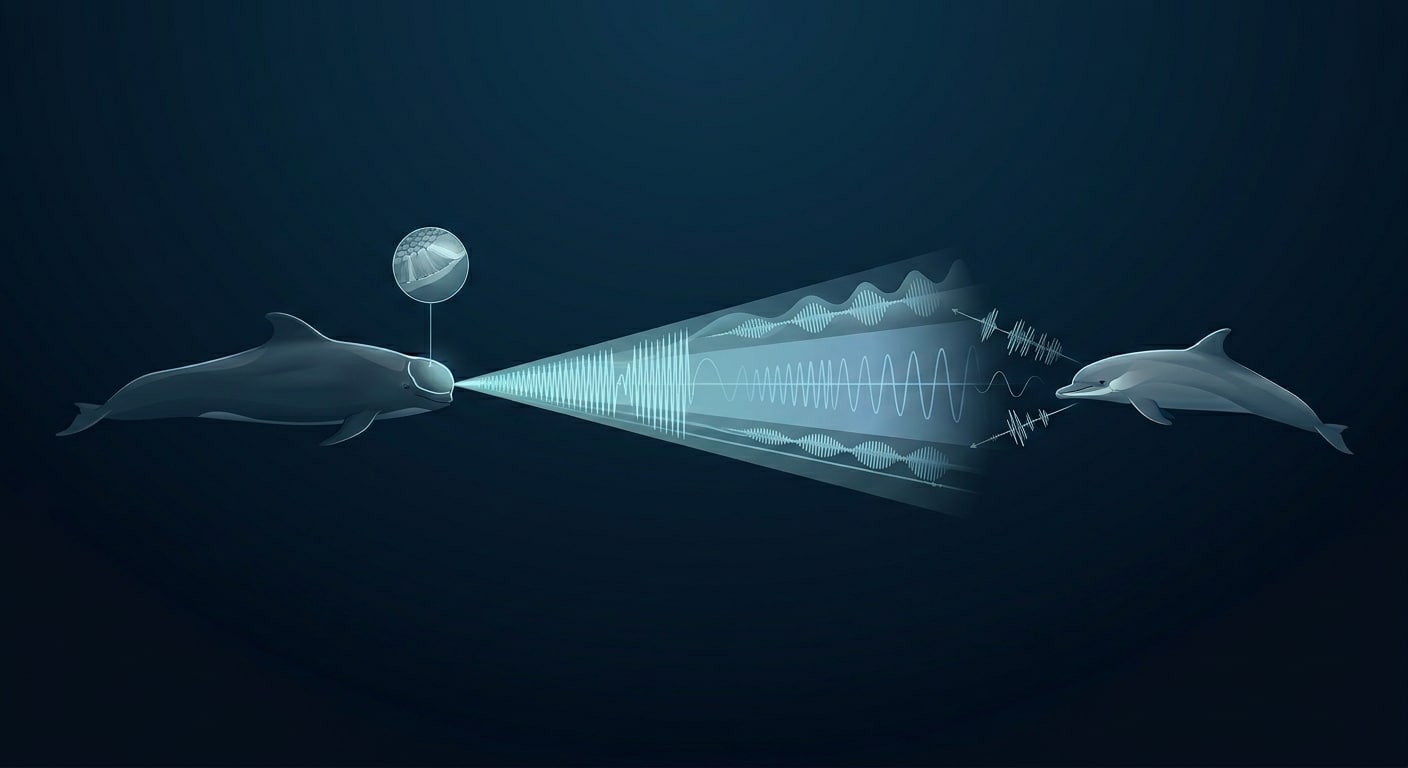
We used to think whale sounds were simple emotional triggers, but modern research suggests something much closer to a language. Recent breakthroughs by Project CETI (which focuses on sperm whales, close cousins of the pilot whale) have revealed what scientists call a "phonetic alphabet."
According to research highlighted by National Geographic, AI analysis of thousands of "codas" shows that whales vary their rhythm and tempo to change the meaning of a phrase. This "combinatorial" system is remarkably similar to how human language works—rearranging basic building blocks to create endless complex meanings.
In Tenerife, these pilot whales are residents. This means they develop specific "pod dialects" that are passed down from grandmothers to calves, ensuring the family’s unique culture survives through generations.
Tenerife is one of the few places in the world where you can observe these acoustic giants year-round. However, because whales rely so heavily on sound, noise pollution from boats can "blind" them. If you want to hear and observe these animals in their natural habitat, it is vital to choose tours with "Barco Azul" (Blue Boat) certification. This ensures the vessel follows strict regulations to minimize sound interference, letting the whales talk in peace.
While not a "language" in the human sense, their communication is structured and complex, featuring elements similar to grammar and a phonetic alphabet.
Yes. Many species use "signature whistles" that act as individual identifiers within their social groups.
It is a biological sonar system where whales emit clicks and listen for the echo to navigate and hunt in total darkness.
Yes, acoustic pollution can mask their signals, which is why "Blue Boat" regulations are critical for their protection on Tenerife.