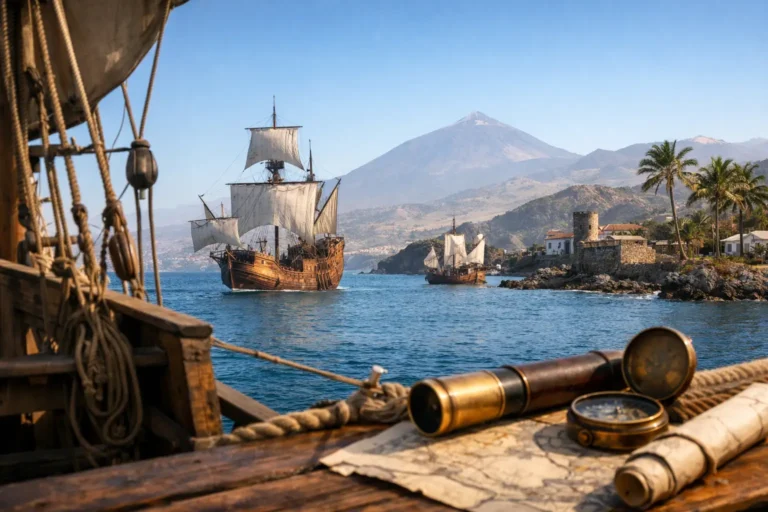
A calm Atlantic surface can be deceptive. Off Tenerife and across the archipelago, the sea that now hosts elegant yacht days, dolphin sightings and golden sunsets also guards centuries of lost cargo, broken hulls and untold journeys. Underwater archaeology Canary Islands shipwrecks history is not simply a niche academic subject — it is one of the most compelling ways to understand why these islands mattered so much to Europe, Africa and the Americas.
For travellers spending time on the water in the Canaries, that hidden past adds a richer layer to every cruise. The same routes admired today for their dramatic coastlines and clear light were once strategic passages for merchants, naval vessels, fishing fleets and emigrant ships. Some arrived safely. Others did not.
The Canary Islands sit in a position that has always made them valuable. They were a natural Atlantic waypoint — close enough to continental trade routes to matter, yet far enough into the ocean to serve as a staging point for longer crossings. Ships bound for the Caribbean, South America and West Africa often passed through or near the islands to take advantage of winds, resupply, or regroup before continuing west.
That strategic location brought prosperity, but it also brought risk. Busy sea lanes mean more accidents, more bad-weather losses and more opportunities for wartime conflict. Add volcanic coastlines, hidden reefs, sudden winds and older navigation methods, and it becomes easier to see why wrecks accumulated around the archipelago over the centuries.
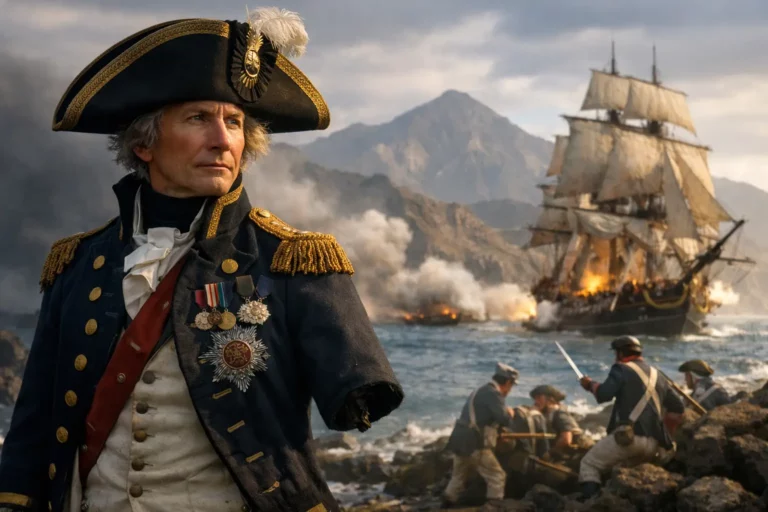
Not every wreck tells the same story. Some reflect commercial ambition — cargoes of wine, sugar, ceramics, metal goods or provisions. Others speak of military tension, privateering and imperial rivalry. Smaller wrecks may reveal everyday island life, from local fishing patterns to inter-island transport. Taken together, they form a submerged archive.
| Artefact Category | What Archaeologists Look For | Historical Evidence Revealed |
|---|---|---|
| Military & Defence | Iron and bronze cannons, muskets, ball ammunition | Naval tactics, privateering raids, and colonial conflicts |
| Commerce & Trade | Amphorae, ceramic jars, glass bottles, metal ingots | Global trade routes, wine exports, and consumer demands |
| Daily Onboard Life | Clay pipes, personal coins, footwear leather, rigging tools | Crew demographics, seafaring habits, and daily hardships |
| Ship Engineering | Ballast stones, timber hulls, copper sheathing, iron nails | Shipbuilding origins, past ports of call, and technological shifts |
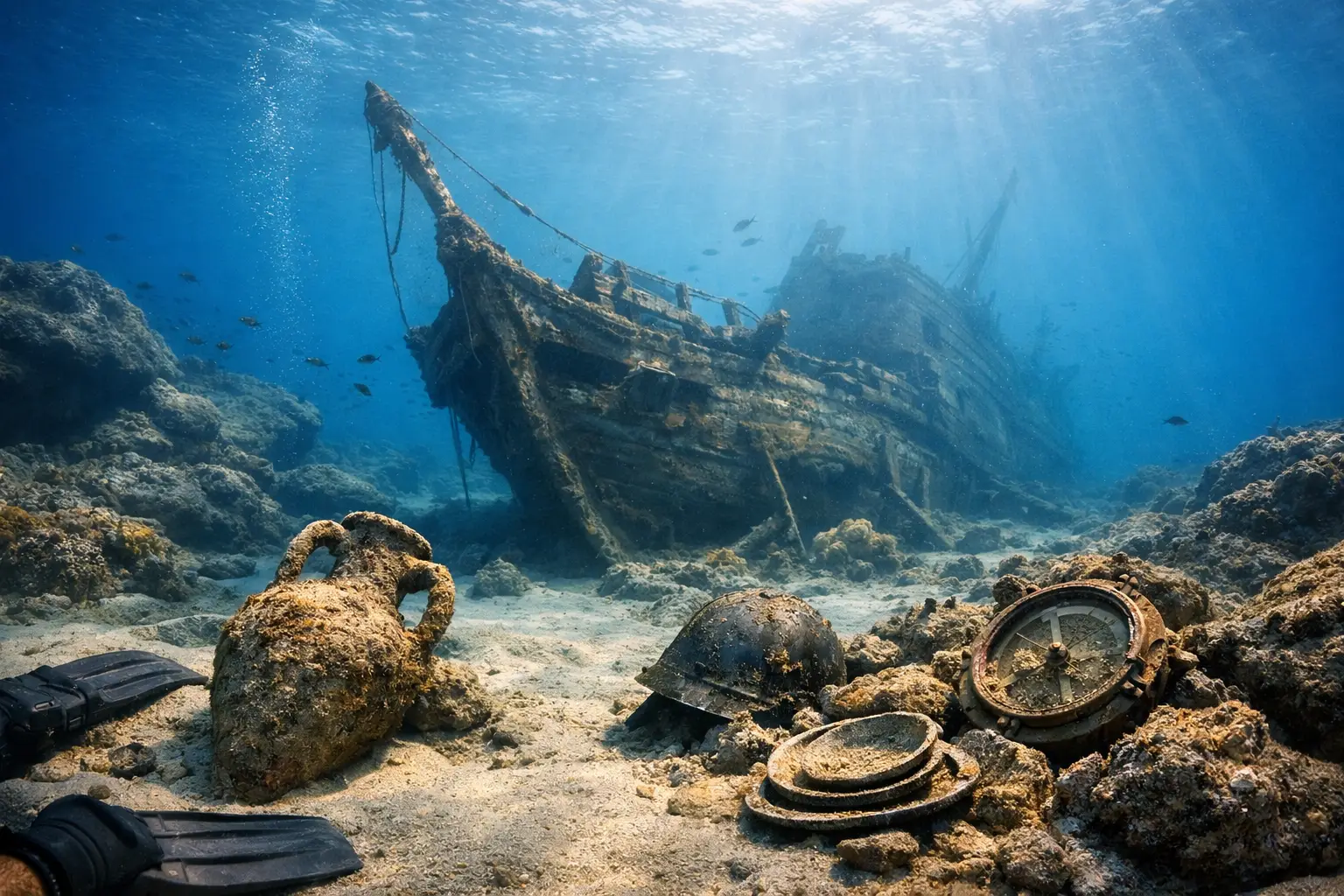
Underwater archaeology in the Canary Islands is careful, methodical work, not treasure hunting with better branding. Its purpose is to understand human history through material remains found below the waterline. That can include ship timbers, anchors, cannons, amphorae, bottles, tools, cargo fragments and personal items, as well as harbour structures and older coastal installations now partly submerged.
The challenge is that sea conditions can preserve and destroy at the same time. Saltwater, currents and marine life gradually alter wreck sites, while sand can bury objects for decades and protect them surprisingly well. Volcanic seabeds add another layer of complexity. A site may be scattered widely rather than lying as one neat, recognisable ship outline.
Modern archaeologists rely on mapping, photography, archival comparison and controlled recovery where appropriate. In many cases, leaving objects in place is the best option. Once an artefact is removed from the seabed, conservation becomes expensive and technically demanding. A cannon or ceramic jar may look stable underwater, yet begin to deteriorate once exposed to air.
That is why serious underwater archaeology depends as much on restraint as discovery. The goal is not to collect souvenirs. It is to protect context, because context is what turns an object into evidence.
Tenerife often takes the spotlight for visitors, but shipwrecks history across the Canary Islands is wider and more varied than many expect. The archipelago's ports connected Europe with Atlantic expansion, and each island played a slightly different maritime role depending on geography, harbour quality, local production and military importance.
Tenerife, with Santa Cruz becoming a major port, saw merchant traffic, naval activity and defensive investment. Gran Canaria also held key maritime significance, particularly through Las Palmas. Lanzarote and Fuerteventura were exposed to routes linked with Africa and regional trade. La Palma became especially important in transatlantic contexts, while smaller islands had their own coastal networks, anchorages and hazards.
The result is not one grand shipwreck narrative but many overlapping ones. A wreck from the 16th century may reveal early imperial trade patterns. An 18th-century loss might reflect changing naval tactics or the movement of luxury goods. A 19th-century steamship wreck can show the transition from sail to industrial maritime transport. Each period leaves different traces on the seabed.
One of the most fascinating parts of underwater archaeology Canary Islands shipwrecks history is that it often reveals ordinary realities rather than dramatic legend. Cargo remains can show what people bought, sold and valued. Repairs to hulls can suggest long-distance wear or shortages at sea. Ballast stones may point to where a ship previously called before reaching the islands.
Even modest finds matter. A clay pipe, a section of rigging, a broken plate or a worked metal fitting can help date a site and place it within wider trading systems. When researchers compare underwater evidence with port records, insurance claims and naval documents, forgotten patterns begin to reappear.
This matters for visitors too. The Canary Islands are often presented only as a place of sun, scenery and leisure. They are certainly that, and beautifully so. But they are also historical crossroads shaped by migration, commerce, defence and exchange. The sea was never just a backdrop. It was the engine of island life.
There is always a temptation to imagine shipwrecks as glamorous — silver coins on the seabed, cannons resting neatly in turquoise water, a perfect lost world untouched by time. Occasionally there is visual drama, but the reality is usually less theatrical and more interesting.
Many sites are fragmentary. Wood disappears. Iron corrodes. Cargo disperses. Storms shift everything. A wreck may survive only as a cluster of anomalies that mean little to the casual eye but a great deal to trained specialists. That can disappoint those hoping for a cinematic scene, yet it also reminds us that the sea edits history harshly.
There is another trade-off here. Public interest helps protect maritime heritage because people value what they understand. At the same time, too much publicity around exact wreck locations can invite looting or careless diving. Preservation and access do not always sit comfortably together, particularly in popular coastal destinations.
For guests enjoying a refined day at sea, the appeal of the Canaries often begins with comfort — blue water, warm light, volcanic landscapes and a sense of escape. But knowing the islands' maritime past changes the atmosphere in the best possible way. It adds depth without disturbing the pleasure of the experience.
When you cruise off Tenerife, you are not only looking at a beautiful coastline. You are moving through waters that once carried sugar exports, naval patrols, emigrants, fishing crews and Atlantic merchants. The view becomes more than scenic. It becomes storied.
This is especially true in a premium setting, where the pace is slower and the surroundings invite attention. On a well-hosted yacht experience, there is space to notice the coastline, the old port approaches, the weather patterns and the sheer scale of the Atlantic. That perspective suits the history. It allows the sea to feel elegant, not empty.
For that reason, maritime heritage sits naturally alongside the kind of elevated experiences visitors increasingly want from Tenerife. Luxury is not only about comfort on board. It is also about feeling more connected to a place and understanding what makes it singular.
The Canary Islands' relationship with the sea did not end when wooden sailing ships gave way to modern tourism. It simply changed form. Today, marine wildlife encounters, private charters and coastal cruising shape how many visitors meet the Atlantic for the first time. Companies such as Royal Ocean present that encounter with a greater sense of ease, privacy and care than crowded excursion boats, but the underlying attraction remains the same one that drew sailors here for centuries — these waters are unforgettable.
There is a lesson in that continuity. The ocean around the Canaries has always been a place of movement, hope, risk and beauty. Underwater archaeology gives us the quieter side of that story. It asks us to look beneath the postcard image and recognise the layers beneath it.
The next time you watch the sunlight change over Tenerife's coast, it is worth remembering that the Atlantic below has carried far more than holiday dreams. It has carried empires, livelihoods, departures, returns and losses — and some of their traces are still resting there, waiting patiently to be understood.