Deep Atlantic Logistics provides specialized inter-island yacht charters, passenger transfers, equipment transport, and tailored marine logistics between La Palma and El Hierro. Crossing this open stretch of the Atlantic requires more than a standard coastal boat—it demands robust offshore vessels, experienced local crews, and precise weather timing.
Whether you are arranging a private group passage, supporting a film production team, or moving scientific equipment across the western Canaries, a successful crossing balances comfort with maritime practicality. Conditions between La Palma’s volcanic coast and El Hierro’s quiet ports change rapidly, making vessel selection and port strategy the foundation of a safe, efficient journey.
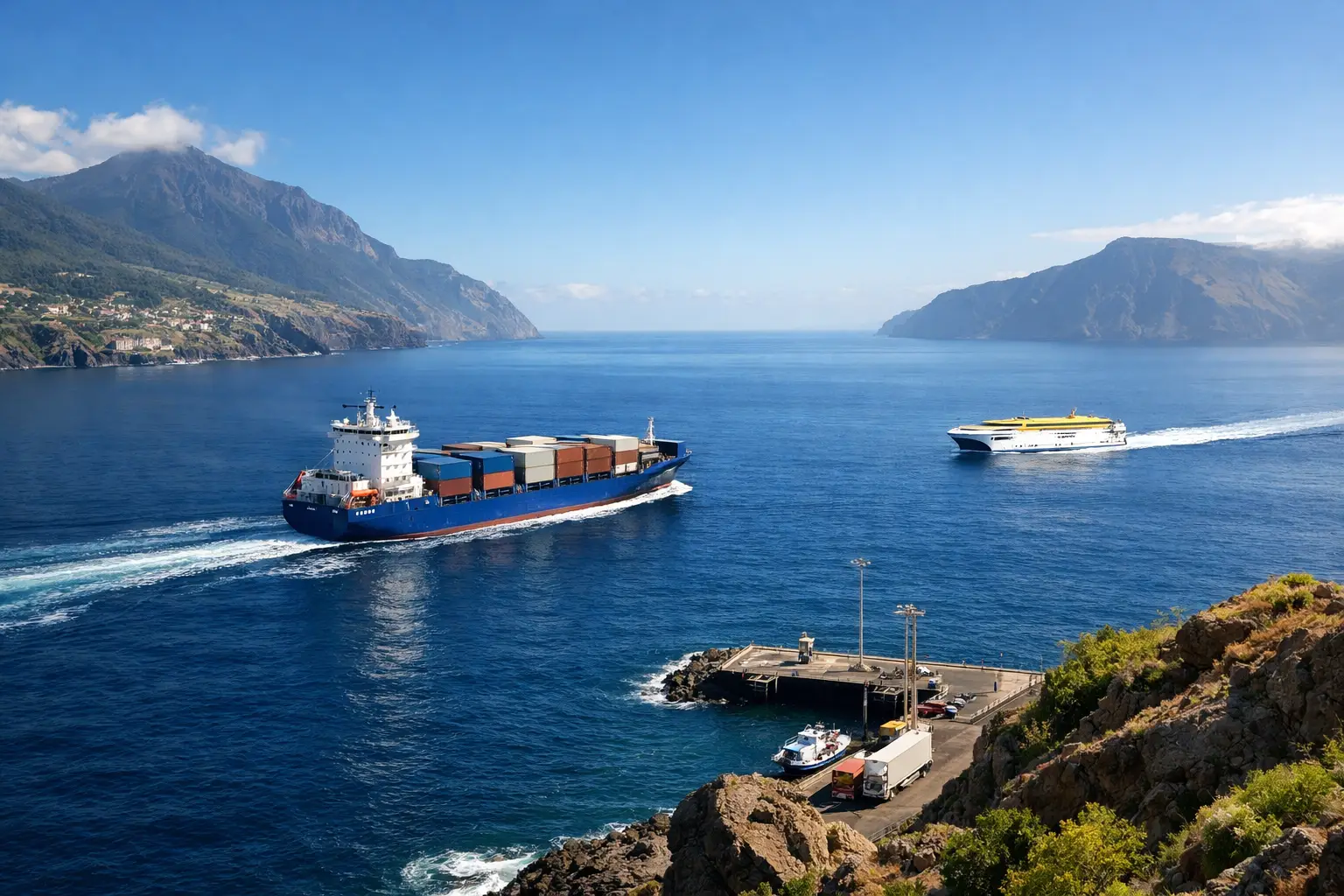
La Palma and El Hierro are separated by deep, unsheltered Atlantic waters rather than a calm inter-island sound. That distinction shapes how inter-island charters operate. A coastal tour boat designed for short sightseeing trips around a beach resort lacks the hull design, range, and stabilization needed for a multi-hour open-ocean transit.
A properly structured charter begins by identifying the core objective of the crossing. A party traveling light with personal luggage requires a vastly different vessel configuration than a media crew carrying heavy camera gear or an organization transporting sensitive marine monitoring equipment. Each scenario defines the required deck space, payload capacity, cabin shelter, and crew profile.
For private passengers, comfort depends on small operational choices. Having shaded seating protected from wind spray, access to fresh water and catering, secure luggage storage, and clear communication from the crew ensures passengers remain relaxed throughout the crossing.
While the Atlantic waters around the Canary Archipelago offer magnificent marine vistas, sea states between the western islands require respect. The passage between La Palma and El Hierro is heavily influenced by the regional northeast trade winds (*vientos alisios*). As wind passes between the high elevation profile of La Palma and neighboring islands, localized wind acceleration zones can increase wave height and ocean chop.
Experienced skippers monitor swell direction, wind speed, and sea state models closely in the hours leading up to departure. On many days, departing early in the morning allows vessels to cross before afternoon winds build up over the channel. The calmer waters found in the western lee of La Palma also provide a comfortable window to settle onto the course before entering the main offshore transit.
Flexibility is essential for open-sea passages. Professional operators adjust departure times or alter exact routes to prioritize safety and comfort. Passengers prone to sea sickness should advise the crew in advance; choosing a seat near the vessel's center of gravity and staying hydrated significantly reduces discomfort.
As a specialized maritime service provider in the Canary Islands, Deep Atlantic Logistics handles the full operational scope behind every crossing. Beyond vessel assignment, marine logistics involve securing harbor berth permits, evaluating payload weight limits, verifying fuel margins, monitoring real-time weather data, and coordinating ground transportation at both ends.
When requesting a proposal from Deep Atlantic Logistics for a La Palma to El Hierro passage, ensure your itinerary outlines all operational requirements. A complete charter agreement clearly states:
Clarifying whether the voyage is a point-to-point transfer or an experiential charter allows the team to select the right platform. Commercial operations prioritize deck layout and payload capacity, whereas private leisure charters focus on guest comfort, privacy, and hospitality.
Selecting the optimal port shapes both sea time and land travel efficiency. On La Palma, departures usually clear from Puerto de Santa Cruz de La Palma on the eastern coast or Puerto de Tazacorte on the western side. On El Hierro, primary arrival points are Puerto de La Estaca (the island's main port near Valverde) and Puerto de La Restinga on the southern tip, famous for its marine reserve.
Passage timing must account for harbor maneuvers, pre-departure safety briefings, and cargo stowage. When planning onward travel on El Hierro—whether renting a car, checking into accommodations, or scheduling local excursions—building a buffer into your arrival schedule ensures a smooth transition without unnecessary pressure if sea conditions require a slower pace.
Selecting a vessel for an Atlantic crossing involves balancing speed, stability, and spatial needs. Smaller groups prioritizing rapid transit often choose twin-engine power catamarans, which cut through ocean swell efficiently. Larger private groups or families seeking maximum comfort may prefer mid-sized motor yachts with enclosed salons, sun protection, and stabilization systems.
To receive the most accurate charter recommendation, provide the operator with detailed voyage specifications during initial inquiry:
Direct passenger transfers focus on getting from port to port smoothly and quickly. Experiential leisure charters, when weather permits, may incorporate scenic coastal passes alongside El Hierro’s dramatic volcanic cliffs or pauses in sheltered bays prior to docking.
Safety is the non-negotiable priority for all offshore operations. Before leaving the berth, the skipper conducts a mandatory safety brief covering life jacket locations, deck movement rules, emergency protocols, and communication procedures. Transparency regarding weather forecasts and sea conditions is the hallmark of a professional crew.
If a skipper recommends adjusting departure times or modifying a route due to swell, guests can trust that decision reflects sound maritime judgment. Navigating open Atlantic channels with an experienced crew turns the crossing between La Palma and El Hierro into an extraordinary highlight of traveling through the Canary Islands.
Passage duration depends on vessel type and ocean conditions. High-speed commercial powerboats usually complete the crossing in 2.5 to 3 hours in favorable conditions, whereas motor yachts or sailing vessels take between 4 and 6 hours.
In La Palma, departures operate from Puerto de Santa Cruz de La Palma (east) or Puerto de Tazacorte (west). In El Hierro, vessels dock at Puerto de La Estaca (near Valverde) or Puerto de La Restinga in the south.
Luggage allowances depend on vessel payload capacity and passenger count. Standard transfers easily accommodate standard suitcases per guest. For excessive luggage, diving equipment, or commercial gear, notify Deep Atlantic Logistics in advance so an appropriately sized vessel or cargo stowage plan can be assigned.
Yes. Deep Atlantic Logistics arranges dedicated support vessels and workboats equipped to transfer technical gear, film production equipment, and scientific instruments between islands safely.
Safety dictates all departure decisions. If trade winds or ocean swell exceed safe operating limits, departures are rescheduled for a clearer weather window, rerouted to more sheltered ports, or processed according to the operator's weather contingency policy.
Planning a private transfer, group charter, or commercial delivery between La Palma and El Hierro? Contact Deep Atlantic Logistics with your target travel dates, passenger count, and cargo requirements to receive a tailored vessel recommendation and detailed operational proposal.


